Live-in care costs in Wallingford: prices and funding
Staying at home can remain possible even when day-to-day support needs grow. Live-in care costs in Wallingford depend on the person’s needs and the level of help required, so an individual assessment is the best way to understand the likely care arrangements and cost. This option may suit someone who needs ongoing support but values the familiarity and independence of home.
It’s understandable to want clear answers before making a decision. A carer can provide personalised help with everyday routines, companionship and practical needs, while supporting the person’s dignity and familiar habits. The right support depends on what matters most to them.
This guide explains when live-in care may be suitable, what a carer can help with and how assessments and funding work. It also explains what affects live-in care costs in Wallingford, so you can compare options and know what to discuss when arranging an assessment.
Key Takeaways
- Consider whether scheduled visits provide enough support or whether a carer living in the home better fits daily needs and routines.
- Learn how care assessments and financial circumstances can shape funding options, including support from the local authority or NHS.
- Understand the everyday help a live-in carer may provide and how care arrangements can be tailored to the person.
- See which factors affect live-in care costs in Wallingford and how they differ from the costs of visiting care.
- Find out how to take the next step towards a personalised care assessment.
WHEN CAN LIVE IN CARE BE USED?
Live-in care may suit someone who needs regular help but wants to remain in familiar surroundings. For example, a person with dementia might feel more settled following a familiar morning routine at home than adapting to a residential care home. The decision depends on the support needed, the person’s preferences and whether their home can accommodate a carer.
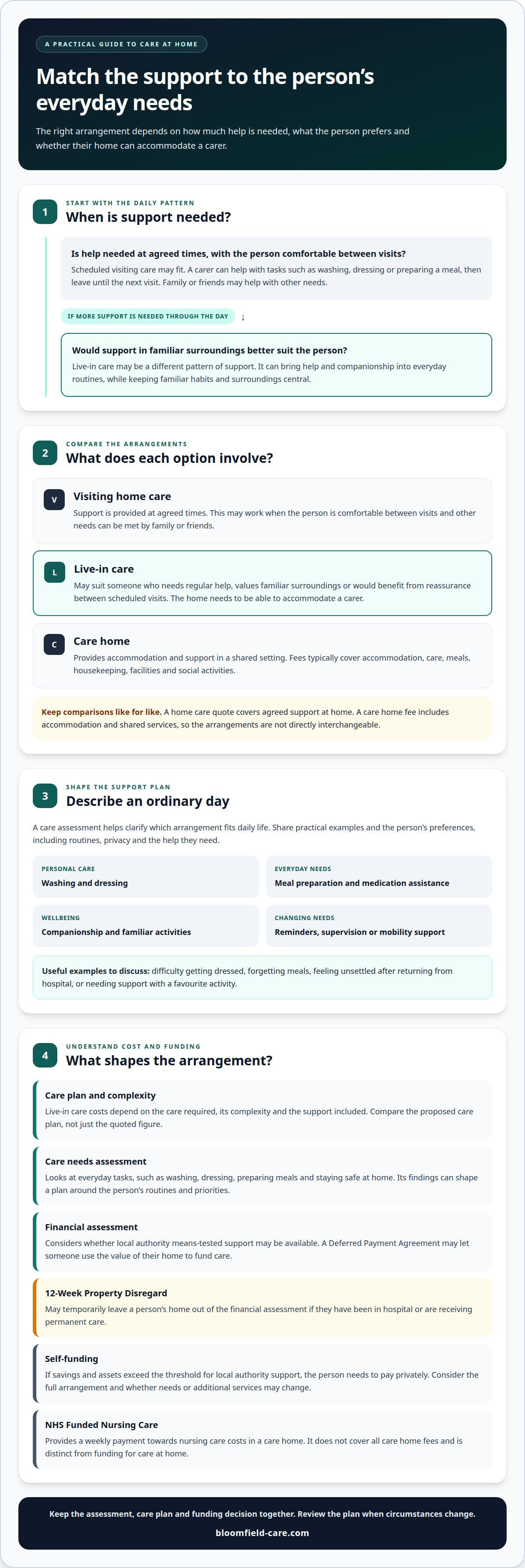
Visiting home care provides support at agreed times. A carer might help with washing, dressing or preparing a meal, then leave until the next visit. This can work well when someone is comfortable between visits and family or friends can help with other needs. If help is needed throughout the day, or reassurance is valuable between scheduled visits, live-in care offers a different pattern of support. A care assessment can help clarify which arrangement better fits daily life.
Live-in care can also bring companionship into everyday routines. A carer might share a meal, support a favourite activity or help someone keep in touch with friends. Familiar support can be especially valuable when changes to the person’s surroundings would feel difficult. The care plan should reflect personal preferences, including privacy, routines and the assistance needed. Discuss more complex needs as part of the assessment.
A care home provides accommodation and support in a shared setting. Fees typically cover accommodation, care, meals, housekeeping, facilities and social activities. Live-in care instead supports the person in their own home, keeping familiar routines and surroundings central. These arrangements are not directly interchangeable: a home care quote covers agreed support at home, while a care home fee includes accommodation and shared services. The person’s care needs, household arrangements and preferred setting all matter.
Quotes can reflect different care plans. Compare the proposed support, such as personal care, meal preparation, companionship and medication assistance, rather than focusing on the figure alone. Ask how the plan accounts for the person’s routines and changing needs. A clear written outline makes it easier to understand the support and compare proposals.
The cost of live-in care in Wallingford depends on the care required, its complexity and the support included. A personalised assessment can establish the arrangements and provide an exact quote for the individual case. The Care Quality Commission provides information about care services, which can form part of understanding how care is regulated in England.
Care needs assessments and funding
In Wallingford, the assessment and funding route depends on the person’s support needs and financial circumstances. First clarify what care is needed, then consider how it will be paid for.
Council Assessments and Funding
A care needs assessment considers how someone manages everyday tasks, such as washing, dressing, preparing meals and staying safe at home. For someone living with dementia, it can also identify where reminders, supervision or dementia care may help. The findings can shape a care plan around the person’s routines and priorities.
A financial assessment considers whether local authority means-tested support may be available. Support may include a Deferred Payment Agreement, which lets someone use the value of their home to fund care. The 12-Week Property Disregard may temporarily leave a person’s home out of the financial assessment if they have been in hospital or are receiving permanent care.
Self-Funding Care
People whose savings and assets exceed the threshold for local authority support need to pay privately for their care. This means planning for the full arrangement, not just the hours of direct help. Consider the care plan, the level of nursing support needed, and whether additional services or changes in needs could affect future spending.
For example, a person may initially need help with meals and personal care, then require more support as dementia progresses. Reviewing the plan as needs change helps families understand what the current arrangement covers and what may need updating. Independent specialist advice on care fees can also help clarify funding decisions.
NHS Funded Nursing Care provides a weekly payment towards nursing care costs, but it does not cover all care home fees. It applies to nursing care in a care home, so families considering care at home should distinguish it from other funding options. A funding assessment can clarify which route applies to the person’s circumstances.
Respite care can be considered when a family carer needs a temporary break or the usual arrangement is changing. Include the timing and type of support needed in discussions about care planning, since short-term arrangements may differ from ongoing support. If someone is moving from hospital into permanent care, the 12-Week Property Disregard may be relevant to their financial assessment.
Keep the assessment, care plan and funding decision together. If a plan identifies help with dressing, medication and meal preparation, those needs can guide discussions about the support being funded. Review the plan when circumstances change, such as after a new diagnosis or a change in mobility, to keep the support and funding arrangements aligned.
What can a live-in carer help with?
A live-in carer’s support can be shaped around the person’s daily routines and assessed needs. Help may include washing and dressing, preparing meals, medication assistance or companionship during familiar activities. The care plan should explain which tasks are included and how the person’s preferences will guide support.
When arranging care, describe an ordinary day and identify where help is needed. Note practical examples, such as difficulty getting dressed, forgetting meals or feeling unsettled after returning from hospital. This gives the assessment a clear picture of the support required, including dementia-related needs, mobility concerns or help with personal care.
Discuss relevant experience and training when arranging a carer. Someone living with dementia may benefit from a carer who understands their communication style and established routines. If mobility support is needed, explain the tasks involved so the care plan can address them. Also discuss how the carer will respect privacy, cultural preferences and the person’s independence at home.
Before care begins, agree the practical details with the provider. Share useful information about routines, meals, medication, mobility and who to contact if needs change. If care is being arranged after a hospital stay, include discharge information and any immediate support needs in the planning conversation. The start date depends on completing the assessment and agreeing a suitable care plan, so avoid assuming that support can begin immediately.
A written live-in care agreement should set out the support included, the carer’s accommodation arrangements, break periods and how cover is organised. It should also explain insurance responsibilities and cancellation terms, so everyone understands what happens if plans change.
Live-in care involves breaks, so the care arrangement should explain how these are covered. Placements commonly last two to six weeks, and families should arrange cover for carers’ breaks. Discuss how that cover will work in practice, especially if the person needs assistance during the day. Clear arrangements help prevent gaps and give the person a consistent plan.
Before care starts, prepare the home for the carer’s stay. Agree where the carer will sleep, how household routines will work and which items or instructions will help with daily tasks. A written list of meal preferences or a clear medication routine can help the first days feel more organised. Keep the person involved in these decisions wherever possible.
Review the care plan after support begins, particularly if the person’s needs change. A new difficulty with dressing or a change in appetite may mean tasks need updating. Regular communication between the person, family and care team helps keep support relevant, respectful and centred on life at home.
Live-in care and round-the-clock support
Live-in care can provide a 24-hour presence and support for people with higher-dependency needs. That means a carer is in the home, not that they provide uninterrupted hands-on care throughout the day and night. The agreed level of support should reflect the person’s routines, abilities and assessed needs. For example, someone may need help getting dressed, preparing meals and moving safely around familiar rooms.
Personalised support begins with understanding what matters to the person. A useful care plan might set out preferred meal times, the help needed with washing and prompts for daily activities. It can explain how a carer should assist while allowing the person to make choices. Families can share practical details, such as which walking aid the person uses or how they prefer their morning routine to unfold.
One-to-one care makes it easier to adapt support as the day changes. If a person feels tired after an appointment, the carer can focus on preparing lunch and making the home comfortable. On a more settled day, support might include a walk, a favourite hobby or companionship over a meal. The care plan gives everyone a shared reference for these preferences and tasks.
Hospital discharge is another point when families may consider support at home. Before the person returns, discuss discharge information, mobility needs and daily routines with the care team. Someone who needs help moving from bed to a chair may need a different plan from a person who mainly needs meal preparation and reminders. Clear information helps shape practical support at home.
In Oxfordshire, families can plan around the person’s home, usual contacts and preferred routines. An assessment identifies which tasks need direct assistance and which the person can still manage independently. Someone returning home after a hospital stay might need help getting dressed in the morning while keeping familiar activities for later. These details help make support personal rather than based on a standard daily schedule.
Discuss how support works overnight and during a carer’s breaks. If someone regularly wakes and needs help, that pattern matters when agreeing the care plan. The plan should make clear what support is available at different times and how cover is arranged. A live-in arrangement provides a carer in the home and agreed support, but is not the same as continuous nursing or constant hands-on care.
Live-in care prices in Wallingford
Understanding live-in care costs in Wallingford starts with the person’s needs and the support included. Costs vary with care type, location, individual support needs and funding circumstances. For example, someone needing help with dressing and meals may require a different plan from someone needing support with complex needs. The assessment and agreed care plan help define the arrangement behind an individual quote.
Compare what each proposed arrangement covers, rather than headline figures alone. Check whether the plan includes personal care, meal preparation, medication assistance, companionship and help with daily routines. Also consider how carers’ breaks are covered and whether respite care forms part of the plan. A clear written outline makes these comparisons more meaningful.
Complex needs can affect the type and level of support required. Someone who needs help moving safely around the home may need a different plan from someone who mainly needs companionship and prompts. A person living with dementia may benefit from familiar routines and consistent support. Explain these needs during the assessment so the proposed care reflects the individual, rather than a generic package.
Home care visits are scheduled, while live-in care provides support in the person’s home throughout the day. If someone needs several visits for dressing, meals and medication, consider the timing and tasks included in each visit. The overall support pattern matters more than any one visit. Compare the proposed schedule with the person’s full day, including times when they may need reassurance or practical help.
Residential care offers a different arrangement. Care homes generally combine accommodation, meals, housekeeping, activities and staff support. A home care quote relates to support delivered in the person’s own home. Compare what each arrangement includes, alongside the person’s preferences, support needs and household circumstances. Because the settings offer different things, a direct comparison should account for accommodation and shared services.
For a couple, clarify whether the care plan supports both people and how their individual needs are considered. Discuss how changes in needs would affect the support arrangement. This is especially useful when one person needs help with personal care while the other mainly values companionship. A clear assessment connects the proposed support with the household’s daily routines.
To understand the cost for an individual case, arrange a free assessment and discuss the care needed, the support plan and any funding circumstances. Arrange a free assessment to talk through the person’s needs and the next steps.
Bloomfield Care: Live-in care
Bloomfield Care can help families explore live-in care when a person needs ongoing support at home. A personalised assessment considers daily routines, support needs and whether live-in care is a suitable fit. The resulting plan can reflect practical help, companionship and the person’s wish to remain in familiar surroundings.
For someone who needs support at set times, domiciliary care may be more appropriate. Bloomfield Care also provides home care visits from local offices. As a CQC-registered home care provider rated “Good” overall by the CQC, Bloomfield Care can discuss the care arrangements and how they may work at home.
To talk through your circumstances and arrange a free assessment, contact Bloomfield Care by calling your local office or using the contact form.
Take the next step at your own pace
Choosing support is personal. Before taking the next step, consider which routines matter most to the person and where they would welcome help. Their views can guide a conversation about care and keep decisions centred on their preferences.
A conversation can help clarify what should happen next. Discuss the person’s priorities with family members and note any questions about arranging support. There’s no need to settle every detail at once; begin with what would make daily life more manageable.
To talk through care options, call your local Bloomfield Care office. A calm conversation can help you consider the next step at a pace that feels right for your family.
Frequently Asked Questions
What affects the cost of care?
The cost depends on the support a person needs and how care is arranged. Help with dressing and meals differs from support for complex needs or dementia. The care plan and the person’s circumstances also shape the arrangement. Live-in care costs in Wallingford reflect the individual’s needs, so sharing examples of daily tasks during an assessment helps clarify what support may be suitable.
Do you cover my area?
Live-in care is available across the south of England, including Wallingford. Home care visits are offered from local offices in Weymouth, Ferndown, Christchurch & Bournemouth, Poole, Wallingford, Henley and Newbury. Bloomfield Care can discuss whether live-in care or home care visits better suit the person’s needs and routine.
What funding options are available?
Funding may involve personal savings and assets, local authority means-tested support, or NHS support in specific circumstances. A Deferred Payment Agreement may allow someone to use the value of their home to fund care. The 12-Week Property Disregard may temporarily exclude a home from a financial assessment in certain circumstances. Since these options depend on individual circumstances, independent specialist care-fees advice can help clarify the choices.
What is the average cost of live-in care in Wallingford, Oxfordshire, per week and per month?
There isn’t one average that represents every live-in care arrangement, and Bloomfield Care doesn’t quote client prices in this FAQ. The cost depends on the person’s care needs and the support included in their plan. A weekly or monthly estimate should reflect those individual arrangements, rather than a general figure. Contact Bloomfield Care for a free assessment to discuss the person’s needs.
What are typical live-in care agency fees in Wallingford, and what is included?
Agency fees depend on the care required and the support set out in the individual plan. Live-in care costs in Wallingford may vary with the person’s routines and level of assistance. Support can include personal care, medication assistance, meal preparation and companionship, depending on the plan. Contact Bloomfield Care for a free assessment to discuss what support is appropriate.
How does live-in care compare with residential care homes and hourly home care?
Each option offers a different arrangement. Residential care combines accommodation and support in a shared setting, while home care visits are organised around scheduled visits. Live-in care takes place in the person’s own home. For a practical comparison, consider the person’s daily routine and which tasks require support. Someone needing help at several points in the day may prefer a different arrangement from someone needing one planned visit.
Does Oxfordshire County Council contribute to live-in care costs, and what are the financial eligibility rules?
Oxfordshire County Council may provide means-tested support after assessing care needs and finances. People whose savings and assets exceed the threshold for local authority support need to pay privately. A Deferred Payment Agreement or the 12-Week Property Disregard may apply in certain circumstances. The person’s financial assessment determines how their circumstances affect eligibility, so specialist care-fees advice can help explain the available options.
Can NHS Continuing Healthcare or other NHS funding pay for live-in care in Wallingford?
NHS Continuing Healthcare and NHS Funded Nursing Care are different forms of support. NHS Funded Nursing Care provides a weekly payment towards nursing care costs, but doesn’t cover all care home fees. Whether NHS Continuing Healthcare is relevant depends on an assessment of the person’s needs. Families can discuss the person’s care arrangements with the professionals involved in their assessment to understand which funding route may apply. To discuss care, call your local Bloomfield Care office or use the contact form.