How to Stop My Dad from Falling and Respond to a Fall
A fall isn’t something you have to put down to getting older. To work out how to stop my dad from falling, look for changes in his balance, mobility, eyesight, medicines or health, and make his home safer by clearing trip hazards and improving lighting. The NHS advises contacting a GP if you’re worried about his balance or mobility, or if he’s had a fall.
It’s understandable to feel worried, especially if you’re unsure whether to help him up or call for medical support. This guide covers common fall risks, practical changes to make the home safer and gentle ways to support strength and balance.
You’ll also learn what to do after a fall and when to seek urgent help. The NHS advises calling 999 if he may have injured his head, back, neck or hip, or can’t get up; for urgent advice when he may be in pain, injured or unwell, call NHS 111 or use 111 online.
Key Takeaways
- Look for changes in your dad’s balance, mobility, eyesight, medicines or health, and speak to his GP if you’re concerned.
- Reduce everyday trip risks by clearing clutter and loose cables, improving lighting and keeping frequently used items within easy reach.
- Choose safe, suitable activities to support strength and balance. The NHS advises older adults to do strength and balance activities at least twice a week.
- Call 999 if he may have injured his head, back, neck or hip, or can’t get up. For urgent advice if he may be in pain, injured or unwell, contact NHS 111.
- If he must wait for help after a fall, keep him comfortable and warm. The NHS advises changing position about every 30 minutes while waiting to help prevent pressure sores.
1. Common causes and risk factors for falls in older adults
Repeated falls shouldn’t be dismissed as an unavoidable part of ageing. They may point to changes in balance, mobility, eyesight or overall health, a medication complication, or a hazard at home. If your dad has fallen more than once, arrange a GP appointment to discuss possible contributing factors.
Notice what happens before and during each fall. Record the date, time, activity and surroundings, such as getting out of bed in a dark room or turning quickly. These details can help a healthcare professional spot patterns. Also note whether your dad seems unsteady, holds furniture while walking, avoids stairs or has become less confident on his feet.
A GP can discuss possible causes, including medication interactions, vision problems, stroke risk or Parkinson’s. Tell them about every fall and any changes in walking or balance. The NHS advises contacting a GP if you’re worried about someone’s balance or mobility, or if they’ve had a fall. Bring your notes and a list of medicines to support the assessment.
Health needs can overlap with everyday factors. Changes in eyesight can make steps or objects harder to see, while dizziness linked to dehydration may affect steadiness. Older adults are advised to drink 6 to 8 glasses of fluids a day, and have their eyes and glasses prescription checked at least every 2 years. These steps can support health, but don’t replace a medical review after a fall.
Falls can affect someone physically, psychologically and socially. An injury may cause pain or make daily tasks harder. After a fall, fear of another one can lead your dad to avoid walking or going out, reducing confidence and contact with friends. Mention these changes to the GP alongside physical symptoms to give them a fuller picture of his needs.
A GP may refer someone at risk to a specialist falls service. An assessment may consider muscle weakness, osteoporosis, eyesight, medicines and home safety, and could include strength and balance training. A mobility aid, such as a walking stick or frame, should suit your dad’s needs. A physiotherapist or occupational therapist can assess which type is suitable and help with safe fitting and use.
2. Removing household hazards and improving home safety
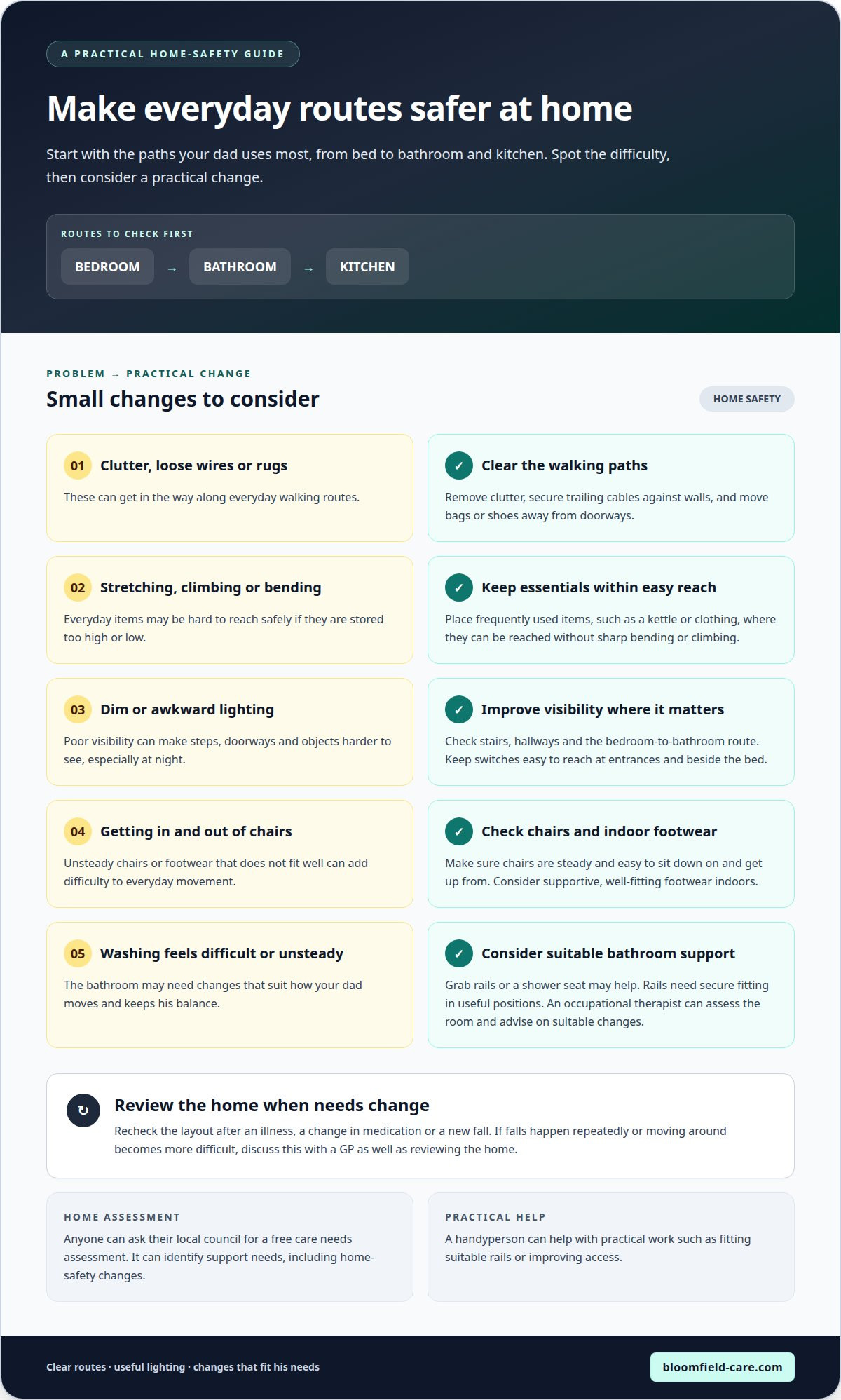
Walk through your dad’s home along the routes he uses most, from bed to bathroom and kitchen. The NHS advises removing trip hazards such as clutter, loose wires and rugs. Clear walking paths, secure trailing cables against walls, and move bags or shoes away from doorways. If he has fallen in a particular spot, look closely at the floor, lighting and objects around it.
Check how he moves between rooms and manages everyday tasks. Keep frequently used items, such as a kettle or clothing, within easy reach so he doesn’t need to stretch, climb or bend sharply. Make sure chairs are steady and easy to sit down on and get up from. Supportive, well-fitting footwear indoors can also reduce avoidable slipping and tripping risks.
Lighting matters most where your dad changes direction or level. Improve visibility on stairs, in hallways and between the bedroom and bathroom, especially at night. Keep light switches easy to reach at entrances and beside the bed. Clear views of step edges and doorways can help him judge where to place his feet as he walks.
In the bathroom, consider whether grab rails or a shower seat could make washing safer. Rails need secure fitting in useful positions, such as beside the toilet or shower, rather than somewhere that forces your dad to reach awkwardly. An occupational therapist can assess how he uses the room and advise on suitable home changes. Adaptations should suit his movement and balance needs, not just look right.
For a broader review, anyone can ask their local council for a free care needs assessment. It can identify support needs, including home-safety changes. If practical work is needed, a handyperson can help with tasks such as fitting suitable rails or improving access. The assessment can help clarify which changes may support your dad at home.
Review the home after an illness, a change in medication or a new fall, as your dad’s needs may have shifted. Notice whether he now struggles with steps, reaching kitchen cupboards or getting in and out of bed. A safer layout can reduce everyday obstacles, but repeated falls or new difficulty moving around also call for a GP discussion, not just household changes.
3. Staying active to maintain strength and balance
Regular movement can help your dad maintain strength, balance and coordination. These abilities support everyday actions such as standing from a chair, turning safely and walking around the home. Becoming less active after a fall can increase the risk of future falls, so help him find manageable ways to keep moving. If he feels unsure or has a health concern, speak with a healthcare professional before starting a new exercise programme.
The NHS advises older adults to do activities that improve strength and balance at least twice a week. Walking, chair-based exercises and activities designed for older adults are possible options. The right choice depends on your dad’s health, confidence and current mobility. A gentle routine he can manage safely is more suitable than an activity that leaves him unsteady or worried.
Chair-based movements can be a starting point if standing exercises feel difficult. Your dad might practise lifting his feet while seated or reaching gently within a comfortable range. For standing activity, a short walk on a familiar, clear route may feel more manageable than going outdoors alone. Keep the pace comfortable, and stop if he feels unwell, dizzy or in pain.
Strength and balance training works best when it suits the person, rather than following a routine chosen for someone else. A physiotherapist or specialist falls service can assess your dad’s movement and suggest suitable exercises. They can also show him how to practise safely and adjust activities as his ability changes. If an exercise causes discomfort or makes him feel less steady, pause and seek advice.
Medicines can affect balance, so include them in any conversation about activity and falls. The NHS advises speaking to a GP or pharmacist if you think medicines could be affecting your dad’s balance. Keep a current list of his medicines and describe what you notice, such as dizziness after taking a dose or difficulty walking at a particular time. Don’t change or stop prescribed medicines without medical advice.
Make movement part of familiar routines. Your dad could walk around the house before lunch, practise a suitable chair exercise while watching television, or take a short walk with someone he trusts. Notice how he feels during and afterwards, and share any changes with his GP or physiotherapist. Suitable regular activity can support independence, while professional advice helps keep the plan appropriate to his needs.
4. When a fall requires emergency medical attention
Stay beside your dad and check whether he’s hurt, in pain or feeling unwell. The NHS advises calling 999 if someone has fallen and may have injured their head, back, neck or hip, or cannot get up. Tell the call handler what happened, where your dad is, and what injuries or symptoms you can see. Don’t try to lift him yourself, as moving him could cause further injury.
If he may be in pain, injured or unwell but doesn’t meet those emergency signs, call NHS 111 or use 111 online for urgent advice after a fall. Follow the advice you receive and explain any existing health conditions, such as heart disease, Parkinson’s or a recent illness. If his condition worsens while you’re seeking advice, call 999.
While waiting, keep your dad comfortable and warm, and avoid moving him more than necessary. If he’s on the floor, speak calmly and reassure him while you stay close. The NHS advises changing position about every 30 minutes while waiting for help to help prevent pressure sores. Only help him change position if it can be done safely without causing pain or further injury.
Dizziness or a sudden change in steadiness can have several possible causes, including an illness or a medicine’s side effects. Vision changes may also affect how safely someone moves around. Once immediate concerns are addressed, note what your dad felt, when it began and what he was doing. Share those details with his GP, particularly if dizziness or falls recur.
Medication interactions can contribute to feeling faint or unsteady. Don’t stop or alter prescribed medicines yourself. Keep the medication packaging or an up-to-date list available, and tell the GP or NHS 111 about recent changes and any symptoms. A healthcare professional can review whether medicines or another health issue may be affecting balance.
A personal alarm may connect its user to a 24-hour response centre, offering a way to summon assistance when family aren’t nearby. Explain how the alarm works and keep it accessible, if your dad uses one. It doesn’t replace calling 999 when he may have a serious injury or cannot get up. After the immediate response, arrange a GP discussion about the fall, even if your dad later feels better. The details can help identify support for his safety and independence.
5. Calling emergency services after a serious fall
If your dad has fallen, pause before moving him. Check whether he’s responsive, in pain or visibly injured, and ask what happened. The NHS advises calling 999 if he may have injured his head, back, neck or hip, or cannot get up. Tell the call handler where he is, what you’ve noticed and whether he has any known health conditions.
While help is on the way, stay with him and keep him comfortable and warm. Avoid lifting or moving him, as this could worsen an injury. If he’s on the floor, reassure him and keep the area clear so responders can reach him. If you’re unsure whether his injury is serious, describe his symptoms to the emergency call handler and follow their instructions.
When should you call 999 after a fall, and what warning signs need urgent care? Call 999 if he may have hurt his head, back, neck or hip, or can’t get up, as the NHS advises. If he may be in pain, injured or unwell without those signs, contact NHS 111 or use 111 online for urgent advice.
If there are no apparent injuries, don’t rush your dad to stand. The NHS advises taking time to check for pain or injury and whether he feels able to get up. Ask him how he feels, and stop if movement causes pain, dizziness or distress. If he can’t rise safely, call for help rather than trying to lift him alone.
Alcohol can be relevant when discussing a fall with a GP, particularly if your dad drank before losing his balance. Tell the GP what he drank and when, and mention any medicines taken around the same time. Alcohol and medicine side effects may affect how he feels or moves, so a clear account can support a careful review. Don’t change prescribed medicines without medical advice.
After a serious fall, note the time, location and what your dad was doing beforehand. Record any pain, dizziness or confusion, and share these details with the medical team. Keep his medication list and relevant health information nearby if you can do so without leaving him alone. The NHS advises changing position about every 30 minutes while waiting for help to help prevent pressure sores. Once immediate care is arranged, tell his GP about the fall and any new difficulties with daily activities.
Bloomfield Care
Bloomfield Care can help families consider what support may make everyday life at home safer and more manageable. If your dad needs support with daily routines, home care visits or live-in care may offer practical help while respecting his preferences and independence. Care can be shaped around familiar routines and individual needs.
Home care may be worth discussing if falls, reduced confidence or difficulty managing everyday tasks are affecting your dad’s wellbeing. It can complement advice from his GP and home-safety changes, but it doesn’t replace emergency medical help or a clinical falls assessment.
To talk through support for your dad, call your local Bloomfield Care office or use the contact form.
Take the next step together
Deciding how to stop my dad from falling can feel like a lot to carry alone. A useful next step is to talk with your dad about what would help him feel safer, while keeping his routines and choices at the centre. You could also agree who will speak with his GP and how family members can share observations, so concerns aren’t lost between conversations.
Support at home may help if everyday tasks have become harder or your family needs more consistent assistance. Bloomfield Care can discuss care that respects your dad’s preferences and supports his independence. You don’t need to have every detail worked out before starting a conversation.
Contact Bloomfield Care for support and discuss what may suit your family. A thoughtful next step can make the way forward feel more manageable.
Frequently Asked Questions
My Dad Keeps Falling at Home, What Do I Do?
Arrange a GP appointment and describe how often your dad falls, what he was doing beforehand and any changes you’ve noticed. A useful first step in working out how to stop my dad from falling is to share these details with his GP. Call 999 if he may have injured his head, back, neck or hip, or cannot get up. For urgent advice if he may be in pain, injured or unwell, contact NHS 111.
How can I make my home fall-proof?
No home can be made completely risk-free, but you can look for hazards during your dad’s usual routines. Walk through the home with him and notice where he pauses, reaches awkwardly or changes direction. Check whether he can reach the telephone, glasses and everyday items without climbing or stretching. Make changes with his agreement, so familiar belongings and routines remain comfortable and practical.
What Are Some Reasons Ageing Adults Fall?
Falls can have more than one contributing factor. A change in health, unsteady movement, eyesight difficulties, medicine effects or obstacles on a walking route may all play a part. Notice whether your dad’s balance seems different at certain times, or whether a fall happened during a particular activity. Sharing those observations with his GP can help focus a conversation about possible causes and suitable support.
What Are the Consequences of Falling?
A fall can cause injury, pain and difficulty with everyday activities such as dressing or preparing a meal. It may also affect confidence: your dad might start avoiding familiar walks, social visits or tasks he previously managed himself. Notice changes in his routine after a fall, including anything he has stopped doing. Sharing these concerns with his GP can help address his physical needs and changes in independence.
What can I do if I'm worried about a fall?
Tell your dad’s GP what worries you and give a specific example, such as seeing him struggle to turn or noticing an unexplained change in his walking. Write down when you first noticed it and whether it has changed. If a fall leaves him in pain, injured or unwell, contact NHS 111 for urgent advice. Call 999 for a possible serious injury or if he cannot get up.
What can I do to prevent a fall?
If you’re considering how to stop my dad from falling, combine practical changes with attention to his health and daily habits. Ask him which activities feel difficult, then focus support around those moments, such as getting ready for bed or carrying a drink. Encourage him to discuss balance concerns with his GP and choose movement that suits his abilities. Review the plan after a change in health or routine.
What are the most common causes of falls in older adults?
Common contributors include changes in balance or mobility, eyesight problems, medication effects, health concerns and hazards around the home. The cause may differ between falls, even for the same person. For example, your dad might stumble while turning one day and feel dizzy another. Keeping a brief account of the circumstances can reveal details worth discussing with his GP, rather than treating every fall as identical.
How can I assess my dad’s fall risk at home?
Notice how your dad manages everyday tasks, such as rising from his usual chair, walking between rooms and turning towards a table. Don’t ask him to attempt a movement that feels unsafe just to test it. Record any change you observe and discuss it with his GP. A healthcare professional can consider his balance, mobility and health together, rather than relying on a home observation alone.
If you’d like to discuss support for your dad, call your local Bloomfield Care office or use the contact form.