Personalised Care Plans in Dorset: Tailored Home Care
What if home care could fit around the routines that make a house feel like home, rather than asking someone to change them? It’s understandable to wonder what visits can include, whether personal preferences will be respected and how family members can have a say. A personalised care plan in Dorset can turn those questions into a clear, practical starting point for support.
At Bloomfield Care, each service begins with a free, no-obligation home visit. The person and their family can discuss daily routines, priorities and the help they would welcome. A written plan is agreed with the client, so support is tailored to the person and can bring different services together. Visits can fit around familiar mealtimes, getting ready for the day, companionship and other agreed needs.
This article explains what information can help shape a useful plan, how the person and family can contribute, and how to revisit arrangements as needs or preferences change. It also explains how home care visits in Dorset can support someone to remain at home and maintain familiar routines.
Key Takeaways
- A személyre szabott gondozási terv Dorset can keep a person’s routines, preferences and priorities at the centre of their agreed home support.
- Personal care, companionship and other support can be tailored to the person and combined to suit everyday life.
- Preparing a few notes about what matters most can help make a care-planning conversation more useful.
- Changes in needs or preferences are a reason to revisit the plan and discuss adjustments together.
- Bloomfield Care’s process begins with a phone call, usually 10 to 15 minutes, followed by a home visit of about an hour. Every carer carries photo ID.
What does a personalised care plan in Dorset do?
A personalised care plan is a written, agreed description of the home care support a person wants and needs. It gives the client and their carers a shared reference: what help has been agreed, how it should be offered and what matters in everyday life. A személyre szabott gondozási terv Dorset should reflect the individual, not a standard list of tasks.
That distinction can make a practical difference. A plan might note that someone prefers to get dressed before breakfast, likes time to manage parts of their morning routine independently, or would welcome companionship during a visit. It can also bring different kinds of support together, so the person’s priorities are clear rather than lost among separate tasks.
How a care plan supports choice and independence
Planning should be a conversation with the person, not a decision made about them. Their views can guide what support looks like, including how much privacy they prefer and whether they want a carer to offer help straight away or wait until asked. The plan records agreed assistance while respecting what the person can and wants to do for themselves.
For example, someone may feel comfortable washing their face and choosing their clothes but welcome help getting dressed. The plan can describe that distinction clearly. It can also record small preferences, such as how the person likes their belongings arranged or what helps them feel at ease at home. These details give carers practical guidance and help visits feel respectful and familiar.
This approach is often called person-centred planning. In practice, it means listening to the person’s wishes and using them to shape support. A useful plan reflects the person’s voice, rather than only describing what others think should happen.
When families may start discussing a plan
There doesn’t have to be a crisis before a family raises the subject. A conversation may begin when getting washed or dressed becomes tiring, household tasks are harder to manage, or someone would welcome more company during the day. Noticing a change is a reason to explore options, without assuming that home care must start immediately.
Families can share specific observations while leaving room for the person to explain how they feel. Instead of deciding that someone needs help every morning, ask which parts of getting ready they find difficult and what they would prefer to manage themselves. The person’s wishes should remain central, even when relatives are worried.
A written plan can make those wishes easier to discuss and keep in view. It should describe the support agreed with the person, alongside their abilities, routines and priorities. Carers wear smart polo shirts, not clinical tunics. Every carer carries photo ID.
What can a Dorset home care plan include?
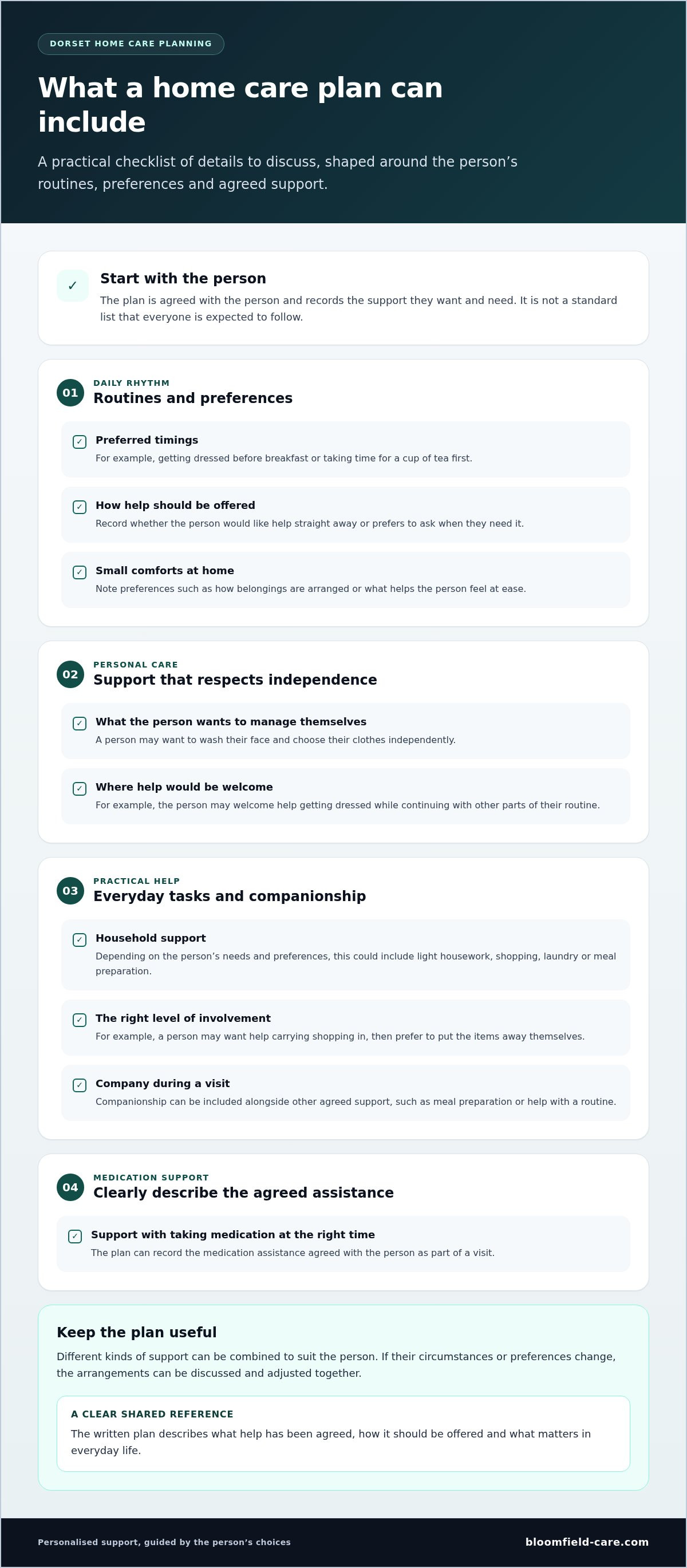
A home care plan records the support agreed with the person after a home visit. It describes what would help in their circumstances, rather than setting out a checklist that everyone is expected to follow. A személyre szabott gondozási terv Dorset can bring several kinds of support together while keeping the person’s preferences and daily life in view.
The plan may cover personal care, companionship, medication support and practical help around the home. The support is tailored to the person and can be combined according to what they would welcome. Someone may want help with a morning routine but manage household tasks independently. Another person may value help preparing a meal alongside company during a visit.
Recording routines, preferences and practical support
Preferred timings are a useful place to start. Does the person like to get dressed before breakfast, or take their time over a cup of tea first? Discussing the rhythm of the day can help shape visits around familiar routines, rather than asking the person to reorganise their life around care.
Practical support can be described in plain, specific terms. Depending on the person’s needs and preferences, this might include light housework, shopping, laundry or meal preparation. A plan could note that someone wants help carrying shopping in but prefers to put items away themselves. Small distinctions like this keep support focused on what’s agreed and let the person remain involved in everyday tasks.
Medication support means assistance with taking medication at the right time. The plan can record the support agreed with the person as part of their visit. It should describe that assistance clearly, without suggesting that home care visits provide medical treatment.
Combining support as needs change
Different kinds of help can be combined to suit a person’s circumstances. For example, someone in Poole might appreciate support getting ready, followed by help with laundry and a friendly conversation. A person in Weymouth might prefer companionship alongside meal preparation. These are examples, not standard packages: the person’s needs and choices guide what is included.
It can help to think about how a visit connects with the rest of the day. A plan might record a preferred mealtime, the household tasks the person would like help with, or how they want a carer to offer assistance. This gives carers practical guidance while leaving room for the person to take part in familiar activities. Support can be adjusted through discussion if preferences or circumstances change.
For tailored Dorset home care visits, Bloomfield Care begins with a free, no-obligation home visit and agrees a written care plan with the client.
How should a care plan respond to changing needs in Dorset?
A care plan should be able to change as a person’s routines, preferences or circumstances change. Revisiting agreed support doesn’t mean the original plan failed. It means checking that the plan still fits everyday life. A személyre szabott gondozási terv Dorset is most useful when it stays personal, clear and open to agreed updates.
Bloomfield Care’s first review takes place within the first two weeks, with regular reviews thereafter. These conversations give the person an opportunity to say what is working well and what they’d like to adjust. Family members can share observations too, while keeping the client involved in decisions about their own support.
Signs that agreed support may need revisiting
Small changes can be a helpful prompt for a conversation. Perhaps a person who used to prefer an early visit now wants more time in the morning, or would like help with a different household task. These are observations about routine and preference, not diagnoses or proof that a particular type of care is needed.
Families can bring clear examples to a review: “Mum has said she’d rather have lunch later,” or “Dad seems to prefer doing the laundry on another day.” Sharing what the person has said, alongside what relatives have noticed, can help everyone discuss whether the current arrangement still feels right.
Keeping the person involved during reviews
Start with the person’s own view. Ask which parts of a visit feel helpful, whether anything feels uncomfortable and what they’d like to happen differently. If they want a change, the discussion can focus on what support to update and how to describe it simply in the written plan.
A comparison can make a change easier to explain:
Earlier routine: A morning visit takes place before breakfast, with support getting ready.
Changed preference: The person would now prefer breakfast first, then help with getting ready.
This kind of adjustment keeps the plan connected to the person’s choices. It records what support has been discussed and agreed. A family member can help note preferences or share an observation, but the client should have space to speak for themselves and say what matters to them.
Clear communication between relatives and carers can make it easier to raise changes respectfully. The article “How Families and Home Carers Can Work Together in Oxford” also explores how families and carers can work in partnership while keeping the person receiving support central.
How can families prepare for a care-planning conversation?
A little preparation can make a care-planning conversation calmer and more useful. The aim isn’t to arrive with every answer, but to help the person explain what matters to them and where support might fit. For a személyre szabott gondozási terv Dorset, the person’s views should guide the discussion, with family members adding helpful context where welcome.
Try this simple sequence before the conversation:
- Note familiar routines. Jot down the usual rhythm of the day, including preferred times for meals, getting dressed or going out.
- Discuss priorities. Ask what the person most wants to keep doing and what has become difficult or tiring.
- Identify preferred support. Talk through the kinds of help they would welcome, as well as tasks they’d prefer to manage themselves.
- Agree next steps. Summarise what you’ve discussed and note any questions or points that need another conversation.
Questions that help describe everyday life
Open questions can help the person talk about their day without making them feel they’re being assessed or treated as a problem to solve. You might ask, “What does a good morning look like for you?” or “Which parts of the day would you most like to keep as they are?”
Then explore what feels manageable and where help would be welcome. For example, “Would you like support with laundry, or do you prefer to do it yourself?” is more respectful than assuming a task needs to be taken over. The Home Carer Responsibilities in Thatcham article offers examples of home-care support that may help families think through practical tasks.
Making family involvement supportive
Relatives can share useful observations, such as a change in a routine the person has mentioned or a task they’ve found frustrating. Keep these details specific and give the person time to respond. If the person wants to lead the conversation, family members can listen, take notes or help clarify a point when invited.
It can also help to agree who the person would like involved in care-planning discussions and updates. Preferences differ: one person may want a relative present, while another may prefer to speak privately first. A discussion about Bespoke Domiciliary Care in Weymouth connects local home-care support with the value of tailoring visits to individual circumstances.
Before finishing, check that everyone understands what has been discussed and what happens next. The written plan should reflect the person’s choices, not simply list tasks for others.
How Bloomfield Care creates a written care plan in Dorset
Arranging home care can feel like a big step, so Bloomfield Care keeps the planning process clear and centred on the person. It begins with a free, no-obligation home visit, where the client can talk through their routines, preferences and the help they would welcome. The written plan is agreed with the client and tailored to their circumstances, rather than being a fixed package.
From first conversation to agreed plan
The process starts with a phone call, usually 10 to 15 minutes. It’s a chance to talk about what has prompted the enquiry and ask initial questions. There’s no need to have every detail worked out beforehand. The conversation helps prepare for the home visit and clarify what the person would like to discuss.
The home visit takes about an hour. It gives the client and family time to describe a typical day, the routines that matter and where support could be useful. The client’s views guide what is included, and different kinds of help can be combined to reflect their circumstances.
After the visit, Bloomfield Care prepares the written plan and sends it within two to three days. The client can see what support has been agreed and how it relates to everyday life. A clear plan can also help family members understand the arrangement and share questions or observations with the care team.
Meeting carers and reviewing the plan
Clients usually meet their carers a day or two before care begins. This gives the person an opportunity to meet the people who will be visiting and put names to faces before the first visit. Every carer carries photo ID. Carers wear smart polo shirts, not clinical tunics.
The first review takes place within the first two weeks, then reviews continue regularly. The client can talk about what feels helpful and whether they would like anything adjusted. Family members can contribute observations, while the client remains involved in decisions about their support. A review keeps the plan aligned with the person’s preferences.
Out-of-hours support is available every day of the year. Each area has a named manager you can reach directly, not a call centre hundreds of miles away. For a family considering a személyre szabott gondozási terv Dorset, knowing how the process works can make the first conversation feel more manageable. The plan is agreed with the client and can be revisited as their circumstances or preferences change.
Bloomfield Care provides home care visits in Dorset, including Weymouth, Dorchester, Ferndown, Wimborne, Christchurch, Bournemouth and Poole. Its local coverage also includes Wallingford, Henley-on-Thames, Oxford, Abingdon, Newbury and Thatcham.
Take the next step at your own pace
Deciding what support might help doesn’t mean giving up control over daily life. It can be a chance to make space for the routines, relationships and choices that matter, with support shaped around the person. A személyre szabott gondozási terv Dorset can begin with a simple conversation about what would make home life feel more manageable.
You don’t need to have every answer before asking questions. The person can explain what they value, and family members can offer context if the person wishes. Bloomfield Care’s named local manager can guide that first discussion and explain the next steps in a calm, straightforward way.
If you’re considering tailored home care visits, call your local Bloomfield Care office or use the contact form to arrange a free, no-obligation home visit.
Frequently Asked Questions
What is a personalised care plan for home care?
It’s a written record of the support agreed with the person receiving care. It helps everyone understand what assistance is planned and how to offer it in a way that feels comfortable. For example, the plan might note that a person prefers to be asked before a carer helps with a task. A személyre szabott gondozási terv Dorset should be clear and useful to the person and their family.
Can family members help create a care plan?
Yes. Relatives can share helpful context, such as what the person has said about their day or which activities they value. The client remains central, and family involvement should reflect their wishes. It may help to discuss who the person would like included in conversations and updates. At Bloomfield Care, the written plan is agreed with the client after a home visit.
How often should a home care plan be reviewed?
Bloomfield Care’s first review takes place within the first two weeks, then regularly thereafter. A review gives the person a chance to say whether the support still feels suitable or whether a detail, such as the order of tasks, needs discussion. If the client wants relatives involved, they can share relevant observations. The purpose is to discuss the plan together.
What happens if someone’s needs or preferences change?
The person can raise the change and discuss whether the written plan should be updated. This might mean preferring a different time for a visit, or wanting more help with one household task and less with another. Families can share what they’ve noticed if the client wants them involved. The discussion can focus on that individual change rather than assuming every change needs the same response.
Is a care plan the same as a list of tasks?
No. Tasks may be included, but the plan should also explain how the person wants support offered. For instance, someone may want a carer to lay out items they’ll need while choosing and using them independently. This helps distinguish between assistance the person welcomes and activities they prefer to continue themselves. A plan is written around the individual, not as a checklist for everyone receiving care.
How long does it take to receive a care plan from Bloomfield Care?
Bloomfield Care sends the written plan within two to three days after the home visit. The process begins with a phone call, usually 10 to 15 minutes, and the home visit takes about an hour. During the visit, the client can talk through the support they’d like and ask questions. The written plan reflects that discussion and is agreed with the client.
Can home care visits include different types of support?
Yes. Support can be tailored to the person and combined according to what they want and what has been agreed. For example, a visit might include companionship alongside meal preparation, or personal care with help organising laundry. Home care visits are available in Dorset, including Weymouth, Dorchester, Ferndown, Wimborne, Christchurch, Bournemouth and Poole, as well as Wallingford, Henley-on-Thames, Oxford, Abingdon, Newbury and Thatcham.
Call your local office or use the contact form to arrange a free, no-obligation home visit.