Personal Care in Abingdon for Dementia and Daily Support
Personal care in Abingdon can help someone living with dementia manage everyday routines while staying in familiar surroundings. Support may include help with washing and dressing, meal preparation, medication support, and moving around safely. The right assistance is tailored to the person’s needs, preferences and independence.
It’s understandable to want practical help without losing the comfort and familiarity of home. This guide explains what personal care can involve, how support with medication, meals and mobility can fit into daily life, and what to consider when arranging dementia care. You’ll also find local contact details to help you take a considered next step for yourself or someone close to you.
Key Takeaways
- See how companionship, personal care and daily routines can be shaped around a person’s preferences and independence.
- Learn what to consider when planning meals that reflect someone’s tastes and dietary needs.
- Understand how clear medication routines and practical mobility support can help make everyday life at home more manageable.
- Find local contact details, including the Oxford Health NHS Foundation Trust telephone number, for support in the Abingdon area.
- Explore when live-in care may be a suitable way to provide ongoing support at home.
What can a live-in carer help with?
A carer can provide companionship, personal care and practical help at home. Daily support may include washing, dressing, preparing for the day and keeping to familiar routines. For someone living with dementia, a regular routine can make everyday tasks easier to follow. Sharing an activity, such as looking through family photographs or enjoying a familiar conversation, can also offer connection. Support should respect the person’s choices, privacy and abilities.
Personal care at home takes place in the person’s own home, with support tailored to their daily routines. Residential care means moving into a care home, where accommodation and support are provided in that setting. The right arrangement depends on the person’s needs, preferences and the support available to them.
When choosing personal care, ask about carers’ training, including dementia awareness and support with personal care. Ask how recruitment checks are carried out, how carers are supervised, and how to raise concerns. Clear information about who to contact and how care notes are shared helps families understand the arrangements.
NHS Continuing Healthcare considers a person’s overall health needs, while Oxfordshire County Council can assess care needs and discuss council support. Ask how the assessment works and how health, daily living needs and financial circumstances are considered. These assessments can clarify what support may be available.
For a safeguarding concern or complaint about home care, record what happened and raise it with the provider’s manager. Ask how the concern will be reviewed and how the outcome will be communicated. If domestic abuse is involved, prioritise safety and contact an appropriate safeguarding service. A care worker’s day-to-day support does not replace specialist help.
To identify CQC-registered home care services, use the Care Quality Commission’s provider records and look for services covering Abingdon. Read each service’s current inspection information and check that its registration covers the care being arranged. This can help distinguish personal care from other kinds of support.
Oxfordshire County Council can assess care needs and explain whether council-funded support may apply. The outcome depends on the person’s assessed needs and financial circumstances. For local cost-of-living help, the council shares information about food bills, financial advice, benefits and local organisations. Abingdon Foodbank and Abingdon Community Fridge are other local food resources.
To arrange a care needs assessment in Abingdon, contact Oxfordshire County Council and describe the daily tasks causing difficulty. Explain how dementia affects routines, personal care, meals or getting around. Keep examples ready, such as needing reminders to wash or help preparing breakfast. Contact the relevant council to ask about arranging an assessment.
CQC ratings vary between services, so look up the individual service’s current CQC record. Read the overall rating alongside the report, which explains how inspectors assessed the service. A rating is useful context, alongside clear information about the person’s particular support needs.
There is no single timeframe for arranging personal care visits in Abingdon. Planning depends on the assessment, the type and pattern of support needed, and scheduling. Explain which tasks are most urgent, such as getting dressed or moving safely from bed to a chair, so these needs guide the discussion.
Meals and dietary requirements
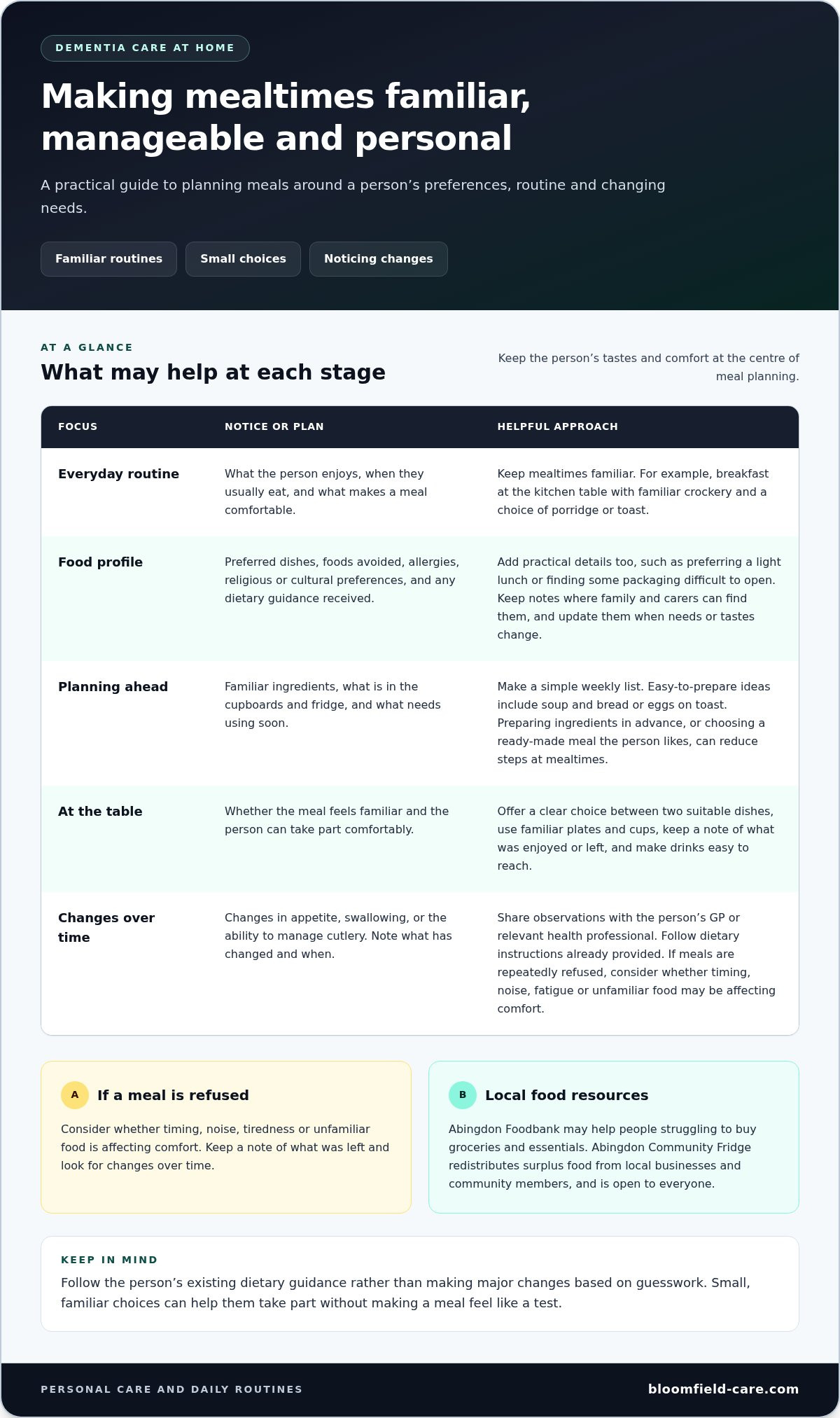
Meals can support familiar routines as well as nourishment. In Abingdon, start by noting what the person enjoys, when they usually eat, and what makes a meal comfortable. For example, a dementia-friendly routine might include breakfast at the kitchen table, with familiar crockery and a choice between porridge and toast. Small choices help the person take part without making the meal feel like a test.
Make a short food profile for anyone helping with meals. Include preferred dishes, foods the person avoids, allergies, religious or cultural preferences, and any dietary guidance they have received. Add practical details, such as whether they prefer a light lunch or find some packaging difficult to open. Keep the notes where family members and carers can find them, and update them if tastes or needs change.
Planning ahead can make meals easier to manage. A simple weekly list could pair familiar ingredients with easy-to-prepare dishes, such as soup and bread or eggs on toast. Check cupboards and the fridge before shopping, then note what needs using soon. If cooking feels tiring, preparing ingredients in advance or choosing a ready-made meal the person likes can reduce the steps involved at mealtimes.
- Offer a clear choice between two suitable dishes.
- Use familiar plates, cups and mealtime routines.
- Keep a note of what was enjoyed and what was left.
- Make sure drinks are easy to reach during the meal.
Changes in appetite, swallowing or the ability to manage cutlery should be taken seriously. Note what has changed and when, then share these observations with the person’s GP or relevant health professional. Follow any dietary instructions already provided rather than making major changes based on guesswork. If a meal is repeatedly refused, consider whether timing, noise, fatigue or unfamiliar food is affecting the person’s comfort.
Access to food can also be part of meal planning. Abingdon Foodbank may help people struggling to buy groceries and essentials. Abingdon Community Fridge redistributes surplus food from local businesses and community members, and is open to everyone. These resources may help households access food, while a written meal plan can make it easier to use ingredients in time.
If you’re considering how support at home could fit around food preparation and personal routines, explore support with daily life at home as one possible next step.
Centre address and contact details
Keep local contact details together before calling about care or support. Write down the person’s name, Abingdon address and preferred contact method. Note the main concern, such as difficulty managing daily routines or needing specialist advice. A short list of questions can help you explain what support you’re seeking and record the next steps.
For Oxford Health NHS Foundation Trust, the telephone number listed for local resources is 01865 901000. Keep this number with the person’s GP details and any relevant appointment information. Before calling, note what has changed and when, such as a new difficulty with washing or getting dressed. This gives you a clear starting point for the conversation.
Age UK’s local resources address is 21-22 St Clements Street, Oxford, OX4 1AB. The listed telephone number is 01865 722898. Keep the address and number together in your contacts, especially if a relative is helping organise information. If you call, explain that you’re seeking guidance connected with an older person in Abingdon.
Oxfordshire County Council is listed at County Hall, New Road, Oxford, OX1 1ND. Its listed contact number is 01865 792422. You can use this contact when asking about council support or the next step for an assessment. Have a brief description ready, such as help needed with meals, personal care or moving around the home.
For someone who wants a listening service, the Silver Line telephone number is 0800 470 8090. Save it under its full name so relatives can find it easily. If the person has difficulty using a telephone, agree who can help place the call and when. Keep any notes about the conversation in the same place as other care details.
Families with children can contact Abingdon Children and Family Centre at Stratton Way, Abingdon, OX14 3RG. The Family Support and Safeguarding Service in Abingdon can be contacted on 01865 897794. These are separate local contacts, so write each organisation’s name beside its number. That reduces confusion when several relatives are sharing arrangements.
A practical contact sheet makes local information easier to use. Include the person’s address, GP contact details, trusted family contacts and the reason for each saved number. Keep a copy beside the telephone and another with family records. For example, label Oxfordshire County Council “care assessment” and Oxford Health NHS Foundation Trust “health support”.
Local contacts can help families find the right route for different concerns. Choose the organisation that best matches the question, then record the date of the call, who you spoke to and any agreed next step. If a relative is making calls, share the notes so everyone has consistent information.
Location in Abingdon
Local support is easier to plan when you know the exact address and postcode. Old Station House is at Old Station Yard, Abingdon, Oxfordshire, OX14 3US. Keep the postcode with appointment details and share it with relatives helping with arrangements. If dementia affects someone’s sense of direction, a written address can make travel plans clearer.
Before arranging a visit, note the person’s starting point and preferred way to travel. Write down the destination postcode, appointment time and a family contact in one plan. If someone feels unsettled in unfamiliar places, agree who will accompany them and what familiar item they might bring. A photograph of the destination or a simple written reminder can also help them prepare.
Old Station House holds a coffee morning on the first Friday of each month, from 10.30am to midday. This named local activity can help families identify a community gathering in Abingdon. If considering attendance, plan the journey together and discuss whether the time and setting suit the person. A familiar companion can help make the outing easier to follow.
Location matters when considering housing and longer-term support. Waiting lists for supported housing across Oxfordshire can be as long as six months, so it may be useful to start conversations early if a move is being considered. Meanwhile, note which parts of daily life are becoming difficult at home, such as preparing to go out or finding familiar rooms.
For someone living with dementia, a familiar home can offer meaningful cues. Keep everyday items in consistent places and make important rooms easy to recognise. For example, a clear label on a bathroom door or a familiar photograph near the entrance may help with orientation. Keep pathways clear of items that could obstruct movement, and review changes as needs evolve.
Families can make a simple location plan without changing the person’s usual routine. Record key places, such as home, a regular meeting point and Old Station House, then note who can accompany the person. Use the same wording for each destination in calendars and reminders. If plans change, update everyone involved to avoid confusion.
For appointments or community visits in Abingdon, allow time to prepare and keep essential details together. A small folder can hold the address, contact number, appointment notes and questions to discuss. If written information helps the person, keep reminders short and put them where they will be seen. These practical steps can support confidence while respecting familiar routines.
Moving to a care home increases the chance of life-changing falls by 50% because of the unfamiliar location. This is worth including in conversations about whether a move is needed and how it might be approached. Families can discuss the risks with the person’s support network, consider what could make a new setting feel more familiar, and ask how changes in surroundings will be managed. Keeping the person involved in decisions and taking time to prepare may help families balance the need for support with the importance of familiar cues.
Medication management and mobility assistance
Medication routines and getting around can both affect daily wellbeing. Start with a current medication list from the person’s GP or pharmacy. Write down each medicine’s name, the instructions provided and who to contact with questions. Keep the list in an agreed place, such as beside the telephone, and update it if the GP or pharmacist changes the plan.
Agree how reminders should work. One person may prefer a written prompt beside breakfast, while another may respond better to a conversation at the usual time. Record whether support means a reminder, help opening packaging or another task, as these are different needs. A carer should follow the instructions given for the person, not decide to change medicines or doses.
If a dose is missed, medicine is refused or instructions seem unclear, note what happened and contact the person’s GP or pharmacist for advice. Don’t guess, double a dose or alter the schedule. A brief record can include the time, the medicine involved, what the person said and who was contacted. This gives the health professional clear details to consider.
Mobility support should begin with the person’s usual movements. Notice which steps feel difficult, such as standing from a favourite chair, reaching the bathroom or getting to the front door. Ask how they prefer to be supported before offering a hand. Respecting that choice helps preserve dignity and makes the task a shared routine, rather than something done to them.
- Keep frequently used items, such as glasses or a walking aid, in an agreed place.
- Move bags, loose items and other obstacles from the route between rooms.
- Allow time for the person to stand, steady themselves and explain what help they want.
- Record new difficulties, such as needing more help to reach the kitchen.
For someone living with dementia, familiar routes and consistent prompts can make everyday movement easier to follow. Use the same simple words for a routine, such as “Let’s walk to the kitchen,” and avoid rushing. If the person seems newly unsteady or reports pain, note what you observe and contact their GP. A sudden change needs prompt attention from an appropriate health professional.
Families can help by sharing one clear account of routines, medicines and movement needs. For example, record which chair the person uses and how they like support when standing. Bring that information to a conversation about care, so the support plan reflects real tasks at home. To discuss support with these daily routines, talk through medication and mobility needs.
When discussing support with Bloomfield Care, families can describe the person’s usual medication reminders, preferred way of moving around and the tasks where help is wanted. Clear examples make it easier to explain what support at home should look like. Share any changes you have noticed, along with the person’s preferences, and keep the conversation focused on practical routines and dignity.
Old Station House’s Admin Assistant, Rachel Green, has 12 years of experience in administration.
Bloomfield Care: Live-in care
Bloomfield Care provides live-in care across the south of England, with support in a person’s own home. It may suit someone who needs regular help with daily routines, including dementia care, while wishing to remain in familiar surroundings. Domiciliary care visits and elderly care can also support people whose needs are better met through planned visits.
When discussing support, describe the tasks that have become difficult, such as getting dressed, preparing meals or moving around safely. Sharing the person’s preferences and usual routine helps make the conversation practical and personal. Bloomfield Care Ltd is registered with the CQC and rated “Good” overall.
For a calm conversation about care options, contact Bloomfield Care or use the contact form.
Take the next step at your own pace
Deciding what support feels right can start with one practical conversation. Before speaking with a care team, note the person’s priorities, the routines they want to keep and where family members could use support. These notes can help focus the discussion on the individual and what matters to them.
For personal care in Abingdon, involve the person receiving support wherever possible. Ask what they value about home and which everyday choices they want to keep making. Their answers can guide a plan that respects their preferences and independence.
Bloomfield Care can discuss the support needed. Contact Bloomfield Care by calling your local office or using the contact form, and take the next step when you feel ready.
Frequently Asked Questions
Looking for dementia home care?
Bloomfield Care offers dementia care at home in Abingdon, tailored to the person. Families can discuss which routines need support and what the individual prefers to manage independently. Support can be combined with domiciliary care or live-in care, depending on the person’s needs. Including a family member in the conversation can help share useful details about communication, familiar routines and changes noticed at home.
What does personal care include in Abingdon, UK?
Personal care in Abingdon can include practical help with everyday routines, tailored to the individual’s needs and preferences. For example, a support plan might explain how the person likes to prepare for the day, what assistance feels comfortable and which tasks they want to do themselves. It can also cover related daily support, such as meal preparation or medication support, so the family has a clear picture of the care being arranged.