Nutritious Meals for Older Adults in Weymouth
A nourishing meal helps when it suits the person eating it. For older adults in Weymouth, planning food and drinks means considering individual dietary needs, personal tastes and familiar routines. Meals can be adapted to make eating and drinking more comfortable and enjoyable, rather than another daily challenge.
It’s understandable to want clear guidance when someone you care about is eating or drinking less or needs different meals. Start by listening to what they enjoy and noticing what makes mealtimes easier.
This guide explains what balanced, appealing meals can look like, how to build drinks into the day and how meal preparation can adapt to changing needs. It also covers how personalised support at home can help an older person maintain familiar routines and enjoy food in a way that respects their choices.
Key Takeaways
- Learn how to shape balanced meals around an older person’s dietary needs, preferences and familiar routines.
- Discover practical ways to make drinking fluids a more comfortable part of the day, including when appetite or routines change.
- Recognise possible signs of dehydration or poor nutrition and understand why changes in eating and drinking deserve attention.
- Explore local routes to nutrition and food support in Weymouth and Dorset, including help with meal planning.
- See how personalised support at home can make it easier to prepare meals that suit someone’s needs and tastes.
Learning about healthy food for older adults
Healthy eating starts with food the person enjoys and can manage comfortably. For older adults’ nutrition and hydration in Weymouth, local food support and guidance can help families plan around wellbeing, access and individual needs.
Dehydration and Malnutrition Signs and Risks
Look for changes from the person’s usual pattern, such as eating less, leaving meals unfinished or drinking less often. A food and drink record can help relatives describe changes to a GP. Note which meals they enjoy, which drinks they accept and when their appetite seems lower. These details can support a more personalised conversation about next steps.
Offer familiar choices instead of treating every meal as a task. Someone who dislikes a large lunch, for example, might prefer a small sandwich and a snack later. Oats, eggs, beans and frozen vegetables can all feature in flexible, familiar dishes. Discuss concerns about weight loss, swallowing or reduced intake with a GP, rather than relying on menu changes alone.
Local Nutrition Support and Assessments
Weymouth and Portland Primary Care Network signposts older people to help with food, meal planning, money advice and learning about healthy food. It is open 8:00 AM to 5:00 PM Monday to Friday, according to Weymouth and Portland Primary Care Network. For concerns about weight loss, possible malnutrition, swallowing problems or dehydration, contact the person’s GP practice to discuss assessment and appropriate NHS support.
For affordable food, Weymouth Foodbank’s collection centre at Weymouth Baptist Church is open Tuesdays and Fridays, 10:30 am to 12:30 pm. Littlemoor’s centre at St Francis’ Church is open Wednesdays, 10:30 am to 1:30 pm. Food parcel collection normally requires a valid referral number. The Weymouth Foodbank Hub accepts donations only, so it is not a parcel collection point.
Ask the Primary Care Network about meal-planning support, then make a flexible weekly list based on preferred dishes. Families in Dorchester can coordinate shopping or cooking with relatives in Weymouth. If money worries make food harder to access, mention this when seeking local money advice. A community meal or club may offer company and activities if available and suitable for the person.
Safe Eating and Drinking with Carer Support
Carers can make mealtimes calmer by offering simple choices, allowing time and maintaining familiar routines. For someone with dementia, a quiet table, recognisable food and gentle reminders may help them focus. Offer drinks in a familiar cup and notice which flavours they accept. These thoughtful steps can support dignity and make mealtimes feel less pressured.
Pay attention to how the person eats and drinks, and record changes to share with family or care services. If coughing, choking or difficulty swallowing occurs, pause and tell the GP. Follow personalised clinical guidance rather than changing food textures yourself. This supports safe assistance while respecting choice, familiar tastes and the person’s role in everyday decisions. Good nutrition and hydration for older adults in Weymouth begin with noticing what works for each individual.
Meal preparation for dietary requirements and tastes
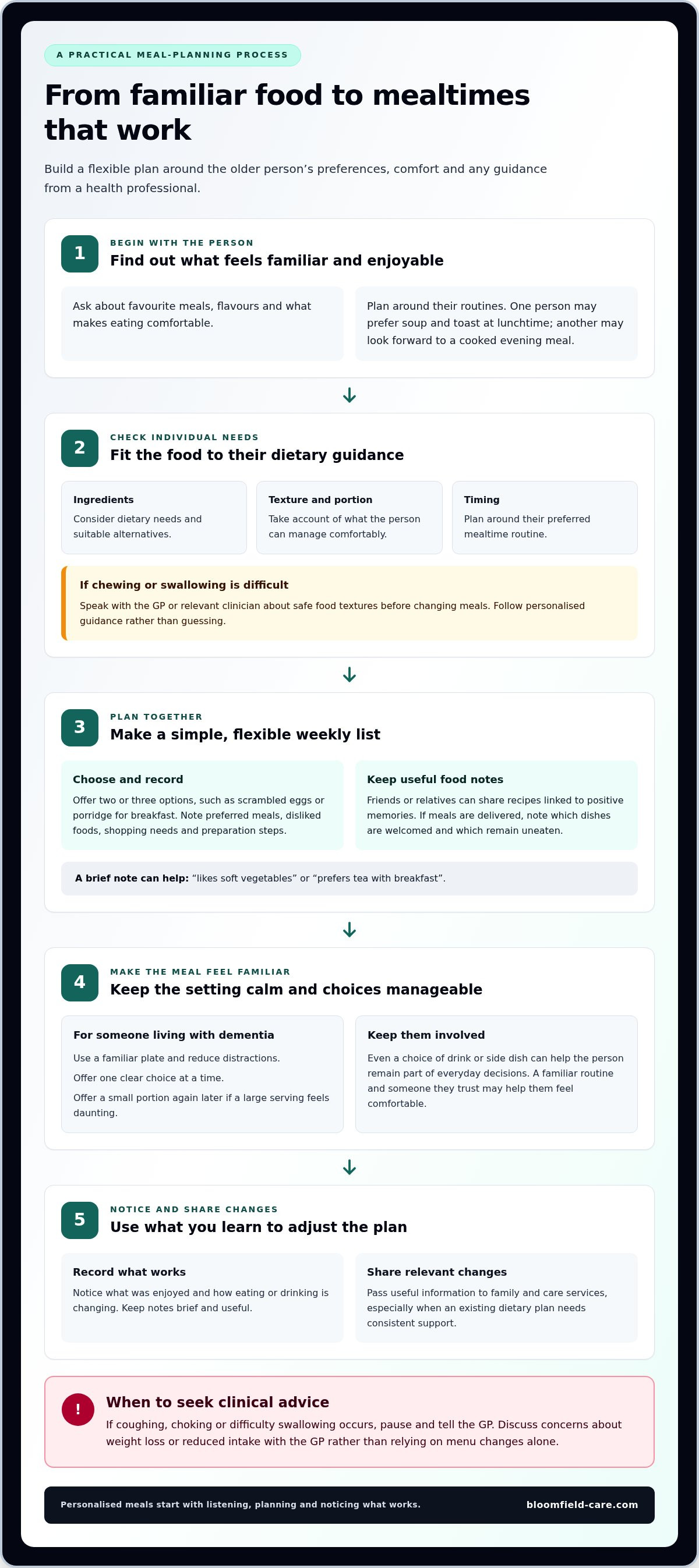
A useful meal plan starts with the person, not a standard menu. Ask which meals feel familiar, what flavours they enjoy and what makes eating comfortable. Someone might prefer soup and toast at lunchtime, while another looks forward to a cooked evening meal. Note those preferences and plan around them, alongside any dietary guidance from a health professional.
Dietary needs can affect ingredients, texture, portion size and timing. For example, someone avoiding a particular ingredient may need suitable alternatives in recipes and snacks. If chewing or swallowing is difficult, speak with the GP or relevant clinician about safe food textures before changing meals. A carer can follow that personalised guidance when preparing and serving food, rather than guessing what might be suitable.
Make meal planning a partnership. Invite the older person to choose between two or three options, such as scrambled eggs or porridge for breakfast. A simple weekly list can record preferred meals, disliked foods, shopping needs and preparation steps. Friends or relatives can contribute recipes linked to positive memories. If meals are delivered, note which dishes are welcomed and which remain uneaten, then adjust future choices.
For someone living with dementia, familiar routines can make mealtimes easier to recognise. Use a familiar plate, reduce distractions and offer one clear choice at a time. A calm visit from someone they trust may help them feel comfortable and connected. Offer small portions again later if a large serving feels daunting. Keep the person involved, even if they can only choose a drink or side dish.
Across Weymouth, a practical routine might involve choosing meals together, checking ingredients, preparing food safely and noting what was enjoyed. Flexible planning also helps when appetite or energy changes from day to day. Keep notes brief and useful, such as “likes soft vegetables” or “prefers tea with breakfast”. Share relevant changes with family and care services, especially when an existing dietary plan needs consistent support.
When dementia affects food choices or familiar routines, dementia care at home can be a useful way to explore personalised support. Discuss the person’s usual meals, preferences and existing guidance, so assistance can respect their choices while helping mealtimes remain part of home life.
How much fluid should older adults drink each day, and how does this change during hot weather or illness?
There isn’t one daily fluid amount that suits every older adult. A suitable target depends on health conditions, medicines, swallowing ability and any fluid limits recommended by a clinician. Ask the person’s GP or nurse what applies, especially if they have been advised to limit drinks. Keep the guidance somewhere visible, such as beside the kettle.
For everyday planning, offer drinks regularly rather than waiting for someone to feel thirsty. A cup with breakfast, a drink alongside lunch and another during an afternoon activity can provide helpful reminders. Keep a preferred drink within reach, using a familiar mug if that feels easier. Water, tea, milk or another usual drink may be suitable, depending on personal guidance and preference.
Food can also contribute fluid. Soup with a meal, yoghurt after lunch or fruit such as melon can add variety to the day. These examples complement drinks but don’t replace an individual fluid plan. If someone avoids a drink because its taste is unfamiliar, offer a preferred alternative and note what they accept.
During hot weather, make drinks easier to remember. Place a fresh drink near the person’s usual chair, offer it during regular visits and take a bottle when going out. Smaller servings offered more often may feel more manageable than a large glass. Keep the room comfortable and choose cool drinks if preferred. Follow any fluid restriction given by their healthcare professional.
Illness can disrupt normal routines. If a cold leaves someone tired, offer drinks with meals and during quiet moments. If they have vomiting, diarrhoea or difficulty keeping drinks down, contact their GP for advice. Don’t try to make up for missed fluids with a large amount at once, particularly if a clinician has set a limit.
A simple record can help relatives spot a change. Note which drink was offered, whether it was finished and any reason for refusal, such as nausea or difficulty holding the cup. Share this information with the GP or nurse if intake falls or the person seems unwell. For someone with swallowing difficulties, follow professional advice about suitable drinks and serving methods.
For someone living with dementia, link drinks to familiar moments, such as a cup of tea after getting dressed. Offer a clear choice between two preferred drinks, then allow time to respond. A calm prompt and an easy-to-reach cup can support independence without pressure. Adjust the routine when weather, illness or appetite changes, while keeping the person’s usual clinical guidance in mind.
What are the signs and risks of dehydration and malnutrition in older people?
Changes in eating and drinking can be easier to notice than their cause. A half-finished cup, untouched lunch or looser-fitting cardigan may prompt a closer look. These observations don’t diagnose dehydration or malnutrition, but they give families useful details to discuss with the person and their GP.
For hydration, notice whether someone drinks less than usual or avoids drinks throughout the day. Also record changes such as a dry mouth, darker urine or unusual tiredness. These signs can have different causes, so consider the whole picture rather than relying on one observation. A drink diary can show what was offered, what was accepted and when the pattern changed.
For nutrition, note meals left unfinished, reduced interest in favourite foods or difficulty managing particular textures. Someone who once enjoyed toast but now avoids it may have a practical problem with chewing, appetite or preparation. Record changes in clothing fit and how much food remains rather than guessing about weight. Share those examples with the GP.
Low food or fluid intake can make everyday wellbeing harder to maintain, particularly if it continues. Reduced energy may affect activities such as getting dressed or preparing a meal. Poor intake can also make it harder to maintain familiar routines. For an older person living alone, missed meals may go unnoticed unless relatives or carers compare notes.
Try these steps to build a clear picture:
- Write down meals, drinks and portions for a few days.
- Record changes in appetite, food preferences or ability to swallow.
- Note when a change began and whether illness or a routine change occurred.
- Share the record with the GP, including questions about medicines or existing dietary guidance.
A sudden or ongoing change deserves attention, especially if the person struggles to swallow, cannot keep drinks down or becomes much less responsive. Contact the GP promptly and explain what has changed and when. If the person has an agreed care plan, follow its instructions and tell the relevant care team about new concerns.
Keep the conversation respectful. Ask whether a meal feels too large, a cup is difficult to hold or a particular food has become unappealing. A small adjustment, such as a smaller serving or an easier-to-reach drink, may reveal what is getting in the way. Keep noting the response and share persistent concerns with the GP so possible causes can be assessed rather than overlooked.
What NHS, council, and community nutrition and hydration support is available for older people in Weymouth and Dorset?
Support may be available through primary care, local food projects and community programmes. In Weymouth, Weymouth and Portland Primary Care Network signposts older people to help with food, meal planning, money advice and learning about healthy food. Families can explain the difficulty, such as managing shopping or planning meals, and ask what local support may fit.
For changes in weight, eating or drinking, contact the person’s GP practice and explain what has changed. A brief record of meals, drinks and concerns can make the conversation more useful. For example, note whether the person is avoiding certain foods, struggling to swallow or finding shopping difficult. The GP can consider the concern and discuss suitable NHS support.
Community food support can help when a household is struggling to access groceries. Weymouth Foodbank’s collection centres include Weymouth Baptist Church and Littlemoor at St Francis’ Church. Emergency food collection normally requires a valid foodbank referral number. The Weymouth Foodbank Hub accepts donations only, so older residents seeking parcels need to use a collection centre and referral route.
For people living with Type 2 diabetes in Mid Dorset, REFOCUS is an information update session. It provides information about diabetes care, diet and treatments. Sessions have groups of up to 15 people, and attendees may bring one family member or friend for support. People can take part as much or as little as they like, and speaking is not required.
There’s no preparation needed for a REFOCUS session, although bringing diabetes medicines can be helpful. If someone cannot attend, they can send someone in their place or reschedule. These details can help families decide whether the session feels manageable. It offers diabetes-related information; individual questions about symptoms or changing treatment should be discussed with the person’s healthcare team.
To make local support easier to use, write down the main need before making contact. This could be help understanding meal planning, accessing food, managing money worries or discussing a health concern. Keep useful notes together, including dietary guidance and foods the person can manage. This gives the person, relative and relevant service a clearer starting point.
If preparing meals or keeping up with food routines has become difficult at home, talk with us about personalised support. A conversation can help families consider what kind of assistance would make everyday meals easier while respecting the older person’s preferences.
Bloomfield Care: Live-in care
Bloomfield Care can help when preparing meals and maintaining familiar routines becomes difficult at home. With live-in care, support is tailored to the person’s dietary requirements, preferred foods and daily habits, and can be combined with other support. This may suit someone with dementia who benefits from familiar meals and gentle help at mealtimes.
Families can discuss what the older person enjoys, any food-related guidance they follow and where practical help would make a difference. The aim is to support everyday life while respecting personal choice and dignity.
To discuss live-in care for an older person in Weymouth, call your local office or use the contact form.
Make mealtimes work for the person
Planning meals and drinks for older adults in Weymouth works best when the next step reflects the person’s priorities. Ask what would make mealtimes easier, then share those preferences with family or anyone supporting them. A clear, personal plan can help maintain familiar routines and choice.
If preparing meals or maintaining everyday routines has become difficult, support at home may help. Bloomfield Care provides domiciliary care, elderly care and live-in care, tailored to the person and combinable to suit their needs. Families can discuss what assistance may suit their circumstances without rushing a decision.
Contact Bloomfield Care about meal support by using the contact form or calling your local office. A thoughtful next step can help make familiar meals a valued part of life at home.
Frequently Asked Questions
What are the recommended daily food and fluid intake guidelines for older adults in the UK?
Older adults should follow an eating and drinking plan suited to their health and circumstances, rather than assume one target fits everyone. Health conditions, medicines, appetite and any clinician-advised fluid limits can affect what is appropriate. For practical planning, include varied foods throughout the day and offer drinks regularly. If someone has a medical condition or prescribed diet, ask their GP or healthcare professional how that guidance applies.
What helps older adults with poor appetite, swallowing difficulties, or special dietary needs eat and drink enough?
Start by identifying the specific difficulty, such as a small appetite, trouble chewing, swallowing concerns or ingredients to avoid. Offer manageable portions and familiar options, and note what the person accepts. For swallowing problems, seek professional advice before changing food texture or drink consistency. A GP can discuss assessment and suitable guidance, while relatives can share clear examples of difficulties during meals.
Are Meals on Wheels or home-delivered meals available for older adults in Weymouth, and what do they cost?
Weymouth and Portland Primary Care Network can signpost older people to local food and meal-planning support. Ask about current home-delivered meal services and what each offers, as availability and charges depend on the service and meal arrangements. Food parcels are separate from prepared meals. Weymouth Foodbank normally requires a valid referral number for emergency food collection.
Where can older people in Weymouth find community meals, lunch clubs, or food support?
For food support, Weymouth Foodbank has parcel collection centres at Weymouth Baptist Church and Littlemoor at St Francis’ Church. Its Hub accepts donations only, not parcel collections. For community meals or lunch clubs, ask Weymouth and Portland Primary Care Network about local signposting. Clarify whether an option provides a sit-down meal, food to take home or practical meal-planning help.
What financial assistance or benefits can help older people in Weymouth pay for meals and food?
Local money advice and a benefits check can help identify support suited to someone’s circumstances. According to Age UK North, South & West Dorset, the organisation has helped secure almost £5 million in welfare benefits locally over three years. From 1 April 2026, the Crisis and Resilience Fund replaced the Household Support Fund and Discretionary Housing Payments in the UK. Ask about current eligibility and application routes before budgeting around support.
For help considering meal support at home, contact Bloomfield Care by calling your local office or using the contact form.