Mikor lehet segítségre szüksége egy idős szülőnek?
Needing help with personal care, meals, medication or getting around doesn’t automatically mean an older parent needs to leave home or go to hospital. Signs an older parent needs help at home include changes that make everyday routines difficult, unsafe or increasingly dependent on family support. If there’s a sudden health problem or immediate danger, seek urgent medical help. Otherwise, start by noticing which tasks are becoming harder to manage.
It’s understandable to hope family support will be enough while worrying about missing an important change. This guide explains what to look for in personal hygiene, eating and drinking, medication, mobility, memory and social contact, and how to decide whether support at home could help. It also covers how to discuss concerns together and recognise when support may need to change, so you can take the next step with care and respect for your parent’s independence.
Key Takeaways
- Notice whether everyday tasks such as washing, preparing meals or getting around are becoming harder or less safe.
- Look for changes in routine, social contact and confidence, not just a single difficult day.
- Keep track of falls, medication difficulties and changes in eating or drinking to help you discuss concerns clearly.
- Consider whether the home layout supports safe movement and whether family members can share care tasks sustainably.
- Use your observations to decide what support could help your parent feel safer while preserving their independence.
1. Signs that an older parent needs help with daily self-care
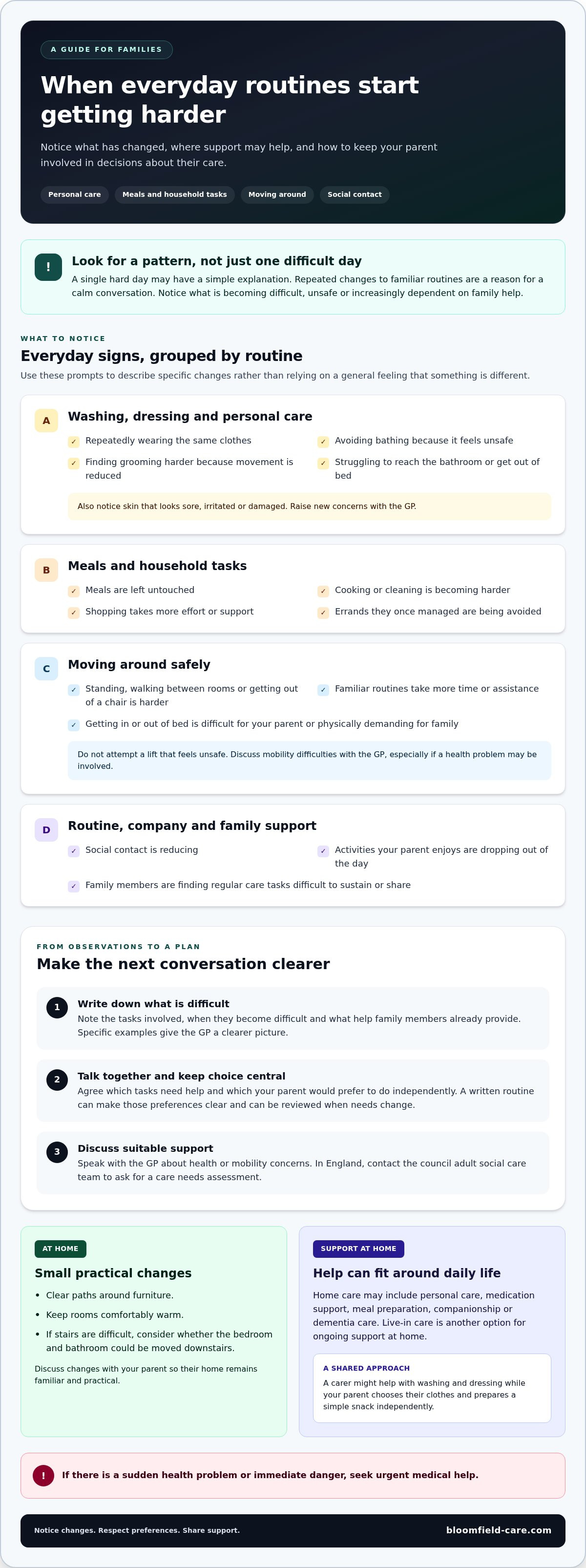
Changes in washing, dressing, cooking, cleaning, shopping or moving around can show that daily self-care is becoming harder. Look for specific signs: your parent may repeatedly wear the same clothes, leave meals untouched, struggle to reach the bathroom or avoid errands they once managed. One difficult day may have a simple explanation, but a recurring pattern deserves a calm conversation.
Notice what happens during familiar routines, such as getting up, washing and preparing for bed. Your parent may need more time, avoid bathing because it feels unsafe, or struggle with grooming because of reduced movement. If they need help getting out of bed, transfers can be physically demanding for both of you. Don’t attempt a lift that feels unsafe. Discuss the difficulty with their GP, especially if a health problem or mobility limitation is involved.
To arrange a local authority care needs assessment in England, contact your parent’s council adult social care team and ask for an assessment. Explain which daily tasks have become difficult, what support family members provide and where safety is a concern.
Simple changes at home may reduce risks: clear paths around furniture, keep rooms comfortably warm, and consider moving the bedroom and bathroom downstairs if stairs have become difficult. Discuss changes with your parent to keep their familiar home comfortable and practical.
During washing, notice any areas of your parent’s skin that look sore, irritated or damaged. Reduced movement, difficulty washing or problems managing continence can make personal care more challenging. Handle sensitive conversations privately and respectfully. If you notice a skin concern or a new difficulty, record what you’ve observed and raise it with their GP.
More support may be needed when several everyday tasks require regular help, or when your parent’s mobility or health needs exceed what family can safely provide. Write down the tasks involved, such as washing, meals, shopping and getting in or out of bed. This gives the GP a clearer picture and helps the family discuss suitable care options.
Family members don’t have to manage every task alone. Share specific responsibilities with relatives or friends, such as shopping or meal preparation, and discuss social care options with the GP if support is needed. If care at home cannot meet a person’s needs, for example when all-day supervision is unavailable, a residential care home may be an alternative. Involve your parent in that discussion, and treat their wishes as central to the decision.
2. Support with daily activities and companionship
Home care for older people in the UK can include personal care, medication support, meal preparation, companionship and dementia care. Live-in care is another option when someone needs ongoing support at home. The right combination depends on the person’s routine, preferences and the tasks they find difficult.
Agree on support together, rather than taking over every task. For example, a carer might help your parent wash and dress, while your parent chooses their clothes and prepares a simple snack independently. A written routine can clarify which tasks need assistance and which your parent prefers to do alone. Review it when needs or circumstances change.
Personal hygiene and continence need particular sensitivity. Your parent may need practical help using the toilet, changing clothes or washing afterwards, while still valuing privacy and choice. Ask how they prefer to be supported, explain each step, and keep towels and clean clothes close at hand. If they’re worried about asking for help, agree on a discreet way to signal when support is needed.
Companionship means more than having someone in the room. A shared cup of tea, a conversation about family photographs, a card game or a short walk can give structure to the day. Reduced social contact can affect mood and increase loneliness. Notice what your parent enjoys, then build those activities into a familiar routine rather than relying only on occasional visits.
Relatives and friends can share care responsibilities according to their time and strengths. One person might organise shopping, another could prepare meals, and someone else could visit for a conversation. A shared calendar helps everyone see what’s been covered and notice when the arrangement is becoming difficult to sustain.
Ask the local council’s adult social care team what support services may be available and how an assessment works. If finances could affect access to council support, ask how a financial assessment applies to your parent’s circumstances. Benefits and care funding are separate questions, so ask the relevant public service about possible entitlement and what information it needs. Don’t assume that age alone determines eligibility.
Family carers need time to rest, too. Agree on a practical handover with a relative or friend, such as covering a regular shopping trip or sitting with your parent during an appointment. If you need further support, discuss social care options with your parent’s GP. A suitable care service can help with daily tasks or companionship while respecting your parent’s preferences, dignity and independence.
3. Common health and mobility needs
A change in physical health can affect several parts of daily life. For example, pain or reduced strength may make standing, walking between rooms or getting in and out of a chair harder. Notice which tasks your parent now avoids and whether they need more support than before.
For someone aged 70-80, a decline in health may also affect mental abilities. Your parent might seem less able to follow a familiar routine or make decisions about simple tasks. Write down when you notice changes and what was happening, then share those details with their GP. Clear examples can help explain the changes you’ve seen.
Mobility changes can also affect confidence. A parent who hesitates before walking to the kitchen may worry about losing their balance, even if they haven’t fallen. Ask which movements feel difficult, and observe how they use chairs, doorways and stairs. Avoid rushing them or pulling them by the arms, which can make an uncertain movement feel less safe.
Falls deserve careful attention because they can affect how confidently someone moves around at home. Record what happened, where your parent fell and whether they were hurt. If they’re injured or you’re concerned about their immediate wellbeing, seek appropriate medical help. If walking or balance changes repeatedly, contact their GP and describe the pattern rather than dismissing it as simply getting older.
Spending long periods in bed can raise other concerns. Someone who cannot change position may be more prone to skin damage, ulcers and wounds. Notice whether your parent can adjust their position independently and whether they appear uncomfortable staying in one posture. If they cannot move safely, ask their treating clinician for guidance on suitable support and pressure sore prevention.
Don’t take on transfers that feel unsafe. Helping someone rise from bed or move between a bed and chair can strain a relative’s back and joints. Explain the specific movement that causes difficulty to the GP or care professional. Their advice can help identify whether your parent needs an assessment, equipment or support with these tasks.
Keep a simple record to make the next conversation more useful. Note changes in walking, transfers, balance, time spent in bed and any new difficulty with familiar activities. Include your parent’s own account, such as feeling tired after walking across a room. This helps family and healthcare professionals understand the person’s needs, not just which task has become harder.
When several physical or mental changes appear together, consider how they affect the whole day. A relative who struggles to move safely may also find it harder to reach meals, the bathroom or family visits. Share your observations with your parent and GP, then discuss support that could preserve independence while addressing difficult tasks.
4. Personal hygiene, meals, medication and mobility
Changes in memory, movement, personal hygiene or eating can indicate that everyday support is needed. Examples include forgetting familiar steps, struggling to wash, leaving meals uneaten or finding it harder to walk safely. Notice whether these changes recur, and record specific examples to discuss with your parent and GP.
Ageing can make skin more fragile, so washing may need a gentler routine. Urine and faeces can irritate skin, particularly when someone has incontinence. Offer privacy, use gentle cleansing, and help protect the skin from further irritation. A simple skin-care approach has three steps: cleansing, restoring and protecting. If pressure sores are a concern, ask the treating doctor for advice.
Meals can reveal changes in appetite, routine or ability. Notice whether food is regularly left untouched or your parent struggles to prepare and reach meals. Encourage them to drink when thirsty. Drinking too little to avoid frequent toilet visits can lead to concentrated urine and health risks, so discuss concerns about drinking or toileting with their GP.
Medication routines can become difficult if someone forgets familiar tasks or seems unsure what they’ve taken. Note the practical problem, such as tablets left in their usual place, and raise it with the GP or treating clinician. Don’t alter or stop prescribed medicines yourself. A clear account helps the healthcare professional understand what has changed.
For mobility, look at how your parent moves between a chair, bed and bathroom. If they can move with some assistance, support them to do so rather than taking over completely. Regular exercise can help maintain muscle health and may improve mood, but first check that it can be done safely at home. Avoid movements that feel unsafe or cause distress.
Falls are another reason to review everyday support. Two or three falls in recent months are a warning sign when considering whether someone can live safely at home alone. Record where each fall happened and what your parent was doing. Share the details with their GP, especially if walking or balance has also changed.
Changes in memory and orientation matter, too. If problems occur regularly, such as confusion about familiar routines or getting lost at home, consult a specialist. Describe what you’ve observed, when it happens and how it affects daily life. This gives your family and healthcare professionals a clearer basis for discussing suitable support.
5. How can I assess an older parent's ability to manage daily activities safely?
Assess your parent’s usual activities rather than judging by one difficult moment. Observe how they manage getting dressed, making a drink, using the bathroom, answering the door and moving between rooms. Note what they do independently, where they pause, and whether they need prompting or hands-on help. Ask how each task feels to them, too.
Consider your parent’s daily routine as you look around the home. Are paths around furniture clear? Can they reach the items they use most, such as a kettle, phone or walking aid? If stairs have become difficult, consider whether a bedroom and bathroom downstairs would better meet their needs. Keep rooms comfortably warm and discuss changes together.
Use a written record to make patterns easier to discuss. For each task, note what happened, what help was needed and whether your parent felt safe. For example, record that they can make breakfast but struggle to carry a hot drink from the kitchen. Practical details are more useful than a general note that they seem less able.
Consider every step involved in a task. Someone may manage washing at the sink but struggle to reach towels, turn taps or dry themselves safely. Placing clothes and toiletries within easy reach may help preserve independence. If the task still needs support, describe the exact difficulty to your parent’s GP or during a care needs assessment.
Notice whether your parent can manage a change in routine. For example, if a familiar item has moved, can they find an alternative? If an appointment is written on a calendar, can they remember what to take? Regular difficulty with memory or orientation deserves attention, especially when it affects medicines, meals or finding the bathroom.
Ask your parent which tasks they want to keep doing and where assistance would feel welcome. A family member might prepare ingredients while your parent chooses and assembles lunch. Someone else may prefer help getting dressed but want privacy when washing. These choices shape support around ability and dignity, rather than replacing tasks your parent can still manage.
Share your observations with relatives who visit at different times, then compare concrete examples rather than impressions. If you’re unsure what support could fit the tasks you’ve identified, talk through your family’s care needs. A clear account of daily routines, home layout and your parent’s preferences can help make the next conversation more useful.
Bloomfield Care: Live-in care
Bloomfield Care can help families explore home support when an older person’s daily needs become harder to manage alone. Live-in care provides a carer’s presence and support at home for higher-dependency needs, while home care visits can help with individual tasks. Elderly care and dementia care are tailored to the person’s routines, preferences and support needs, and can be combined.
Live-in care may be worth discussing when frequent assistance is needed throughout the day, or when familiar surroundings are especially important. For support with particular routines, home care visits may be a better fit. A free assessment can help your family discuss the care required; costs depend on those needs.
To talk through support for your family, contact Bloomfield Care or visit bloomfield-care.com.
Start with one thoughtful conversation
Choosing support doesn’t have to begin with a major decision. Start by asking your parent what would make an ordinary day easier, then listen without rushing to solve everything at once. A calm conversation can reveal what matters most, whether that’s privacy, keeping familiar routines or having someone nearby for a particular part of the day.
Signs an older parent needs help at home can be difficult to raise, especially when you want to protect their independence. Agree on one practical next step together, such as writing down tasks they’d welcome help with or discussing concerns with their GP. Include your parent in decisions wherever possible, and revisit the conversation as their wishes or needs change.
If you’re ready to talk through possible support, contact Bloomfield Care. A conversation can help you consider a thoughtful way forward while keeping your parent’s comfort and choices at the centre.
Frequently Asked Questions
Hospital instead of family?
A hospital is for urgent assessment or treatment, while family support helps with everyday needs at home. A sudden, serious change in your parent’s health needs prompt medical attention, rather than household help alone. For ongoing difficulties, such as being unable to manage familiar routines, discuss suitable support with your parent and GP. The key distinction is whether they need medical care now or practical help with daily living.
Can you buy peace of mind?
Support can ease some practical worries, but it can’t remove every uncertainty. Agree how family members will share updates, who your parent wants contacted, and what to do if plans change. For example, a relative could check in after an appointment while another helps organise paperwork. A written plan can clarify everyone’s role and make your parent’s preferences clear.
What signs show an elderly parent may need help at home?
Signs an older parent may need help at home include repeated difficulty with tasks they previously managed or relying on others to resolve everyday problems. For example, unopened post may pile up, appointments may be missed, or your parent may stop answering calls because using the phone feels difficult. Note when these changes happen and ask whether your parent has noticed them, too. Raise a new or sudden change promptly with their GP.
How can I talk to an elderly parent about accepting help at home?
Choose a calm moment and begin with one specific concern, not a list of everything you think has changed. You could say, “I noticed the post is becoming difficult to manage. What would make it easier?” Listen before suggesting options. Offer a small, reversible first step, such as help with one task, and let your parent decide who should join the conversation.
When should an older person’s need for help be treated as an urgent medical or safeguarding concern?
Seek urgent medical help if your parent becomes suddenly very unwell, is seriously injured or faces immediate danger. A safeguarding concern arises when you believe someone may be experiencing abuse, neglect or serious harm. If there’s no immediate danger but you’re worried about their safety or care, contact the council’s adult social care team or their GP. Share clear examples, including what happened and when.
To discuss support for your family, call your local Bloomfield Care office or use the contact form.