Live-in Care in Newbury: A Guide to Support at Home
What if support at home could fit around familiar routines rather than replace them? If you’re considering live-in care Newbury for someone you love, it’s natural to wonder what each day would look like and whether they could continue enjoying the comfort and independence of home.
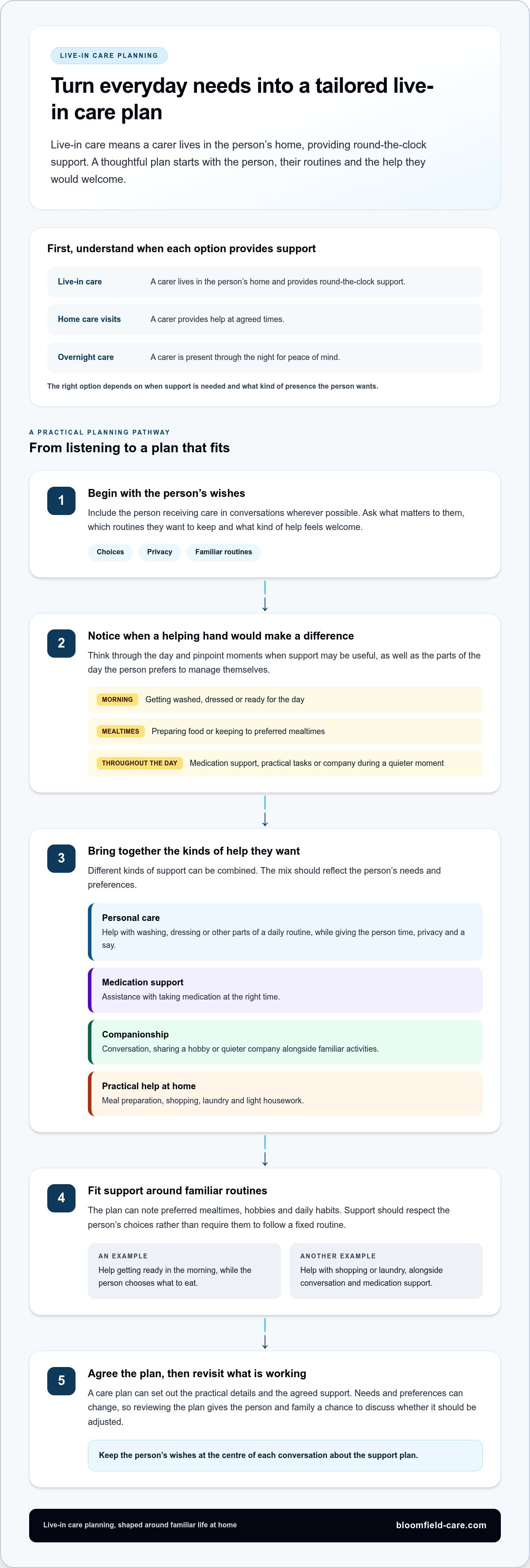
Live-in care is provided by a carer who lives in the person’s home, offering round-the-clock support. Home care visits provide help at agreed times, while overnight care means a carer is present through the night for peace of mind. The right option depends on when support is needed and what the person wants.
This guide explains what live-in care can involve, how it compares with other home-based support and how Bloomfield Care can help Newbury families take a first step. Each service begins with a free, no-obligation home visit and a written care plan agreed with the person receiving support. Carers wear smart polo shirts, not clinical tunics, and every carer carries photo ID. Out-of-hours support is available every day of the year.
Key Takeaways
- Live-in care Newbury can be tailored to a person’s familiar routines, preferences and support needs.
- Consider what help would make daily life easier, from personal care and practical tasks to companionship and medication support.
- Compare live-in care, home care visits and overnight care by looking at when support is needed and how much presence feels right.
- Include the person receiving care in conversations wherever possible, and let their wishes guide the next steps.
- Bloomfield Care creates tailored support plans that can bring different kinds of help together.
What does live-in care in Newbury involve?
Arranging more support for someone close can feel like a significant decision. You may want to make everyday life easier while protecting the person’s choices and connection to home.
Live-in care is support from a carer who lives in the person’s home, providing round-the-clock support while they continue living in familiar surroundings. The day-to-day arrangement should reflect the individual rather than require them to follow a fixed routine. For families considering live-in care Newbury, it helps to discuss what support is wanted and when.
How live-in care can support everyday life
Support can include personal care, such as help with washing or getting dressed, as well as companionship and medication support. A carer may also help around the home with meal preparation, shopping, laundry and light housework. The mix depends on what the person wants and needs help with.
A care plan can set out practical details such as preferred mealtimes, hobbies and daily habits. Someone might value help getting ready in the morning but want to choose what to eat or how to spend the afternoon. Their preferences can guide the support and help them stay involved in everyday decisions.
Why familiar surroundings may matter
Home is more than a place to receive care. Favourite belongings, familiar rooms and established routines can help someone feel settled and in control. With a carer living in the home, support can be shaped around those details, from keeping to a familiar morning routine to sharing conversation over a meal.
For some people, live-in care may be an alternative to moving into a care home. Support can be organised around the person’s home and preferences, although some aspects of daily life may change. Families can also explore general information about a live-in caregiver to understand the broad idea of care provided in someone’s residence.
Live-in care supports daily life, but it cannot guarantee better health or complete independence. The person’s needs, wishes and home life should inform the plan. It can help to talk together about which parts of the day feel difficult and which routines are important to keep.
Bloomfield Care’s support is tailored to the person and can combine personal care, companionship, dementia care, medication support and help around the home. Carers are trained and DBS-checked. Carers wear smart polo shirts, not clinical tunics, and every carer carries photo ID. Out-of-hours support is available every day of the year.
What support can live-in care in Newbury include?
Support is most useful when it fits naturally into the person’s day. Start by considering when assistance would make a difference, such as getting ready in the morning, preparing a meal or having company during a quieter part of the afternoon. With live-in care Newbury, different kinds of support can be combined around the person’s needs and preferences.
A tailored care plan can bring together personal care, companionship, medication support and practical help at home, shaped around the person’s routines and preferences.
For example, someone might want help getting dressed but prefer to make their own breakfast. Another person may value help with shopping and laundry alongside friendly conversation and assistance with taking medication at the right time. Live-in care provides round-the-clock support, while the help offered should still respect the person’s choices and privacy.
Personal care, medication support and companionship
Personal care may include help with washing, dressing or other parts of a daily routine. A considerate approach gives the person time, privacy and a say in how assistance is provided. Medication support means assistance with taking medication at the right time. Companionship might mean sharing a conversation, enjoying a hobby together or spending time alongside someone as they go about familiar activities.
The kind of company that feels welcome differs from person to person. Some may enjoy chatting over a cup of tea, while others prefer quieter, more discreet support. Their preferences can guide how companionship fits into the day, so it feels personal rather than imposed.
Help around the home and changing needs
Practical help can ease everyday jobs without taking over the household. This may include preparing meals, light housework, laundry or shopping. The right combination depends on the person: one may need help planning and preparing meals, while another may value support with washing and household tasks.
Needs and preferences can change over time. Reviewing the agreed support gives the person and family a chance to discuss what is working and whether the plan should be adjusted. Changes should reflect the person’s wishes and support needs, rather than assume the same arrangement will suit indefinitely.
Care can bring different kinds of help together, rather than requiring a person to choose just one. Bloomfield Care creates support around individual routines and needs. For general information about care regulation in England, families can visit the Care Quality Commission (CQC) standards website.
If you’d like to talk through what a tailored plan could include, explore live-in care with Bloomfield Care.
Comparing live-in, visiting, and overnight care
These options differ mainly in when a carer is present and how support fits into the day or night. Compare them by considering when help is needed, which routines matter most and what kind of presence the person would welcome.
| Type of support | Presence and timing | How it may fit |
|---|---|---|
| Live-in care | A carer lives in the person’s home and provides round-the-clock support. | Support can be shaped around daily routines and needs at different times. |
| Home care visits | A carer comes to the home at agreed times. | Visits can focus on the support agreed for those times. |
| Overnight care | A carer is present through the night for peace of mind. | It focuses on support during the night, rather than round-the-clock support. |
Live-in care and home care visits
The main difference is whether a carer lives in the home or provides support through visits. Home care visits can help with agreed parts of the day, while live-in care provides round-the-clock support at home. Visiting care isn’t automatically unsuitable for someone with particular needs. The important question is how the timing and type of support fit their circumstances, routines and preferences.
For example, a person may need help with a morning routine or practical tasks at agreed times. Another may benefit from having support at different points throughout the day and night. The distinction is the pattern of presence, not a judgement about what a person can or can’t manage.
Live-in care and overnight care
Overnight care means a carer is present through the night for peace of mind. It is distinct from live-in care, which provides round-the-clock support. Consider whether reassurance or practical help is wanted mainly at night, or during the day as well.
These services don’t have to be treated as entirely separate choices. Support can be tailored and services can be combined to reflect the person’s situation. For families considering live-in care Newbury, a useful starting point is to note when help is needed, which routines the person wants to keep and what they would prefer support to look like. Those details can guide a plan that respects their wishes and fits life at home.
How can a Newbury family decide whether live-in care may fit?
There isn’t one sign or checklist that determines whether live-in care is right. Start with the person: what matters to them, where they would welcome help and how they feel about having a carer in their home. Where possible, include them in the conversation and give their views time and attention.
Start with the person’s routines and preferences
Think through an ordinary day. Which activities does your family member enjoy doing independently? Are there parts of the morning, mealtimes or evenings where practical help or personal care could make things easier? Consider whether companionship would be welcome and what kind of company feels comfortable.
Try asking open questions, such as, “Which parts of the day feel hardest at the moment?” or “What would you most like to keep doing for yourself?” Listen without rushing to solve everything at once. The aim is to understand what the person wants, not to make decisions about them without their involvement.
Talk through the home and support needs
Gather a clear picture of what support is needed now and what has changed. Note the practical details that affect daily life, then consider how support at home could fit around familiar surroundings and routines.
- Which everyday activities are becoming difficult or taking more effort?
- What support is already in place, and where are there gaps?
- Which routines, belongings or parts of home life are especially important to the person?
- How do they feel about a carer living in their home?
These prompts aren’t a pass-or-fail test. They can make a family discussion more specific and help everyone explain their hopes or concerns. If family members see things differently, keep the person’s wishes central and focus on what would help them feel respected and supported at home.
A home visit can turn these conversations into a written, person-centred care plan. Bloomfield Care begins each service with a free, no-obligation home visit, then agrees the written plan with the person receiving care. The visit is a chance to discuss routines, preferences and support needs in the setting where care would take place.
Considering live-in care Newbury doesn’t mean you need every answer before taking a first step. Discussing the option can clarify what support might look like and whether it reflects the person’s wishes. Explore Bloomfield Care’s live-in care to learn more.
Bloomfield Care: Exploring live-in care in Newbury
Taking the first step can feel easier when you know what to expect. Bloomfield Care gives the person and their family time to talk through support at home, ask questions and agree a plan that reflects the person’s needs and preferences.
From the first conversation to an agreed care plan
The process begins with an initial phone call, which usually takes 10-15 minutes. It’s a chance to explain what has prompted the conversation and where support may help. You don’t need to have everything worked out before you call. The person receiving care can take part wherever possible.
Next comes a free, no-obligation home visit, which usually takes about an hour. Meeting at home allows the conversation to centre on the person’s surroundings, routines and preferences. You can talk through what they would like to continue doing independently, where they welcome help and what matters most in daily life.
Following the visit, a written care plan is sent within two-to-three days. It’s agreed with the client and tailored to the person, setting out the support discussed rather than imposing a standard arrangement. This gives everyone a clear understanding of the planned care and the person’s wishes.
Meeting carers and reviewing support
The client usually meets carers a day or two before care begins. This gives the person and family an opportunity to meet the carers who will support them at home. Bloomfield Care’s carers are trained and DBS-checked. Carers wear smart polo shirts, not clinical tunics, and every carer carries photo ID.
Support is reviewed after it begins. The first review is usually within the first two weeks, then regularly thereafter. Reviews are an opportunity to discuss how the agreed plan is working in everyday life and whether the person’s needs or preferences have changed. The person’s voice remains central.
Each area has a named manager you can reach directly, not a call centre hundreds of miles away. Out-of-hours support is available every day of the year. Bloomfield Care’s local footprint includes Weymouth, Dorchester, Ferndown, Wimborne, Christchurch, Bournemouth, Poole, Wallingford, Henley-on-Thames, Oxford, Abingdon, Newbury and Thatcham. Live-in care is provided across the south of England.
Live-in care provides round-the-clock support at home, with the plan shaped around the individual rather than a fixed template. If you’re considering live-in care Newbury, call your local office or use the contact form to discuss a free, no-obligation home visit.
Take a gentle first step towards support at home
Choosing support doesn’t mean making every decision at once. A useful next step may be to talk together about what the person wants life at home to look like and what kind of help would feel comfortable. Their wishes can guide your family’s conversation.
If you’re exploring live-in care Newbury, Bloomfield Care can help you discuss the options and consider what may suit your family member.
Call your local Bloomfield Care office or use the contact form to discuss live-in care in Newbury.
Frequently Asked Questions
What is live-in care in Newbury?
Live-in care in Newbury is home-based support from a carer who lives in the person’s home. It provides round-the-clock support, with the agreed care plan setting out help according to the individual’s needs and preferences. For example, the plan might reflect how someone likes their day to begin or when they welcome assistance, rather than assuming the same routine suits everyone.
Can live-in care support someone with dementia in Newbury?
Yes. Bloomfield Care provides dementia care tailored to the person, rather than relying on a standard routine. A written care plan can reflect familiar habits, preferred activities and the day-to-day assistance agreed with the person. For instance, they may prefer a familiar order for getting ready. Dementia care can be combined with other agreed support to suit the person’s circumstances.
Can live-in care be combined with companionship or personal care?
Yes. Support can be tailored and combined to reflect what the person wants help with. Their agreed written care plan might include personal care, companionship, medication support or help around the home, but not everyone will need each type. One person may value support with a morning routine and company over lunch, while another may prefer a different mix.
What happens during the first Bloomfield Care home visit?
The first home visit is free, carries no obligation and usually takes about an hour. It’s a chance to talk in the person’s own surroundings about their daily routines, preferences and support needs. Bloomfield Care sends a written care plan within two-to-three days of the visit and agrees it with the client. The person can discuss the proposed support before it’s settled.
When will a client meet their carers before live-in care begins?
Clients usually meet their carers a day or two before care begins. This gives the person and family an opportunity to become acquainted before support starts. The written care plan guides support around the individual’s needs and preferences.
What does Bloomfield Care’s CQC rating mean for Newbury families?
Bloomfield Care is rated “Good” overall by the Care Quality Commission (CQC), as of 30 April 2022. This rating is a regulatory quality reference that can help families understand the provider’s assessed standard of care. It isn’t a guarantee of an individual experience or outcome.
Is overnight care the same as live-in care?
No. Overnight care is a separate service, with a carer present through the night for peace of mind. Live-in care provides round-the-clock support in the person’s home. The distinction is the period of support each service focuses on, rather than a fixed set of tasks. Services can be combined where appropriate, based on the person’s circumstances and agreed support.
To discuss support at home, call your local office or use the contact form.