Home Carer Responsibilities in Thatcham: What Support Can Include
What if accepting help at home could protect independence, rather than take it away? It’s understandable to wonder what a carer can actually do, and whether support means changing familiar routines. For families considering home care options in Thatcham, the answer starts with the person: what matters to them, what they can manage and where a little help would make daily life easier.
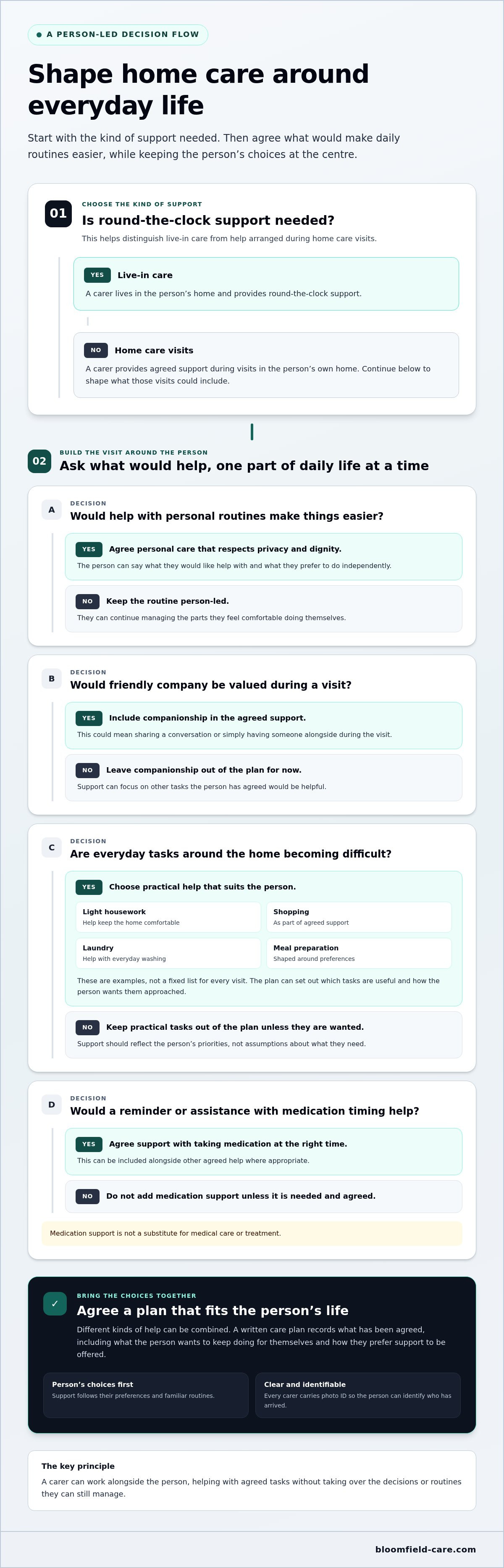
Home care visits can support practical tasks such as personal care, companionship, help around the home and assistance with taking medication at the right time. Support is tailored to the person and services can be combined, so visits can fit around their preferences and routines. This is different from live-in care, where a carer lives in the person’s home and provides round-the-clock support.
This article explains the everyday help a home carer can provide, how support can be shaped without taking choice away, and how to begin a conversation about care in Thatcham. Bloomfield Care starts with a free, no-obligation home visit and a written care plan agreed with the person, so everyone can understand what support will involve.
Key Takeaways
- Understand the otthoni gondozó feladatai Thatcham may involve, from personal care and companionship to practical help at home.
- See how support can fit around familiar routines, be tailored to the person and combine different types of help.
- Compare home care visits, overnight care and live-in care to understand how each type of support differs.
- Find out what to expect at the start, including a 10-15 minute phone call and a home visit of about an hour.
- Learn how local support is managed, and why every carer carries photo ID.
What does a home carer do in Thatcham?
A home carer provides agreed support during visits to a person’s own home. The role is to help with parts of everyday life that have become difficult, while respecting the person’s choices, privacy and familiar routines. For families thinking about otthoni gondozó feladatai Thatcham, the central point is that a carer offers practical assistance, not a reason to take over decisions the person can still make for themselves.
Support might help someone get ready for the day, keep to a familiar routine or feel less alone. The person remains involved in deciding what happens and how help is offered. A carer can work alongside them, rather than assume every task needs to be done on their behalf. This partnership matters: receiving help at home need not mean giving up control of daily life.
The term “home care” covers different forms of support in the UK. The Home care in the United Kingdom overview provides wider context, but what a visiting carer does in practice depends on the individual’s agreed needs and preferences. At Bloomfield Care, support is tailored to the person, and services can be combined to fit their circumstances.
How home care visits support everyday independence
Visits are arranged around agreed support in the person’s home and routines. A carer may assist with a task while leaving the person to do the parts they feel comfortable managing. This can make help feel personal and less disruptive. The aim is not to impose a new routine, but to support the person’s familiar way of doing things wherever possible.
Example: Someone who finds getting ready tiring might prefer to choose their clothes and wash independently, with a carer nearby to help with a step they find difficult. The person can say what they would like help with and what they would rather do themselves. It’s an example of support that follows the person’s choices, rather than replacing them.
Why duties differ from person to person
People have different abilities, preferences and routines, so there isn’t one standard task list for every home care visit. A written care plan records the support agreed with the person, helping everyone understand what visits are intended to include. It should reflect the person’s priorities, not assumptions about what someone of a certain age or with a particular condition must need.
Depending on the person’s circumstances, support may bring together different kinds of assistance. For example, personal care may be combined with companionship or practical help around the home. Support may also include dementia care, respite care or help with taking medication at the right time. These options are tailored to the individual, not tasks automatically included in every visit. Every carer carries photo ID, so the person can identify who has arrived at their home.
Before visits begin, it can help to talk through what the person already manages, what feels challenging and which routines they want to preserve. Clear preferences, such as when they like to get up or how they prefer help to be offered, give the care plan useful detail. That conversation keeps support grounded in the person’s daily life and their say in it.
Personal care and everyday help a Thatcham home carer may provide
Home care visits can cover different parts of daily life, from personal care and companionship to practical help around the home. The right mix depends on the person’s needs, preferences and agreed care plan. Support is tailored to the individual, and services can be combined, so help can focus on what matters most rather than follow the same task list for everyone.
Personal care, companionship, and medication support
Personal care is offered with respect for privacy and dignity. A carer can provide agreed help with personal routines, taking time to listen to how the person prefers to be supported. The person’s choices remain central: they can explain what they would like help with and what they would rather do independently.
Companionship is about friendly support and spending time together. That might mean sharing a conversation or simply having someone alongside during a visit. For a person who lives alone, companionship can be an important part of a tailored care plan, alongside practical support.
Medication support means assistance with taking medication at the right time. It can be included with other agreed support where appropriate. It isn’t a substitute for medical care or treatment. For general information about care and regulation in England, the Care Quality Commission (CQC) is a useful source.
Help around the home in Thatcham
Practical help can ease some of the pressure of everyday tasks while respecting how a person likes things done. Examples include:
- Light housework to help keep the home comfortable.
- Shopping as part of the agreed support.
- Laundry to help with everyday washing needs.
- Meal preparation shaped around the person’s preferences.
These examples don’t mean every visit includes every task. One person may value help preparing a meal, while another may prefer support with laundry or light housework. The plan can set out which tasks are helpful and how the person wants them approached. Where it suits the individual, practical help can be combined with personal care, companionship or medication support.
For families considering otthoni gondozó feladatai Thatcham, it may help to write down which tasks feel difficult, which the person wants to keep doing themselves, and what sort of support they would welcome. This gives the conversation a clear starting point without assuming that help means taking over. Bloomfield Care can discuss home care support and how it may be tailored to the person.
Home, Overnight, and Live-in Care: The Differences
Home care visits, overnight care and live-in care all provide support in a person’s own home, but the pattern of support is different. Understanding that distinction can help families decide what kind of arrangement may suit someone’s needs and daily life. The otthoni gondozó feladatai Thatcham depend in part on whether help is arranged for visits, through the night or as live-in support.
| Type of support | What it means |
|---|---|
| Home care visits | A carer visits the person at home to provide agreed support. The care plan can combine relevant services around the person. |
| Overnight care | A carer is present through the night for peace of mind. |
| Live-in care | A carer lives in the person’s home and provides round-the-clock support. |
What home care visits are designed to support
Visiting care provides support at agreed times, without a carer living in the home. The person can continue with familiar routines between visits, with help focused on the tasks set out in their plan. Personal care, companionship and practical assistance can be combined where appropriate, and support is tailored to the person. Visit arrangements are based on the agreed support, rather than a single pattern for everyone.
This can suit someone who wants help with particular parts of the day while maintaining their usual home life. The support takes place in the person’s own home and is planned around the routines they value.
When overnight or live-in care may be relevant
Overnight care means a carer is present through the night for peace of mind. It does not mean round-the-clock support. Live-in care is a different arrangement, with a carer living in the home and providing round-the-clock support. The appropriate option depends on the person’s needs and preferences, as reflected in the agreed care plan.
Families may also be thinking about support for a short-term change in circumstances, including respite care. Bloomfield Care’s guide, Respite Care in Oxfordshire and Dorset, covers that related option. If a family member provides unpaid care, GOV.UK also has information about Carer’s Allowance. This is separate from choosing a home care arrangement, but may be useful background for relatives.
For more detail about live-in support in the local area, look for Live-in Care in Newbury: A Guide to Support at Home. Comparing the arrangements can make it easier to describe what is needed, such as help at selected times, a carer present overnight, or support throughout the day and night through live-in care.
Tailored Home Care by Bloomfield Care in Thatcham
Starting home care can bring practical questions as well as understandable worries. A clear process helps the person and their family talk through what would be useful, without rushing decisions. At Bloomfield Care, support is tailored to the person and services can be combined, so the agreed help fits their needs and everyday routines.
From the first conversation to a written care plan
The first step is a phone call lasting 10-15 minutes. It’s a chance to explain what has prompted the enquiry, ask initial questions and arrange a home visit. There’s no need to have every detail worked out beforehand. It can help to mention which daily tasks feel difficult, what the person would like to keep doing independently and any routines that matter to them.
Each service begins with a free, no-obligation home visit. The visit takes about an hour and gives the person and family time to discuss support in the familiar setting of home. The conversation can cover what help is wanted, when it would be useful and how the person prefers assistance to be offered. Their views guide the discussion.
After the visit, a written care plan is sent within two-to-three days. It sets out the support discussed and is agreed with the client, so there is a shared understanding of what care will involve. The plan can bring together relevant services, tailored to the person, rather than assuming the same combination is right for everyone. If needs or preferences change, the plan provides a clear starting point for a conversation about support.
Meeting carers and reviewing support
Before care begins, clients meet their carers a day or two before the start. This gives the person an opportunity to put names to faces and share preferences directly, helping the first visit feel less unfamiliar. Every carer carries photo ID, which the person can use to identify who has arrived.
The first review takes place within the first two weeks. It’s an opportunity to discuss how the agreed support is fitting into daily life and whether anything needs to be adjusted. Reviews continue regularly thereafter, without assuming that a person’s needs or wishes will always stay the same. Support remains tailored, and services can be combined as appropriate.
Bloomfield Care provides out-of-hours support every day of the year, giving clients and families a point of support outside ordinary office hours. Each area has a named manager you can reach directly, not a call centre hundreds of miles away. For families considering otthoni gondozó feladatai Thatcham, a conversation can help turn broad concerns into practical priorities. Arrange a free home care assessment to discuss what support may suit the person.
Bloomfield Care in Thatcham: Practical Next Steps
Choosing support for someone close to you can feel like a big decision. It doesn’t have to begin with a detailed plan. A first conversation can simply focus on what life at home looks like now, what the person wants to continue doing for themselves and where help could make everyday routines easier.
What families can expect from local support
Bloomfield Care provides home care visits in Thatcham through its local area around Newbury. The service also supports people across nearby communities, including Weymouth, Dorchester, Ferndown, Wimborne, Christchurch, Bournemouth, Poole, Wallingford, Henley-on-Thames, Oxford and Abingdon. These locations are served through local offices and home care visits, while live-in care is provided across the south of England. For Thatcham families, the Newbury area is a nearby starting point for discussing support at home.
Visits are intended to be discreet and friendly, with help shaped around the person rather than disrupting the way they like to live. Support is tailored to the individual, and services can be combined where appropriate. Carers are trained and DBS-checked. Carers wear smart polo shirts, not clinical tunics. Every carer carries photo ID, so the person can identify who has arrived at their home.
Local communication matters too. Each area has a named manager you can reach directly, not a call centre hundreds of miles away. Out-of-hours support is available every day of the year. This is support for clients and families outside ordinary office hours, not a promise that a carer is present at home around the clock.
A gentle first step for Thatcham families
If you’re unsure what to ask for, start with the person’s own perspective. What would they like to manage independently? Which parts of the day have become tiring or difficult? Are there particular routines, preferences or concerns that should guide the support? These questions can make a conversation about otthoni gondozó feladatai Thatcham more specific and centred on the person, rather than on a general list of care tasks.
It may help to note a few examples before speaking with the local team, such as a daily task that takes more effort than it used to or a time when companionship would be welcome. The person can take part in the conversation as much as they wish, and family members can share their observations while keeping the individual’s choices at the heart of the discussion. You don’t need to have every answer before making contact.
Each service begins with a free, no-obligation home visit, giving the person and family a chance to talk through their needs in familiar surroundings. It’s a way to explore what support could look like, with no pressure to decide everything at once. To discuss home care visits for someone in Thatcham, call your local office or use the contact form.
Take a Reassuring First Step
Deciding whether to arrange help doesn’t mean you have to know exactly what support is needed straight away. For families thinking about otthoni gondozó feladatai Thatcham, start with the person’s own wishes: what they’d like to manage themselves, where they welcome assistance and what would help home continue to feel like their own space.
Bloomfield Care Ltd is a CQC-registered home care provider rated “Good” overall by the CQC as of 30 April 2022. Bloomfield Care also has 5-star Google reviews, a 9.2/10 rating from 40 reviews on homecare.co.uk, and was listed in the Top 20 Small Home Care Groups 2025 & 2024. These details may offer reassurance as you consider what feels right for your family.
A conversation can be a simple way to explore options, share concerns and decide on a suitable next step, at a pace that feels comfortable. Call your local office or use our contact form to talk through support for someone in Thatcham.
Frequently Asked Questions
Can a home carer support someone who does not need personal care?
Yes. Home care can be useful even if someone manages personal care independently. Support might focus on companionship, help around the home or assistance with taking medication at the right time, depending on what’s agreed. For example, a person who manages washing and dressing may still welcome help preparing a meal or friendly company during a visit. The support plan can focus on these priorities without assuming that every type of help is needed.
Is home care in Thatcham arranged around the person's usual routines?
Yes. Support can be planned with the person’s usual habits and preferences in mind. It may help to explain which parts of the day they prefer to keep unchanged, such as their morning routine or when they like to have a meal. Sharing what they prefer to do independently can also help shape appropriate support. The aim is for visits to fit around the person’s life, rather than expecting them to adopt an unfamiliar routine.
Can family members be involved in agreeing a home care plan?
Yes, family members can share helpful observations and take part in discussions, while keeping the person receiving care at the centre of decisions. Relatives might explain which everyday tasks have become harder or what the person has said they would welcome help with. It can be useful to distinguish family concerns from the individual’s own preferences, so both are heard. The written plan is agreed with the client and reflects the support discussed with them.
What happens if a person's support needs change over time?
Support can be reviewed as the person’s circumstances or preferences change. For instance, they may begin to find a familiar task more tiring, or want a different kind of help at home. Share these changes with the care team so the plan can be discussed and adjusted where appropriate. A change in routine doesn’t automatically mean every part of the support needs to change. The focus is on what is useful to the person now.
Does Bloomfield Care provide home care visits in Thatcham?
Yes. Bloomfield Care provides home care visits in Thatcham, with Newbury among its local areas. The practical otthoni gondozó feladatai Thatcham depend on the person’s circumstances and the support agreed with them. Families can discuss what help would be useful, including companionship or assistance around the home. The service is tailored to the individual, and relevant services can be combined rather than treated as a fixed, one-size-fits-all package.
Are Bloomfield Care's carers trained and DBS-checked?
Yes. Bloomfield Care’s carers are trained and DBS-checked. A DBS check relates to information held by the Disclosure and Barring Service and forms part of the checks described for carers. Every carer also carries photo ID, which helps the person identify who has arrived. If someone feels unsure at the door, they can take a moment to check the carer’s identification before beginning the visit.
How can a family begin discussing home care support?
Start by noting what the person would like to continue doing themselves, what feels difficult and what help they might welcome. You don’t need to have a complete plan before getting in touch. Bloomfield Care begins with a free, no-obligation home visit to discuss the person’s situation and possible support. To take that first step for someone in Thatcham, call your local office or use the contact form.