Home Care for Older People in Oxfordshire: Family Guide
What if accepting help at home could protect familiar routines rather than take them away? If you're exploring elderly home care in Oxfordshire for someone you love, it’s natural to wonder what visits can include and whether support will still feel personal. Good home care fits around the person, not the other way round.
Care should reflect what matters to the older person, from how they like to start the day to the everyday tasks they would welcome help with. Support can be tailored to their needs and preferences, and different services can be combined. The person remains involved in decisions about their routine and the support they receive.
This guide explains how home care visits can bring together personal care, companionship, dementia care and practical help. Bloomfield Care starts with a free, no-obligation home visit and a written care plan agreed with the client. We’ll look at what to expect when arranging care in Oxfordshire, including how local support and introductions to carers can help make the first steps feel more reassuring.
Key Takeaways
- Home care visits can support daily routines while helping an older person keep choice, independence and familiar comforts at home.
- For families exploring otthoni idősellátás Oxfordshire, personal care, companionship, dementia care and practical help can be tailored and combined.
- Home care visits, overnight care and live-in care offer different types of support, including a carer present through the night for peace of mind.
- Listening to the older person and discussing the tasks and routines that matter can help families approach care decisions together.
- Bloomfield Care’s process includes a 10-15 minute phone call, a home visit of about an hour, a care plan sent within two-to-three days, and a carer meeting a day or two before care starts. Every carer carries photo ID.
What does home care for older people in Oxfordshire involve?
Home care visits provide help with everyday routines in an older person’s home. A carer can assist with tasks that have become difficult while respecting the person’s choices and involving them in decisions about their day.
The right support depends on the person, their preferences and what they find challenging. One person may welcome help getting washed and dressed; another may mainly value company or a hand with shopping. Visits can fit around familiar routines rather than asking someone to follow one fixed model. For families considering otthoni idősellátás Oxfordshire, start by identifying which parts of the day feel harder and what the older person would like to keep doing for themselves.
Home care can mean different things in different households. What is Home Care? offers a general overview, while the details of an individual’s visits are shaped by their day-to-day needs and wishes.
What kinds of help can home care visits include?
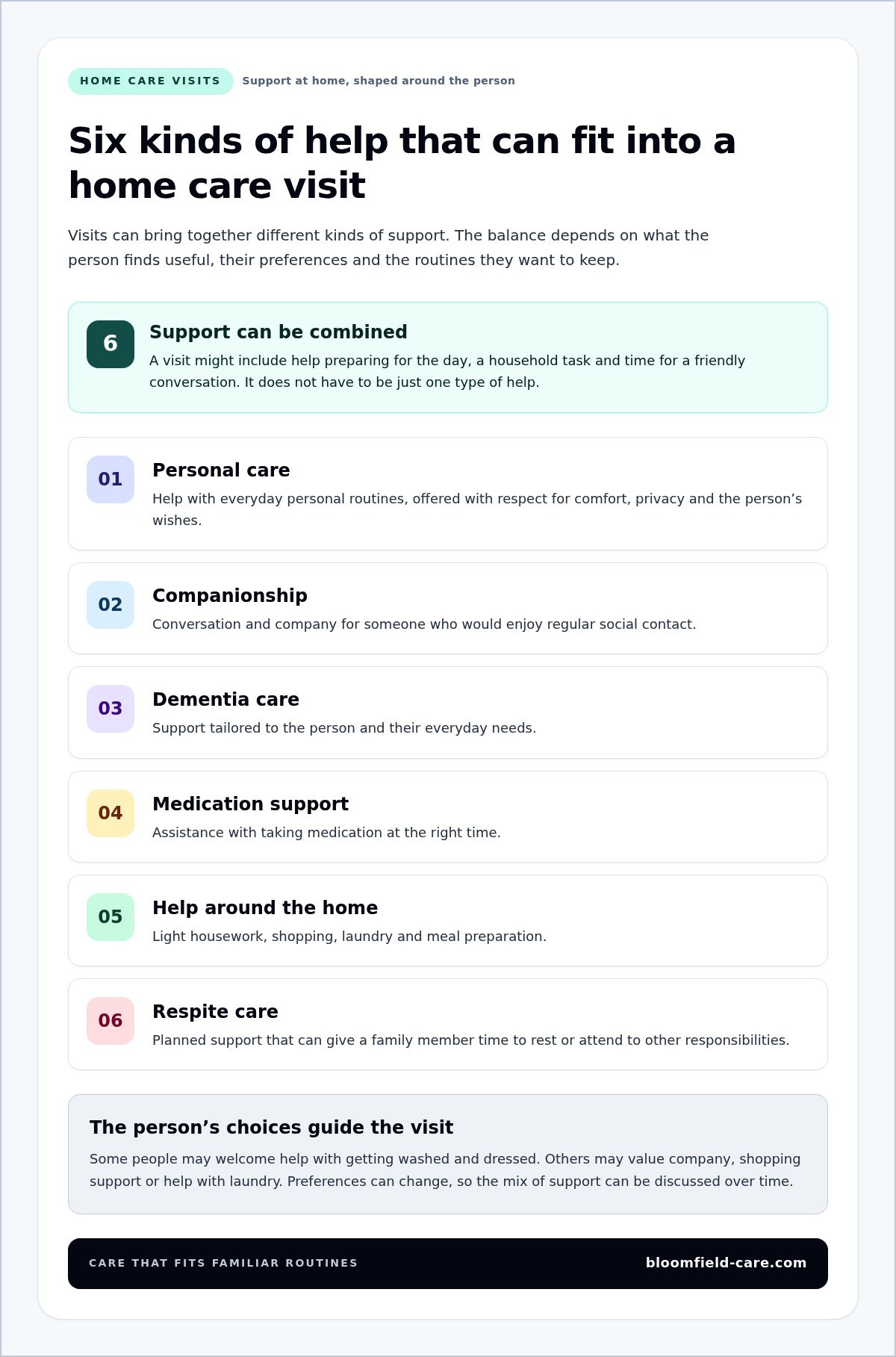
Support may bring together personal care, companionship, dementia care and practical assistance. These are not necessarily separate choices. A visit might include a friendly conversation alongside help preparing for the day, or support with a household task as well as personal care.
- Personal care: help with everyday personal routines, offered with respect for the person’s comfort and privacy.
- Companionship: time for conversation and company for someone who would enjoy regular social contact.
- Dementia care: support tailored to the person and their everyday needs.
- Medication support: assistance with taking medication at the right time.
- Help around the home: light housework, shopping, laundry and meal preparation.
- Respite care: planned support that can give a family member who helps with care time to rest or attend to other responsibilities.
The balance can change over time. Someone may manage their own breakfast but appreciate help with laundry and a shared lunch. Discussing preferences and specific tasks helps shape visits around what the person would find useful.
Who might find support at home helpful?
Home care may suit an older person who needs help with daily routines, wants regular companionship or would appreciate practical assistance at home. A particular diagnosis or living alone isn’t a requirement. People can receive support while living with a partner or family, with the type of help reflecting their circumstances.
Some people want assistance with one specific task; others may benefit from a combination of personal care, companionship, dementia care and help around the home. Support is tailored to the person, not defined by a label. The aim is to provide useful help while respecting the routines, choices and abilities that matter to them.
How tailored home care supports daily life and independence
Good support starts with the older person’s priorities. Person-centred care starts with the individual’s preferences. Listen to what they enjoy, what they would rather do independently and where a helping hand would make the day easier. Visits can fit around familiar habits instead of expecting the person to change their routine to suit a fixed care model.
Support can combine different kinds of help. Someone might want assistance with personal care and meal preparation alongside time for a chat. Another person may prefer practical help with laundry and shopping, with companionship as an important part of the visit. The balance is personal and can be discussed as needs or preferences change.
For example, a person might like to get dressed at their usual time, choose what they would like for breakfast, then have help preparing it before enjoying a friendly conversation. This is an illustration, not a promised routine: the person’s choices and what suits them should guide the plan. Families exploring otthoni idősellátás Oxfordshire can consider which parts of a typical day the older person wants to keep doing and where support could help.
Personal care, practical help and companionship
Personal care should be offered sensitively, with attention to privacy, dignity and the person’s wishes. A carer can explain the support being offered and give the older person time to take part as much as they want. Practical help, such as shopping, laundry, light housework and meal preparation, can make home routines easier to manage while respecting the person’s choices.
Companionship is friendly social support, not medical treatment. It may mean sharing a conversation, taking an interest in the person’s day or spending time together over a meal. These kinds of help can be combined during a visit, according to what the person values and finds useful.
When needs change or family carers need support
Support needs can shift over time. Regular communication helps families and carers discuss what is working and what the person would prefer. A family member who provides help may also need time to rest or manage other responsibilities. Respite care can be part of a tailored arrangement, providing planned support while they take a break. The respite care guide for Oxfordshire and Dorset explains more about this kind of support.
Keep the conversation open so support remains relevant. A task that once felt manageable may become difficult, or the older person may want more help with something they previously preferred to do alone. Families can share what they notice while keeping the older person involved in choices about their care.
If you’re considering how home care might fit around someone’s daily life, talk with the local Bloomfield Care team about support tailored to their preferences.
Home Care Visits vs Live-in Care: The Differences
Home support doesn’t have to mean choosing one fixed level of care. The right arrangement depends on the help a person wants, when they need it and whether support is most useful at particular points in the day or needs to be present in the home. Home care visits, overnight care and live-in care are different arrangements, and services can be tailored and combined as circumstances change.
| Type of support | What it involves | May suit someone who |
|---|---|---|
| Home care visits | A carer visits the person’s home to help with agreed tasks and routines. | Would value support with particular daily activities while continuing to live at home. |
| Overnight care | A carer is present through the night for peace of mind. | Would benefit from someone being there during the night. |
| Live-in care | A carer resides in the person’s home, providing round-the-clock support. | Needs a carer living in their home to provide support across the day and night. |
This comparison is a starting point, not a rule about what someone must choose. The person’s needs and preferences guide the arrangement, and different kinds of help can be considered together. Families exploring otthoni idősellátás Oxfordshire can focus on the times when support would be most helpful, rather than assuming home care means a single, unchanging model.
When may scheduled home care visits suit someone?
Visits can help with particular tasks while someone remains in familiar surroundings. That might mean support with getting ready for the day, preparing a meal or managing a household routine. The focus is on what the person wants help with, while respecting the things they prefer to do themselves. Bespoke domiciliary care in Weymouth offers a related example of home-based visits shaped around individual needs.
There isn’t one visit pattern that suits everyone. The person’s daily routine, preferences and practical needs help inform the support. Visits can suit someone who wants help with selected tasks while valuing their independence and familiar home life.
How do overnight and live-in care differ?
Overnight care means a carer is present through the night for peace of mind. It is distinct from live-in care, where a carer resides in the person’s home and provides round-the-clock support. The choice depends on the kind of presence and assistance that would feel right for the person, rather than on a presumption that one arrangement is always more suitable.
Talking through daily and night-time needs can help clarify what the older person and their family would find reassuring. Live-in care in Oxfordshire, Dorset and West Berkshire explains this option in more detail. Bloomfield Care provides both home care visits and live-in care. You can speak with the local care team about how support could be tailored and combined.
What should families consider when exploring home care in Oxfordshire?
Starting a conversation about support can feel sensitive, especially if an older person worries that help might change their independence or familiar routines. A calm first step is to listen. Ask what they would like to make easier rather than deciding for them what they need. Their views should guide the discussion, even when family members have concerns of their own.
First listen to the older person, then identify helpful tasks, discuss their routines and consider suitable support together.
Starting a conversation about help at home
Choose a relaxed moment and keep the conversation open. You might ask, “Is there anything at home you’d like a hand with?” or “Which parts of the day feel most tiring?” This makes it easier to discuss practical help without suggesting the person has lost the ability to make choices. Give them time to think, and accept that they may want to revisit the conversation later.
It can help to make a few notes together. Record the routines they want to keep, the tasks they find difficult and any preferences that would make a visit feel comfortable. For example, note how they like to organise their morning, what they enjoy doing themselves and how they feel about someone helping with household tasks. Privacy, trust and consistency are reasonable things to discuss. The person should feel listened to and treated with respect.
Family members can share what they have noticed, but the older person should remain part of decisions wherever possible. A written note of their preferences can help everyone discuss support clearly, without turning the conversation into a list of what they can no longer do.
Understanding local support in Oxfordshire
Whether a family is in Oxford, Abingdon, Wallingford or Henley-on-Thames, local home care should fit the person’s circumstances. Bloomfield Care provides home care visits in Oxfordshire, including from local offices in Wallingford and Henley. Its local presence also includes Weymouth, Dorchester, Ferndown, Wimborne, Christchurch, Bournemouth, Poole, Newbury and Thatcham. Home care visits are available across Dorset, Hampshire, Berkshire and Oxfordshire, with live-in care across the south of England. Each area has a named manager you can reach directly, not a call centre hundreds of miles away.
It’s also reasonable to want to know who will be coming into the home and how visits can feel familiar and respectful. Clients meet their carers before care begins, and every carer carries photo ID. Out-of-hours support is available every day of the year. These practical details help families understand how communication and reassurance form part of the arrangement.
Costs depend on the care needed, so discuss the person’s circumstances rather than relying on a general figure. The Oxfordshire and Dorset home care cost guide offers further context for families planning ahead.
If you’re ready to talk through what would help, call your local office or use the contact form to arrange a free assessment.
How Bloomfield Care Arranges Home Care in Oxfordshire
Arranging care should feel clear and collaborative. Bloomfield Care’s process gives the older person and their family time to explain what would help and agree support that reflects the person’s needs and preferences. Knowing what to expect at each stage can make starting the conversation feel more manageable.
From the first call to the agreed care plan
The process begins with a phone call, which usually takes 10-15 minutes. It’s a chance to describe what has prompted the enquiry and talk about the support the person may find helpful. You don’t need to have every detail worked out before speaking.
Next is a free, no-obligation home visit, which usually takes about an hour. The older person and their family can discuss everyday routines, preferences and tasks they would like help with. This gives everyone space to talk through what matters and consider how support could fit into daily life.
A written care plan is sent within two-to-three days of the visit and agreed with the client. It reflects their needs and preferences, providing a clear reference for the support discussed. The home visit and care plan are free, with no obligation to proceed.
Meeting carers and ongoing support
Clients usually meet their carers a day or two before care begins. This introduction offers an opportunity to meet the people who will be visiting and share preferences that could help the first visit feel more familiar. Carers wear smart polo shirts, not clinical tunics. Every carer carries photo ID.
The first review is usually within the first two weeks, then regularly thereafter. These conversations give the client and family an opportunity to discuss how the arrangement is working for them and raise any changes in needs or preferences. Bloomfield Care Ltd is CQC-registered and had an overall CQC rating of Good as of 30 April 2022.
If you’d like to discuss home care visits in Oxfordshire, call your local office or use the contact form to arrange a free, no-obligation home visit.
Take the next step at your own pace
Starting a conversation doesn’t mean making every decision straight away. It can give you and your family space to talk about what would make daily life easier, while keeping the older person’s wishes at the heart of any next steps. A thoughtful arrangement of otthoni idősellátás Oxfordshire can begin with one clear conversation and develop around the person’s needs.
Choosing support is personal, and feeling comfortable with the people involved matters. Bloomfield Care has 5-star Google reviews, a 9.2/10 from 40 reviews on homecare.co.uk, and is listed in the Top 20 Small Home Care Groups 2025 & 2024. These details may offer reassurance as you consider what feels right for your family.
You’re welcome to talk through your situation without feeling rushed. Talk with Bloomfield Care about home care in Oxfordshire by calling your local office or using the contact form. A first conversation can help you explore a suitable way forward, one step at a time.
Frequently Asked Questions
Can home care be tailored to an older person’s routines and preferences?
Yes. Support can be planned around the person’s preferred routines, including when they like to get up, how they organise their day and which tasks they want to manage themselves. Families can note these details before discussing care. For instance, someone may prefer to choose their own clothes and welcome help with fastening buttons or preparing breakfast.
Is home care only for older people who live alone?
No. An older person can receive help at home whether they live alone, with a partner or with family. Support can focus on a task that has become tiring while relatives continue to be part of everyday life. For example, a carer might help someone get ready while their partner prepares for work. The arrangement should reflect what the older person wants and what their household finds helpful.
Can different types of home care support be combined?
Yes. Support can bring together different forms of help rather than requiring someone to choose just one. A visit could include help with getting dressed, preparing a meal and spending time in conversation. What is included depends on the person’s needs and preferences. Discussing the whole routine, rather than focusing on a single task, can help families describe what kind of visit would be most useful.
What does medication support at home involve?
Medication support means assistance with taking medication at the right time. It is not medical treatment. Families can explain the person’s usual medication routine when discussing support, including when they may appreciate a reminder or assistance. Clear communication helps everyone understand what support is requested while keeping the older person involved in everyday choices as much as they wish.
How can families talk to an older relative who is unsure about accepting help?
Start by asking what they would like to make easier, and listen without rushing them towards a decision. You might say, “Would it help to have a hand with the shopping?” rather than making broad statements about what they can no longer do. Acknowledge any worries, offer time to think and revisit the conversation gently. This can help the person feel respected and in control.
Can an older person meet their carer before home care begins?
Yes. Clients usually meet their carers a day or two before care begins. They can use the introduction to share practical preferences, such as how they like to be addressed or where they would like everyday items kept. These details help the carer understand what feels comfortable to the person and support a respectful, personal start.
Is live-in care the same as overnight care?
No. Overnight care means a carer is present through the night for peace of mind. Live-in care is different: a carer resides in the person’s home and provides round-the-clock support. These arrangements meet different needs, so families can consider whether reassurance during the night or support across the day and night better reflects the person’s circumstances and wishes.