Home Care Costs in Wallingford: What Shapes the Cost?
To understand home care costs in Wallingford, start with the support a person actually needs. A visit to help with daily routines is different from regular visits, a carer present through the night, or round-the-clock live-in care. The right arrangement depends on the person’s needs, routines and preferences.
It’s natural to want a clear idea of costs before making decisions. You may also worry that asking about care will lead to pressure to move quickly. A conversation can simply be a chance to explain what’s happening and discuss possible support. Bloomfield Care begins each service with a free, no-obligation home visit, where needs can be discussed and a written care plan agreed.
This article explains what can shape home care costs, including how often a carer visits, how long support lasts and what help is needed. It compares home care visits, overnight care and live-in care, and offers practical points to consider before discussing a care plan. The aim is to help you explore support that fits the person’s everyday life at home.
Key Takeaways
- Home care costs in Wallingford depend on the support needed, the pattern of care and the tasks included in the tailored care plan.
- Home care visits, overnight care and live-in care provide different kinds of support. Consider when help is needed and how it fits the person’s routines.
- When discussing a care plan, look at the agreed tasks, timing, continuity and how the plan will be reviewed.
- Before a conversation, note everyday tasks the person would welcome help with, as well as the routines and preferences they want to maintain.
- Bloomfield Care starts with a free, no-obligation home visit to discuss needs and agree a written care plan tailored to the person.
Home care costs in Wallingford: why there is no single figure
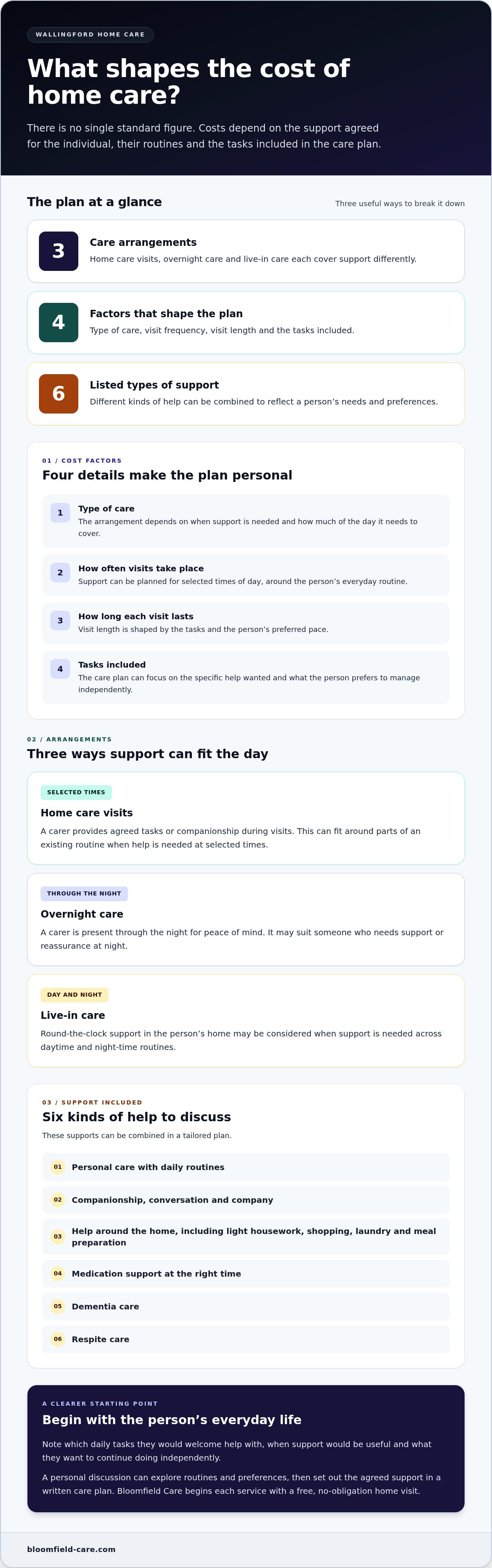
There isn’t one standard figure for home care in Wallingford because each person’s needs and agreed support are different. Costs depend on the type of care, how often visits take place, how long they last and which tasks are included. Someone who wants help with one part of a daily routine may need a different arrangement from someone who benefits from several kinds of support.
A general estimate may not reflect the person’s actual routine. It could assume a visit pattern or a set of tasks that doesn’t suit them. A more useful starting point is to describe what help is wanted, when it would be helpful and what the person prefers to manage independently. Those details make it easier to discuss a plan that fits everyday life.
Home care costs depend on the support agreed for the individual, rather than a standard package that fits everyone.
Which parts of a care plan can affect costs?
Visit frequency and duration depend on the support needed. A plan might include visits at selected times of day, with the length of each visit shaped by the tasks and the person’s preferred pace. Thinking through a typical day can help identify when support would be most useful and avoid building a plan around assumptions.
The tasks matter too. Personal care can support someone with daily routines, while companionship provides conversation and company. Help around the home can include light housework, shopping, laundry and meal preparation. Medication support means assistance with taking medication at the right time. Dementia care and respite care can also form part of a tailored plan. These services can be combined to reflect the person’s needs and preferences.
Why a personal discussion is more useful than a generic estimate
A conversation can bring out details that a broad estimate cannot: when support is most helpful, what the person wants to keep doing independently and which tasks have become difficult. Families can also describe changes in routine and share what helps the person feel comfortable receiving support at home.
Bloomfield Care begins each service with a free, no-obligation home visit to discuss the person’s needs and agree a written care plan with them. This gives the person and their family an opportunity to talk through the proposed support before deciding whether it feels right.
For families considering home care costs in Wallingford, a personal discussion connects the plan to real needs rather than an assumed package. It also gives everyone a clearer basis for discussing visit patterns, tasks and preferences. You don’t need to have every detail decided beforehand. A few notes about daily routines and areas where support may help are a useful starting point.
How different home care arrangements shape the support plan
The right arrangement depends on when support is helpful and how much of the day it needs to cover. Some people want a carer’s help with particular daily tasks, while others may need a carer present through the night or round-the-clock support at home. These arrangements serve different purposes and can be considered alongside the person’s routines and preferences.
| Arrangement | What it provides | How it may fit a plan |
|---|---|---|
| Home care visits | Support during agreed visits with specific tasks or companionship. | Can fit around parts of someone’s existing routine when help is needed at selected times. |
| Overnight care | A carer present through the night for peace of mind. | May suit someone who needs support or reassurance during the night. |
| Live-in care | Round-the-clock support in the person’s home. | May be considered when support is needed across both daytime and night-time routines. |
Home care visits and flexible everyday support
Home care visits focus on agreed tasks. Depending on the person’s needs, these might include personal care, help with meal preparation or assistance around the home. Companionship can bring conversation and company into the day, while medication support can help with taking medication at the right time. The care plan sets out the support wanted and respects what the person prefers to manage independently.
For example, someone might want help with a daily task while also valuing time to chat or keep up with familiar interests. These needs can be discussed together rather than treated as separate, fixed packages. Bloomfield Care tailors services to the person, and different types of support can be combined where appropriate.
Overnight care and live-in care are different arrangements
Overnight care means a carer is present through the night for peace of mind. It is separate from live-in care, which provides round-the-clock support in the person’s home. Consider when practical help or reassurance is wanted, and how that fits with the person’s usual routine. You can also find more detail in Overnight Care Services in Oxfordshire: Support at Home.
When considering support, look at the purpose of each arrangement, not just how long someone is present. The Care Quality Commission (CQC) provides information about care services and regulation in England.
These distinctions can make home care costs in Wallingford easier to discuss, because they help explain the kind of support a person may need. If you’re considering home care visits, you can explore tailored home care support and discuss an arrangement that reflects the person’s routines and preferences.
What to compare when planning home care costs in Wallingford
Once you have a clearer picture of the support someone may need, reviewing the details of a proposed care plan can help you understand what is included. For families in Wallingford, focus on the tasks, timing and how the plan reflects the person’s daily life. Similar descriptions can mean different things, so it helps to discuss what the support will look like in practice.
Look at the care-plan details, not just a headline figure, to understand whether the support fits the person’s everyday life.
Questions that make care plans easier to understand
Start with the person’s priorities. Which everyday tasks matter most to them? What do they prefer to do independently, and what would they welcome help with? Describing familiar routines and personal preferences makes the discussion more practical. Note any changes that could affect the support they need.
- Tasks: Which agreed activities will the carer support, and how do they relate to the person’s priorities?
- Visit pattern: At what points in the person’s routine would support be most helpful, and how long might the agreed tasks take?
- Continuity: How will the support plan help the person become familiar with their care routine and the carers supporting them?
- Review: How can the person or family raise a change in needs, and how will the plan be reviewed?
Use these questions as a guide, not a standard template. Care plans are shaped around the person, so the details will depend on the tasks and support discussed. Consider how the activities fit together and whether the proposed routine reflects the person’s preferences.
How to think about local funding and assessments
If you’re considering council support, consult Oxfordshire County Council for current adult social care information about assessments, eligibility and funding. The council can explain the process and how it applies to an individual’s circumstances. Funding depends on the person’s situation, so don’t assume it will be available or cover a particular care plan.
For a wider regional perspective, the article The Cost of Home Care in Oxfordshire and Dorset: A Complete 2026 Guide may provide helpful context alongside a personal discussion about support. Regional information can help you frame questions, but it isn’t a quote for an individual plan. The person’s needs and agreed arrangements remain central.
Keep your notes simple. A brief outline of daily routines, important tasks, preferences and questions about reviews can make conversations clearer. Include the person receiving support in planning, so the discussion reflects the life they want to continue living at home.
A practical way to plan for home care costs
A little preparation can make a care conversation feel more manageable. You don’t need to have every answer before speaking with someone. Start with what the person finds difficult, what they want to continue doing for themselves and what kind of help they may welcome.
- List needs. Note everyday tasks where support may help, such as personal care or help around the home. Separate these from preferences, such as enjoying a chat during a visit or receiving support at a particular time of day.
- Note routines. Write down the person’s usual day, including times when they value privacy, independence or company. Include any changes in their needs that may affect the support they would welcome.
- Discuss support. Talk through the tasks, routines and preferences with the person receiving care, and include family members if they wish. This helps shape an arrangement around the person rather than starting with a fixed package.
- Review the written plan. Read the proposed care plan together. Check that it reflects the agreed tasks and preferences, and raise anything that needs clarifying before care begins.
Prepare for a first conversation about care
A few notes are enough to get started. You might list the tasks that feel most important, the parts of the day that are more challenging and any preferences that help the person feel at ease. Bloomfield Care’s initial phone call usually takes 10-15 minutes, and the home visit is usually about an hour. These are opportunities to talk things through without rushing a decision.
It can help to distinguish essential support from personal preferences, while recognising that both matter. Assistance with an everyday task may be essential, while a preference about timing or companionship can help make the arrangement more comfortable. Discussing both gives a fuller picture of what the person wants from care.
Understand the care plan and review process
After the home visit, the written care plan is sent within two-to-three days. Clients usually meet their carers a day or two before care starts. The first review is usually within the first two weeks, then regularly thereafter.
Take time to read the plan and consider whether it describes the support in a way the person recognises. If routines or needs change, those details can be discussed during a review. A clear plan helps families understand what has been agreed and how support fits into everyday life.
If you’re ready to talk through care needs and planning in Wallingford, contact Bloomfield Care to arrange a free, no-obligation home visit.
Home care costs in Wallingford with Bloomfield Care
Understanding the support being considered can make home care costs in Wallingford easier to discuss. Bloomfield Care provides tailored home care visits in Wallingford. The free, no-obligation home visit is an opportunity to talk about the person’s needs and agree a written care plan.
You don’t need to have every detail decided beforehand. The discussion can cover what help may be useful, what the person wants to continue doing independently and which routines matter to them. The written plan gives the person and family clear details to consider as they decide what support feels right.
Local support, familiar routines and personal choice
Bloomfield Care provides home care visits across Dorset, Hampshire, Berkshire and Oxfordshire, including Weymouth, Dorchester, Ferndown, Wimborne, Christchurch, Bournemouth, Poole, Wallingford, Henley-on-Thames, Oxford, Abingdon, Newbury and Thatcham. Live-in care is available across the south of England. Each area has a named manager you can reach directly, not a call centre hundreds of miles away. Services are tailored to the person and can be combined to reflect their needs and preferences.
Clients meet carers before care starts, helping them become familiar with the people who will support them at home. Carers wear smart polo shirts, not clinical tunics. Every carer carries photo ID. Bloomfield Care is CQC-registered and rated “Good” overall by the CQC as of 30 April 2022. Out-of-hours support is available every day of the year.
What happens after the first conversation?
The conversation and home visit help build a shared understanding of the support the person wants. Bloomfield Care then prepares a written care plan for the client to consider. Clients usually meet their carers a day or two before care starts, and the plan can be discussed to ensure it reflects the person’s routines and preferences.
Support needs may change over time. Regular reviews provide an opportunity to discuss how the plan is working for the person and whether their wishes or needs have changed. This keeps the conversation centred on their comfort, choices and independence at home.
To discuss tailored care in Wallingford, call your local office or use the contact form to arrange a free assessment.
Take the next step at your own pace
Planning home care costs in Wallingford doesn’t mean you need to settle every detail straight away. A useful next step is to talk through what matters to the person, including the help they may welcome and the choices they want to keep making for themselves.
Bloomfield Care’s Wallingford home care visits are tailored to the individual. A free, no-obligation home visit offers space to discuss needs and agree a written care plan, without committing to ongoing care. You can take time to consider whether the suggested support feels right for your family.
Care planning is personal. An open conversation can help you feel more prepared to decide what suits the person and their home life. Call your local office or use our contact form to discuss care in Wallingford. We’re here to help you talk through the next step.
Frequently Asked Questions
How much does home care cost in Wallingford?
Home care costs in Wallingford depend on the support a person needs and the plan agreed with them. The tasks involved and the pattern of visits shape the arrangement, so a general figure may not reflect someone’s circumstances. Think about which parts of daily life the person would like help with and what they want to continue doing independently. These details can make a discussion about suitable support more specific. You can contact Bloomfield Care for a free assessment to discuss the person’s needs.
Can home care visits be combined with other support?
Yes. Different types of support can be brought together in a plan tailored to the person. For example, someone might want assistance with a daily task alongside companionship or help around the home. Medication support can also be discussed as part of their needs. Sharing preferences, routines and priorities helps shape an arrangement around the person, rather than treating each support need as a separate, fixed choice.
Does Bloomfield Care provide home care visits in Wallingford?
Yes, Bloomfield Care provides home care visits in Wallingford. Support is planned around the individual, with the aim of respecting their routines and choices at home. Families can discuss the kinds of help that may be useful and how these could fit into everyday life. Wallingford is one of the local areas served by Bloomfield Care, alongside locations across Dorset, Hampshire, Berkshire and Oxfordshire.
What happens during a home care assessment?
An assessment is a chance to talk about the person’s everyday life and the support they may welcome. You can describe tasks they find difficult, routines they want to maintain and preferences that would help them feel comfortable. Include the person receiving support in the conversation wherever possible. The discussion informs a written care plan, which you can read and consider before deciding whether the proposed arrangement feels suitable.
Is overnight care the same as live-in care?
No. Overnight care is a separate arrangement, with a carer present through the night for peace of mind. Live-in care provides round-the-clock support in the person’s home. The arrangements suit different patterns of support, so consider when assistance or reassurance is wanted and how this relates to the person’s usual routine. Talking through those details can help clarify which arrangement to explore.
Can the local council help with home care costs?
Oxfordshire County Council provides current information about adult social care assessments and funding for Wallingford residents. Any support depends on local arrangements and the person’s circumstances, so don’t assume that funding will be available or cover a particular plan. You can also discuss the care the person may need with Bloomfield Care. Call your local office or use the contact form to talk through support options.