Home Care Costs and Support for Wheelchair Users in Abingdon
A good home care plan is shaped around the person, not just their wheelchair. The cost of home care for wheelchair users in Abingdon depends on the support needed and how often visits are arranged, so there is no single price for everyone.
It’s understandable to want a clear idea of both the practical help available and what it may mean for your budget. Support can be planned around daily routines, personal care, meals, companionship and individual disability-related needs, while helping the person maintain comfort and independence at home.
This guide explains what affects care costs, how visits can fit into a daily routine and what to consider when arranging short-term support. It also covers how to shape care around individual needs, so you can make an informed decision at a pace that feels right.
Key Takeaways
- Understand which parts of an individual care plan can affect the overall cost, including the type and pattern of support needed.
- See how help with medication routines, meals and companionship can fit into everyday life at home.
- Explore ways care can be adapted around mobility, disability-related needs and sensory impairments.
- Learn how different care arrangements can support changing needs, including when temporary help may be useful.
- Find out what to consider when choosing between home visits and live-in care for a wheelchair user in Abingdon.
How much does home care cost in Abingdon?
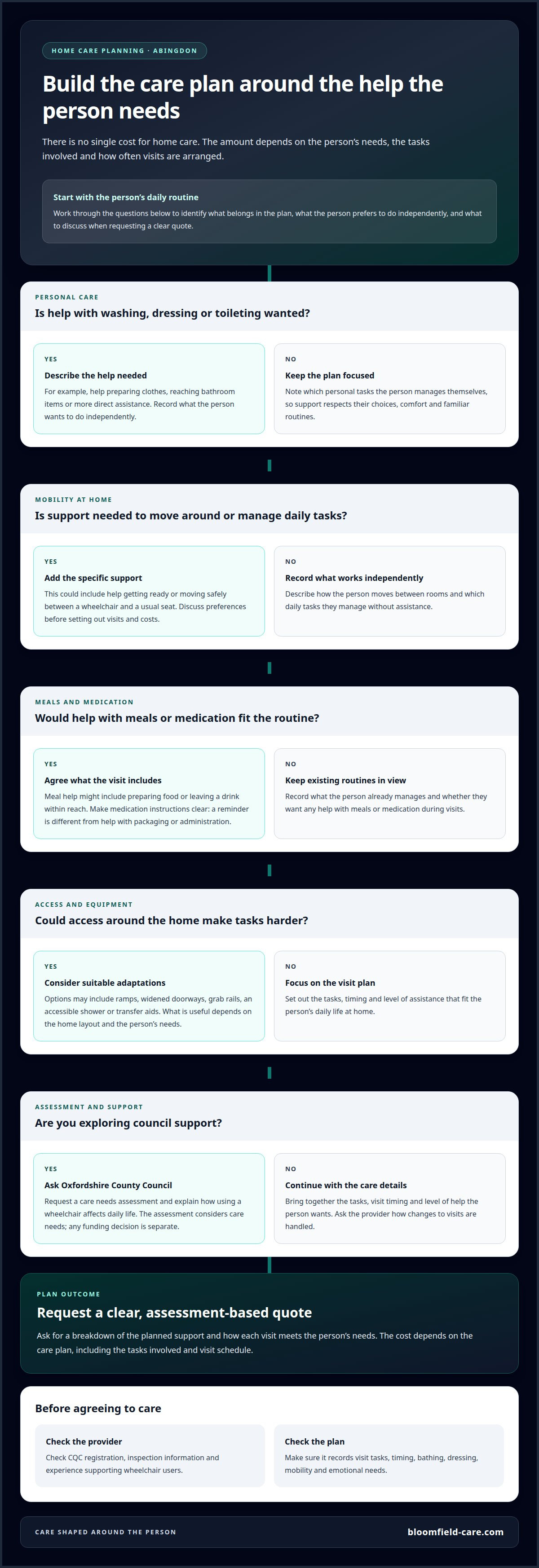
There is no single cost for home care for wheelchair users in Abingdon. The amount depends on the person’s needs, the tasks involved and the visit schedule. One plan might include morning help with washing and dressing; another might focus on meal preparation and companionship. Ask for a clear breakdown of the planned support and how the visits meet the person’s needs.
Personal care can include help with washing, dressing and toileting. The support needed varies: one person may want help preparing clothes and reaching bathroom items, while another may need more direct assistance. A clear plan should say what the person wants to do independently and where carers should help. This keeps support focused on comfort, dignity and familiar routines.
Mobility support at home should reflect how the person moves between rooms and completes daily tasks. For example, the plan could cover assistance getting ready in the morning or moving safely between a wheelchair and a usual seat. A care agency should discuss the person’s preferences and relevant support needs before setting out visits and costs. Learning disability support may also include clear communication, familiar routines and help with personal care.
When choosing a provider, check its CQC registration, inspection information and experience supporting wheelchair users. Ask how the care plan records bathing, dressing, mobility and emotional needs, and how changes to visits are handled.
To check whether an Abingdon provider is registered with the CQC, search its name in the CQC directory. Review the registration details and inspection information for the service you’re considering.
Abingdon residents can contact Oxfordshire County Council to request a care needs assessment and ask about possible council support. The assessment considers the person’s care needs; any funding decision is separate.
To arrange an assessment, contact Oxfordshire County Council’s adult social care service and explain how using a wheelchair affects daily life. Give practical examples, such as needing help with washing, dressing or preparing meals.
Home adaptations and equipment may include ramps, widened doorways, grab rails, an accessible shower or transfer aids. Useful options depend on the home’s layout and the person’s mobility and care needs.
People in Oxfordshire can ask their council about grants for wheelchair access and home adaptations, including whether a Disabled Facilities Grant may apply. The council can explain the assessment and application process for the home.
A personalised care plan brings these details together, including visit tasks, timing and the level of assistance required. Costs depend on that plan, so request a clear assessment-based quote before agreeing to care. This helps families understand what support is included and how it fits the person’s daily life.
Support with medication, meals and companionship
A well-planned routine can make everyday tasks easier. Morning support, for example, might include a medication prompt, breakfast preparation and time to get settled before other activities. Carers follow the agreed plan and respect the person’s choices, rather than rushing through tasks. This practical help can support familiar routines around meals and medication.
Medication support should reflect the person’s needs and the instructions they already follow. A care plan can record when reminders are helpful, where medicines are kept and what assistance the person wants. Someone who manages their medication independently, for example, may only want a prompt at breakfast. If more help is needed, the plan should describe the agreed support.
Medication monitoring and administration are different from a simple reminder. The person’s plan should clearly describe the assistance required, such as prompting, helping with packaging or supporting administration. Carers need clear instructions and should record relevant information in line with the care arrangements. If a dose is missed or something seems unusual, the agreed process should guide the next step, including contacting an appropriate health professional when needed.
Meal preparation can fit the person’s appetite, preferences and kitchen routine. A carer might make porridge, prepare a sandwich for lunch or leave a drink within reach. They can also help with related household tasks, such as washing up or putting ingredients away. These practical steps can make mealtimes more comfortable and easier to manage at home.
Companionship offers more than practical help. Sharing a cup of tea, talking about the day or enjoying a familiar interest can bring connection into a home routine. For someone living with dementia, calm conversation and familiar activities can help make a visit feel settled. The person’s preferences should guide the visit, including when they would rather have quiet time.
Before visits begin, the care plan can bring together medication reminders, meals and companionship. It should explain what the person wants to do themselves, what help they welcome and how carers should support each routine. A lunchtime visit, for example, might include preparing food, a medication reminder if agreed in the plan, and time together. This gives the visit purpose while preserving choice.
Families considering companionship and everyday assistance can focus on the routines that matter most, from a warm meal to a familiar conversation. Clear instructions help carers provide compassionate support that feels consistent, respectful and comfortable.
Support for physical disabilities and sensory impairments
Support can be arranged around physical access, communication and the tasks someone wants help with. In Abingdon, look for an agency whose plan addresses wheelchair use and the person’s specific sensory needs.
Physical Disability Support
For someone with limited mobility, support might include help with dressing, organising belongings or reaching everyday items. Someone with sight loss may prefer carers to describe where objects are placed, while a person with hearing loss may find face-to-face communication helpful. Discuss these preferences when planning home care, so support reflects the individual’s needs and independence.
When discussing care for a wheelchair user, ask how the plan will cover daily tasks, communication and mobility support. We are regulated by the CQC. A practical plan should explain how a carer can support a usual morning routine, rather than relying on general statements about disability support.
After a hospital stay, the person may need help returning to familiar routines. Use the discharge information to identify practical support, such as help getting dressed or preparing lunch. Reablement focuses on rebuilding everyday skills, with activities guided by the person’s needs and abilities. Loved ones can share useful details about routines, while the person remains central to decisions about their care.
Consider how much support is needed throughout the day. Live-in care may suit someone who needs a carer living in the home, while planned visits can help with specific tasks, such as getting ready or preparing a meal. The key question is whether support is needed for set activities or across more of the day. Describe the person’s routine, including when assistance matters most.
Visiting and Hourly Care
Home care visits can be arranged around particular tasks, such as help with dressing before leaving home or preparing an evening meal. When planning visits, consider how long each task takes and when help is needed. A clear schedule helps the person and their loved ones understand what each visit is for.
For sensory needs, include practical communication preferences in the care plan. For example, note whether the person prefers spoken explanations, written prompts or clear descriptions of items being moved. These details help carers provide consistent support during visits and reduce confusion when routines change. Include the person’s choices about privacy, timing and how assistance is offered.
Before care begins, set out the support needed after discharge, the preferred visit pattern and any communication preferences. A clear plan gives the person, carers and loved ones a shared understanding of daily support, while allowing the person’s abilities and choices to guide each task.
Care services tailored to individual needs
A useful care plan starts with the person’s priorities, not a standard list of tasks. One wheelchair user may want help getting ready before work; another may prioritise preparing for a weekly family visit. These details shape care around daily living, personal choices and independence. In Abingdon, planning should also account for the person’s home and usual routines.
Start by describing what the person can do comfortably and where assistance would help. A plan might include help with dressing while leaving time for the person to choose clothes and manage familiar steps independently. Another person may need help organising the day after a hospital stay. Specific examples make it easier to agree what carers will do and what the person prefers to manage themselves.
Useful details to include in a personalised plan are:
- Daily priorities: note when the person wants help, such as preparing to go out or settling in for the evening.
- Choice and privacy: record how they prefer assistance with personal tasks, including knocking before entering a room.
- Changes in need: explain what has changed, such as needing more time to dress after an illness.
Describe medication support clearly, even when it involves only a reminder. For example, the plan could say that the person prefers a prompt with breakfast but manages their medication independently. If more assistance is needed, set out the agreed support and recording arrangements. Clear instructions help carers follow a consistent approach at each visit.
Care needs can change, so review the plan when routines or abilities change. After a hospital stay, someone may need help with everyday tasks while rebuilding confidence at home. A family carer may also need respite care, which gives them a planned break from caring. In either case, agreeing the tasks and timing in advance helps the person understand what support to expect.
Consider whether support is needed at set times or throughout more of the day. Visits may suit someone who wants help with particular routines and spends other periods independently. Live-in care may suit a person who needs a carer living in the home. The right arrangement depends on the person’s routine, support needs and preferences, not on wheelchair use alone.
A practical starting point is to describe a typical day and identify where assistance would make the greatest difference. Include the person in decisions and update the plan when their goals, health or living arrangements change. This keeps support connected to their own priorities for comfort and independence.
What home care services are available for wheelchair users in Abingdon, Oxfordshire?
Home support can range from help with particular daily tasks to care across more of the day. The right arrangement depends on what the person wants help with, such as getting dressed, preparing meals or keeping to a familiar routine. In Abingdon, a care plan can focus on practical assistance while respecting the person’s choices and independence.
Home care visits are arranged around agreed tasks. A morning visit might help someone wash, dress and prepare breakfast, while an evening visit could support getting ready for bed. Visits can also include companionship or medication support as part of the care plan. Clear tasks and timings help each visit fit the person’s day.
For someone who needs more support across the day, live-in care offers a different arrangement, with a carer living in the home. It may suit a person who needs help at several points, such as getting ready, preparing food and settling in for the evening. The plan should set out the support required and respect the person’s privacy, preferences and usual way of living.
Care can also be arranged for a particular change or period of need. After returning home from hospital, someone may want help with everyday routines while settling back in. A family carer may need respite care, giving them planned time away from caring responsibilities. The tasks and schedule should reflect why support is needed.
Depending on the person’s care plan, support at home may include:
- Personal care: help with washing, dressing and other daily routines.
- Meals: preparing food and setting it within comfortable reach.
- Medication assistance: reminders or other agreed support.
- Companionship: conversation and shared activities at home.
- Regular visits or live-in support: arrangements shaped around the pattern of help needed.
When considering home care for a wheelchair user in Abingdon, focus on how each option fits their day, not simply the name of the service. Note the tasks, preferred times and any changes in support after illness or a hospital stay. This gives the care provider a clearer basis for discussing a suitable plan.
For help discussing a suitable home care arrangement, get in touch about care at home.
Bloomfield Care Ltd is rated Good overall by the Care Quality Commission. This rating can be one consideration when discussing support, alongside the person’s preferred routines and the tasks they want help with. Ask how the proposed arrangement would work in practice, including whether visits or live-in support better match the person’s needs. A clear discussion can help shape a plan around the wheelchair user’s choices and daily life.
Bloomfield Care
Bloomfield Care can help you explore care options shaped around a wheelchair user’s daily needs and preferences. Its domiciliary care supports people at home, while elderly care and dementia care can address wider needs where relevant. Bloomfield Care Ltd is registered with the Care Quality Commission and rated “Good” overall.
For someone who needs support across more of the day, live-in care may also be worth discussing. A conversation can help clarify the tasks involved, the preferred routine and the type of care that may fit. Bloomfield Care has a local office in Wallingford, as well as offices elsewhere in its service areas.
If you’d like to discuss care options, please contact Bloomfield Care through the contact form or call your local office.
Take the next step towards care that fits
Choosing support starts with the person’s priorities: what they want to do independently, where assistance would help and how care can fit into daily life. A short list of preferred routines can make the first conversation more focused.
Bloomfield Care can discuss whether domiciliary care, elderly care or live-in care may suit the person’s circumstances. You can talk through their needs and arrange a free assessment without pressure.
Contact Bloomfield Care through the contact form or call your local office to discuss the next step. A thoughtful conversation can help you move forward with confidence.
Frequently Asked Questions
What does a carer help with?
A carer can help with personal care, meals, medication support, companionship and light household tasks. The agreed plan can reflect what the person prefers to do independently. For example, a carer might help organise toiletries before a wash, then leave the person privacy to complete the parts they manage themselves. Home care visits can range from 30-minute visits to several hours a day, depending on the support arranged.
What does home care for wheelchair users in Abingdon typically cost per hour?
There isn’t one hourly price for home care for wheelchair users in Abingdon. Costs depend on the care needed, the tasks involved and the visit schedule. A plan for occasional help differs from one requiring support at several points throughout the day. Bloomfield Care can discuss the person’s needs through a free assessment and explain the cost for the proposed care.
What help is available with personal care, transfers, meals and medication at home?
Home care for wheelchair users in Abingdon can be arranged around personal care, meals and agreed medication support. For example, a carer might help prepare the bathroom, support dressing and place lunch within comfortable reach. Transfer support should follow the person’s agreed plan and equipment instructions. The care plan can clarify which tasks the person manages independently and when they want help, preserving choice in everyday routines.
What are the risks of falls and unsafe wheelchair transfers, and how can carers reduce them?
A rushed or poorly planned transfer can lead to a loss of balance or injury. Reduce avoidable risks by clearing the route, allowing enough time and following the person’s transfer plan and equipment instructions. Carers should explain each step before helping and stop if the person or equipment feels unstable. If the person’s needs change, discuss transfer arrangements with an appropriate health professional, such as a GP or occupational therapist.