Dementia Support at Home in Oxford for Families
Good home support for people living with dementia in Oxford brings together familiar routines, family involvement, thoughtful communication and practical help that adapts as needs change. Respite and local services can also make caring at home more manageable for families. The right support respects the person’s choices and dignity.
It’s understandable to want to keep someone safe and comfortable at home while feeling unsure how much help is needed or where to begin locally. Finding support doesn’t mean the family has to manage everything alone.
This guide explains how families can share care, communicate with empathy and recognise when extra support may help. It also covers respite, local services and what to consider when arranging personalised dementia care at home in Oxford.
Key Takeaways
- Agree how family members will share care tasks, keep important information together and revisit the plan as needs change.
- Build support around the person’s routines, preferences and abilities, offering choices and help in manageable steps.
- Use a calm voice, simple language and attentive body language to help communication feel more reassuring.
- Plan regular respite and ask for support before caring responsibilities become overwhelming.
- Explore local dementia services and consider whether home visits or live-in care could provide the level of support needed.
Family involvement and multidisciplinary working
Family members often provide day-to-day dementia care at home. The World Health Organization recognises unpaid carers’ major role in supporting people living with dementia. In Oxford, relatives may help with meals, appointments, familiar routines and keeping in touch with friends. Agreeing who does each task can prevent confusion and make support more consistent.
What adaptations and assistive technology can make an Oxford home safer for someone with dementia? Improve lighting on stairs and at entrances, clear loose rugs and clutter, and use contrasting colours to make important items easier to see. Labels, simple reminders, motion-sensitive night lights or door alerts may help, depending on the person’s needs and how they use the home.
Start with a shared care plan. Record the person’s daily routines, preferences, care needs and important contacts. Then agree who will arrange appointments, prepare meals, manage household tasks and provide company. For example, one relative might attend GP appointments while another checks in during the week. Review the plan when needs or family availability change.
Clear communication between relatives and health professionals also helps. Keep a brief, dated record of changes in sleep, appetite, mood or daily abilities, with specific examples. Share relevant observations with the person’s GP or care team. Bring written questions to appointments, such as whether a new difficulty could be related to health, medication or changes at home.
Online support groups give family carers a place to exchange experiences and feel less alone. Members might share practical ideas, such as making a familiar meal easier or preparing for a difficult appointment. Treat personal stories as peer support, not professional advice about diagnosis, medication or treatment. Raise health questions with the person’s GP or relevant care professional.
Emotional support matters as much as practical planning. A family carer may feel grief, worry or frustration, even while acting with love and patience. Choose someone you trust to talk to, and make time for a short walk or a quiet cup of tea. Sharing feelings with relatives or a support group can help carers recognise their own needs, not just focus on the next task.
As dementia progresses, the person may need more support and eventually continuous supervision. Review what the family can manage, which tasks are difficult and whether extra help at home is needed. Where possible, discuss changes openly with the person and include their wishes in decisions. A considered plan helps relatives work together while keeping the person’s dignity and familiar life at the centre.
Person-centred care for people living with dementia
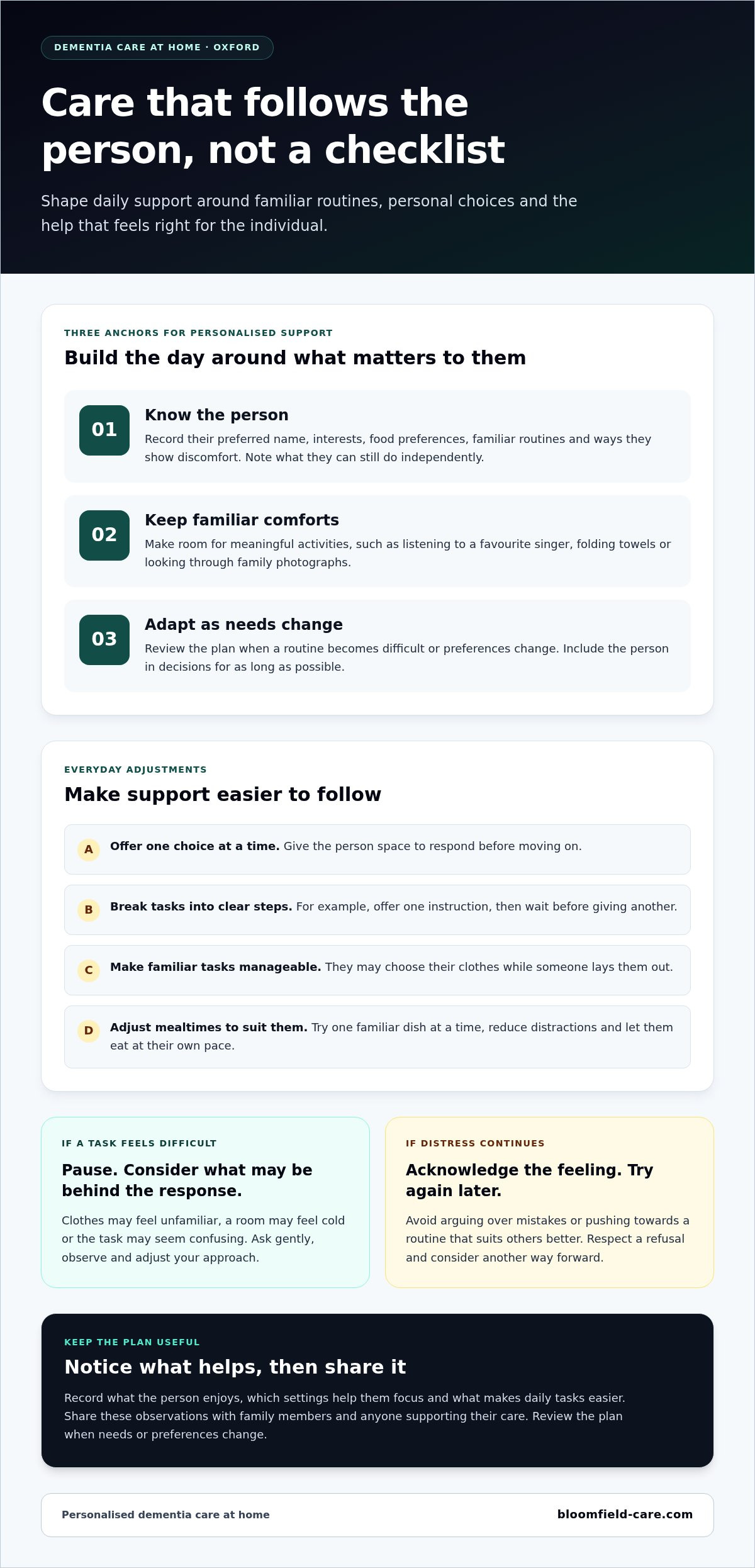
Person-centred care starts with the individual, not a checklist of symptoms. Daily support should reflect their history, preferences, abilities and feelings.
Understanding the Person’s Perspective
Try to understand a situation from the person’s point of view. If they resist getting dressed, consider whether the room feels cold, the clothes seem unfamiliar or the task feels confusing. Ask gently, observe their response and adjust your approach. Avoid arguing over mistakes. A calm, respectful response can protect trust and make the next step easier.
Personalised Care Plans and Routines
A useful care plan records what helps this person, not just what needs doing. Include their preferred name, interests, familiar routines, food preferences and ways they communicate discomfort. Note which tasks they can still manage independently. For example, they may choose their clothes while someone lays them out. Review the plan when a routine becomes difficult or their preferences change.
Use the plan to make everyday support feel familiar. Keep meaningful activities in the day, such as listening to a favourite singer, folding towels or looking through family photographs. Offer one choice at a time, then give the person space to respond. If a task causes distress, pause and try again later. Don’t push them towards an ideal routine that suits others better.
Mealtimes can benefit from simple adjustments tailored to the person. A care plan for someone with moderate dementia might include serving one familiar dish at a time. Reduce distractions if the person loses focus, and let them eat at their own pace. Notice which foods and settings they enjoy, then share those observations with anyone supporting them.
Give information in small amounts instead of stringing together several instructions. Rather than saying, “Get ready, find your coat, and come downstairs,” offer one clear step, then wait. Speak slowly and gently, use the person’s name and encourage what they manage. If they seem upset, acknowledge the feeling before trying to solve the practical problem.
In-person support can complement care at home. A dementia café or local group may offer conversation, shared activities and the chance to meet people with similar experiences. Choose activities that suit the person’s interests and comfort. A familiar song or quiet chat, for example, may feel more inviting than a busy group discussion. Family members can attend together and notice what the person enjoys.
Person-centred support also means involving the person in decisions for as long as possible. Ask them directly about choices, even when others help explain them. Respect a refusal, consider the reason behind it and offer another way forward. In Oxford, families can use these observations to shape a care plan around the person’s identity, keeping familiar comforts while adapting support as needs change.
Empathetic and non-verbal communication
A person living with dementia may find it harder to follow words, express a need or respond quickly. Their posture, expression and movements can offer clues about how an interaction feels. In Oxford, family carers can use these signs to adjust their approach, rather than assuming silence or resistance means refusal.
Approach from the front and use the person’s name. Make eye contact if they find it comfortable, then pause before speaking. A sudden approach from behind, a rushed question or several people speaking at once may feel confusing. Notice whether the person turns towards you, looks away or seems tense, and give them time to respond.
Keep your words clear, gentle and practical. Share one piece of information at a time, such as, “Your tea is ready,” instead of explaining several plans at once. Speak slowly without raising your voice as though the person cannot understand. After asking a question, wait quietly. Repeating it immediately can add pressure rather than help.
Try to understand the feeling behind a response. If someone says they need to go home while sitting in their familiar Oxford living room, avoid arguing that they are already home. They may be seeking comfort or familiarity. Acknowledge the feeling, offer a calm conversation and suggest looking at a favourite photograph together.
Body language matters during everyday tasks. Before helping with a coat, show it and ask permission instead of reaching towards the person without warning. Move at an unhurried pace and keep your expression relaxed. If they pull away, pause and consider whether they feel uncomfortable, uncertain or rushed. A short break may make it easier to try again.
Small responses can encourage connection. Smile when appropriate, nod to show you’re listening, and offer specific, respectful praise for an action, such as choosing a jumper. If the person uses gestures, pointing or familiar objects to communicate, respond to those cues. For example, bringing a cup may show that they want a drink.
Continue speaking to the person, even if they can no longer reply with words. Say who has arrived, explain what you’re doing and include them in conversations. Before opening a window, for example, explain that you’re letting in fresh air. A gentle tone and a pause give them time to guide what happens next with a facial expression or movement.
Notice which approaches work for this individual. A family note can record useful details, such as whether the person prefers a quiet room, familiar music or time to answer. Share these observations with relatives and care professionals. Consistency can make daily interactions easier to recognise, while adapting to the person’s changing responses keeps communication respectful and individual.
Family members supporting someone with dementia can try to understand their experience with empathy, accept them without judgement and be genuine in the relationship. Making room for the person’s feelings and perspective, without dismissing them, helps maintain a respectful connection. Respond with warmth and honesty, while remembering that their experience may differ from your own.
Caregiver stress, shared responsibilities and respite
Supporting an older person with dementia can reshape family life. One relative may balance work, appointments, meals and personal care, while another lives farther away. Stress can build when every task falls to one person. Treat a written rota as a practical starting point, not a promise that one carer must manage everything.
List recurring tasks, such as preparing lunch, collecting prescriptions or accompanying someone to an appointment. Beside each task, name the person responsible and a backup. One relative might handle shopping while another phones after work. Relatives who live farther away can still organise deliveries, update contact details or arrange calls with family members.
Notice changes in your own wellbeing as well as the person’s needs. For example, note if you’re regularly losing sleep, cancelling your appointments or feeling unable to leave the house. These are useful points to discuss with someone you trust or a health professional. Sharing a specific example, such as “I haven’t had an uninterrupted afternoon for weeks,” can make your support needs clearer.
Respite means arranging a break from caring responsibilities while the person continues to receive appropriate support. A relative might take over during a regular walk, a friend could share a meal, or planned help could be arranged at home. Choose a break that genuinely helps you rest. Time to meet a friend, attend your own appointment or simply unwind can make daily responsibilities easier to manage.
Prepare a handover before leaving. Write down the person’s usual routine, what they enjoy, how they communicate discomfort and who to contact with questions. For example, note that they prefer lunch at the kitchen table and feel calmer with familiar music. Keep the information somewhere accessible, and update it when routines or needs change.
Agree how to ask for help before a difficult day arrives. A family message group can share updates, while a calendar can show appointments and planned breaks. Make clear requests, such as asking a sibling to cover a GP visit or stay during a meal. Specific requests are easier to organise than a general appeal to “help more”.
As dementia progresses, review what the family can manage and what support is needed. If one person provides most of the care, arrange a family conversation to discuss specific tasks, emotional support and respite. Home may remain the preferred setting, but another care setting can also be considered if needs change. Centre the decision on the person’s wellbeing, preferences and available support.
Carers need social connection as well as practical help. Set a regular time to speak with someone you trust, attend a carers’ group or take part in an activity you enjoy. If you’re unsure which respite options may suit your family, list the tasks causing the most strain and discuss them with a local support service. This gives the conversation a clear, useful starting point.
Finding local dementia services
Oxford families can begin by mapping the support needed, then contacting relevant local services. Keep a short list of questions and examples ready for each conversation.
Funding Eligibility and Direct Payments
For council-funded home care in Oxfordshire, ask Oxfordshire County Council about a needs assessment and financial assessment. These help establish what support may be funded and whether a contribution applies. Direct payments allow eligible support to be arranged using council funding. Ask the council how this works, what it can cover and what records or arrangements are required.
Describe practical difficulties clearly, such as needing help to prepare meals or wash safely. Give examples of how often they happen and what occurs without support. This explains the person’s care needs more clearly than focusing only on a dementia diagnosis.
Arranging a Care Needs Assessment
Contact Oxfordshire County Council’s adult social care service to request an assessment for the person living with dementia. Explain what has changed at home and which daily tasks have become difficult. Before speaking with the council, note the person’s routines, strengths, risks and support from family or friends.
Ask how the person can share their views during the assessment. With their agreement, a relative can help describe daily needs and bring questions. A brief diary can help: record an example, such as difficulty preparing breakfast or finding the bathroom.
Local Home Care Providers and Services
Oxford has home-care services to explore, but provision and suitability vary. Ask local providers about dementia care, personal care, help with meals, medication support and companionship. Explain the person’s usual routine and the tasks that need assistance, then discuss how support could fit around familiar activities.
For respite and day services, ask Oxfordshire County Council and local dementia support services about current options. These may include activities outside the home or planned support at home, depending on local provision and the person’s needs. Ask what each option involves and whether it suits the person’s preferences and daily routine.
Responding to Changing Needs and Safety Concerns
If someone becomes unsafe at home, address the immediate hazard first. For example, stay nearby if they’re confused near stairs, and remove an obvious trip hazard. Record what happened and contact the person’s GP or care team to discuss the change. For an immediate emergency, call 999.
If needs increase, tell Oxfordshire County Council and request a review of the person’s support. Share specific changes, such as being unable to manage meals or needing more supervision. Discuss the options with the person wherever possible, including help at home and whether another care setting should be considered.
To discuss support options for your family, contact our team.
Bloomfield Care: Live-in care
Bloomfield Care supports families considering more help at home through live-in care, including dementia care. This may suit someone whose changing needs call for a carer to live in the home, while familiar surroundings and routines remain important. Support is tailored to the person and can be combined with other services to reflect their needs, preferences and family circumstances.
If help is needed only at particular times, domiciliary care visits may be a better fit. Bloomfield Care can tailor home care visits to the person’s routines and needs, combining practical help and companionship as appropriate.
To discuss care options, contact Bloomfield Care or visit bloomfield-care.com.
Choose a next step that feels manageable
Support can start with a conversation about what matters most to the person and family now. The priority might be maintaining familiar routines, easing a difficult part of the day or giving relatives more time to rest. The arrangement can be reviewed as needs change, keeping comfort and choice at home in view. Thoughtful home support for people living with dementia in Oxford starts with understanding the individual, not rushing into a decision.
Bloomfield Care offers live-in care, domiciliary care and elderly care. If you’re considering support, share what daily life looks like and which tasks feel hardest. That gives you a clear starting point for discussing suitable care options. Contact Bloomfield Care to talk through the next step. A calm, informed conversation can help your family move forward together.
Frequently Asked Questions
What home support services are available for people living with dementia in Oxford?
Home support in Oxford can include scheduled visits or live-in care, tailored to the person’s needs and combined where appropriate. Families can explain when support is most useful, which familiar routines matter and what changes they have noticed. For example, help might fit around a preferred morning routine or a time of day when the person feels less settled. Sharing these details makes it easier to discuss suitable support.
How do NHS and Oxfordshire services support people with dementia at home?
The NHS supports health needs, while Oxfordshire County Council can assess social care needs. Keep a concise record of questions, changes and existing support, then share it during conversations with the GP or council. This helps focus each discussion on the person’s current circumstances and the support that could make daily life at home more manageable.
To discuss care options, please call your local Bloomfield Care office or use the contact form.