Dementia Home Care in Newbury for Familiar Routines and Carers
Dementia-friendly home care in Newbury can help someone remain in familiar surroundings, with support shaped around their routines, preferences and daily needs. Families can also connect with local organisations such as Dementia Friendly West Berkshire, which works to ensure people living with dementia and their carers are heard.
It’s understandable to want clear information before making a change, especially when home is a source of comfort and reassurance. Suitable support should respect the person’s dignity and independence while giving family carers practical help.
This guide explains how home care can fit around familiar routines, what support may involve, and how families can arrange care. It also covers local connections and when tailored dementia care at home could help, so you can consider the options at a pace that feels right for your family.
Key Takeaways
- Share the person’s preferences, daily habits and support needs to help shape care around what feels familiar.
- Involve family carers in planning so they can explain what helps and find support for their own wellbeing.
- Keep meaningful hobbies and everyday routines part of the day, adapting activities to the person’s interests and abilities.
- Newbury’s Admiral Nurse clinics require an advance booking, but you don’t need a referral to attend.
- Explore local dementia-friendly organisations to find community connections, activities and support for carers.
Looking for dementia home care?
Start by listing the support needed, such as help with meals, personal care or daily tasks. A dementia-friendly home in Newbury can combine practical adaptations with care that respects familiar routines and family involvement.
Personalised Care and Family Involvement
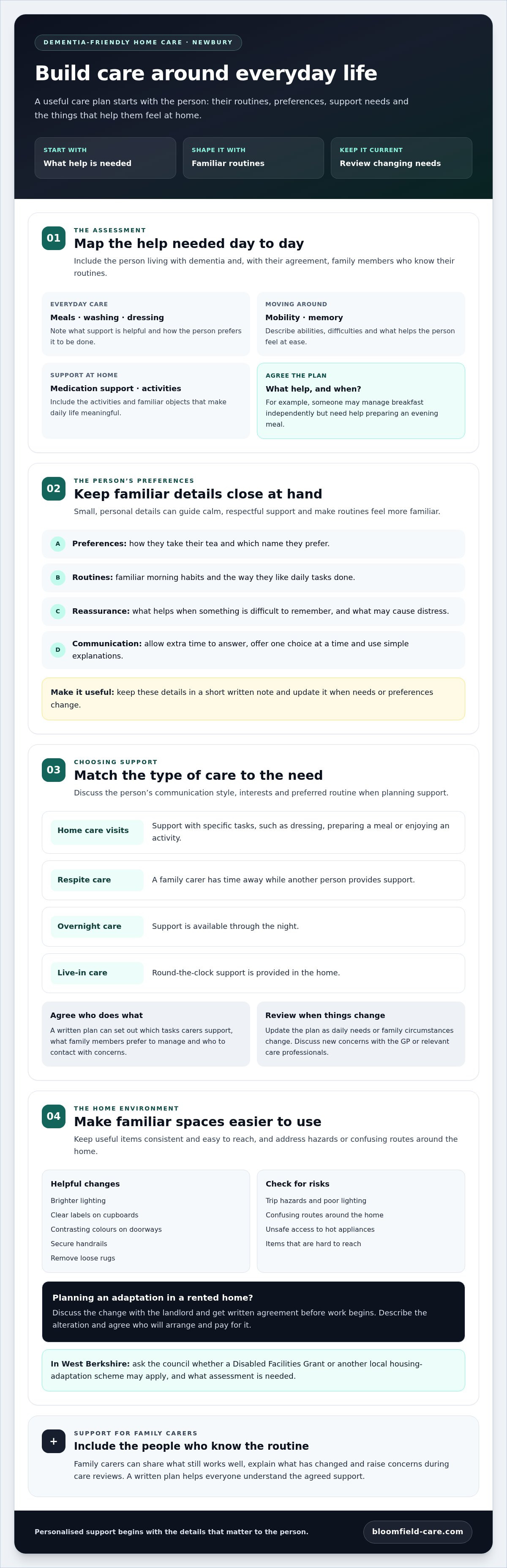
Personalised dementia care starts with the person’s preferences, abilities and daily routine. Share useful details with the carers, such as how someone takes their tea, which name they prefer, or what helps when they find something difficult to remember. These details can guide calm, respectful support.
Family members can explain what has changed and what still works well, from a familiar morning routine to a favourite activity. Keep these details in a short written note and update it as needs or preferences change.
Care Options and Carer Matching
Home care visits can help with specific tasks, such as dressing, preparing a meal or enjoying an activity. Respite care gives a family carer time away while another person provides support. Overnight care offers support through the night, while live-in care provides round-the-clock support in the home.
When considering a carer match, discuss the person’s communication style, interests and preferred routine. A familiar conversation about gardening, for example, may help someone feel at ease. A care home is another setting to consider if support at home no longer meets the person’s needs. Residential care generally includes personal support, while nursing care also addresses nursing needs.
Assessments and Tailored Packages
A care assessment should build a picture of everyday life, not just list tasks. Include the person living with dementia and, with their agreement, family members who know their routines. Cover meals, washing, dressing, mobility, memory, medication support and activities at home.
Use the assessment to agree what help is needed and when. Someone, for instance, may manage breakfast independently but need support preparing an evening meal. Review the plan when daily needs or family circumstances change, so the support continues to suit the person.
For adaptations in a rented home, discuss proposed changes with the landlord and get written agreement before work begins. Describe the specific alteration, such as fitting a grab rail or changing a door lock, and agree who will arrange and pay for it.
Adaptation costs vary: a simple change, such as clearer labels, is different from fitted equipment or building work. The cost depends on the adaptation, materials, installation and property. Ask for an itemised estimate before agreeing to work.
Helpful changes may include brighter lighting, clear cupboard labels, contrasting colours on doorways, secure handrails and removing loose rugs. Address trip hazards, confusing routes, unsafe access to hot appliances and poor lighting. Keep frequently used items, such as a kettle or clothes for getting dressed, in consistent, easy-to-reach places.
In West Berkshire, ask the council whether a Disabled Facilities Grant or another local housing-adaptation scheme may apply. Ask what assessment is needed and whether the person’s circumstances affect eligibility or contributions.
Support for people living with dementia and carers
Support should respond to what helps the person feel comfortable, not just complete a list of tasks. For someone living with dementia, this might mean offering one choice at a time, allowing extra time to answer, or using familiar objects to support daily activities. Carers can share what the person enjoys, what causes distress, and how they communicate preferences.
Practical support may include washing, dressing, meal preparation, companionship and help with a daily routine. Agree which tasks are needed and how the person prefers them to be done. For example, a carer might lay out two clothing options rather than choose for the person. Family carers can explain relevant routines and raise changes in needs during care reviews.
Be clear about the care team’s agreed role. A written plan can set out which daily tasks carers support, what family members prefer to manage and who to contact with concerns. Carers provide the agreed practical support, while changes to the plan should involve the person and those close to them. If a task feels unsafe or falls outside the agreed support, raise it with the care coordinator rather than assume the carer can take it on.
As dementia progresses, communication and day-to-day support needs may change. Familiar voices, simple explanations and a calm pace can make personal care feel less confusing. Keep useful details together, such as preferred foods, ways to offer reassurance and signs that someone needs a rest. Family carers can update these notes when they notice a change. Discuss new concerns with the person’s GP or relevant care professionals so support can be reviewed to reflect their current needs.
Carers in Newbury can also seek advice through Dementia UK’s Admiral Nurse clinics. Appointments last 45 minutes and take place at Nationwide Building Society, 75 Northbrook Street, Newbury, RG14 1ND. People concerned about their own memory or someone else’s, people diagnosed with dementia, and their carers can attend. No referral is needed, but book in advance. If you can’t book online, text APPOINTMENT to 0747 872 4000 to request an appointment.
Dementia Friendly West Berkshire works with people living with dementia and carers to ensure their voices are heard. A family member can bring a specific concern, such as finding suitable local activities or feeling isolated, to a support conversation. Preparing a short list of questions beforehand can help make that conversation focused and useful. You can also explore dementia care at home as part of learning about support options.
so use the clinic dates to plan ahead: the Newbury Nationwide Building Society branch clinics are scheduled for Tuesday 6th October and Wednesday 7 October 2026. Before attending, carers may find it helpful to decide which concern they most want to discuss and note any changes they have observed, alongside questions about support. This can keep the conversation centred on the person’s current needs and make it easier to explain what reassurance, routines or practical help are useful.
Maintaining familiar routines and hobbies
Familiar routines can give shape to the day and help preserve independence. Keep regular activities in a recognisable order, such as getting dressed, having breakfast and then reading the morning paper. If a task becomes difficult, offer a small prompt or practical help while giving the person time to take part.
Look for useful cues around the home. A labelled drawer can make it easier to find a favourite jumper, while a familiar mug beside the kettle can signal a usual tea break. Keep frequently used items in consistent places. If something needs moving, explain the change simply and show where it is now.
Hobbies can offer choice, purpose and comfort without needing to feel like formal activities. Match the activity to the person’s interests and current abilities. Someone who once enjoyed gardening might sort seed packets, water a houseplant or sit outside with a family member. A former keen cook could wash vegetables or stir ingredients while another person handles hot pans.
- Music: Play a familiar song and invite the person to listen, sing or tap along.
- Reading: Share a favourite magazine, family album or short passage aloud.
- Making things: Offer simple knitting, sorting, drawing or folding tasks linked to past interests.
- Everyday contribution: Invite the person to lay the table, match socks or help prepare a snack.
Notice how the person responds. If an activity brings enjoyment, allow time to continue; if it causes frustration or tiredness, pause and try something gentler. For example, replace a complicated jigsaw with sorting familiar photographs. Offer clear choices, such as a walk in the garden or listening to music, instead of asking an open-ended question.
Family members can make a simple routine sheet for the kitchen or care folder. Include preferred waking habits, meal choices, rest periods and activities that usually feel welcome. Use clear words and familiar names. A note such as “after lunch, water the plants” can help everyone offer consistent prompts without taking over.
Changes in interest or ability may mean adapting a hobby, rather than abandoning it. Break a familiar task into manageable steps, prepare materials beforehand and keep distractions low. If someone enjoys painting, set out a brush, paper and a small selection of colours. The aim is to support participation and choice, not to finish the task perfectly.
For outings around Newbury, plan around the person’s preferred pace and familiar comforts. A quiet visit to a nearby garden may suit someone who enjoys fresh air, while a family photo album at home may feel easier on a tiring day. Involve the person in choosing, and make the activity flexible enough to end when they wish.
Booking and referral requirements
For Newbury’s Dementia UK Admiral Nurse clinics, you don’t need a referral, but you should book an appointment in advance. The clinics are for people concerned about their own memory or someone else’s, people diagnosed with dementia, and carers supporting someone living with dementia.
If you can book online, use that route to request an appointment. If online booking isn’t possible, text the word APPOINTMENT to 0747 872 4000 to request one. Include the required word clearly, then keep your phone available for a response about the appointment request. Sending a text requests an appointment; it isn’t the appointment itself.
Before booking, note who needs support and what they hope to discuss. For example, write down a question about changing memory, communication at home or a carer’s concerns. A short list can help the person explain their situation during the appointment, especially if they find it difficult to remember details under pressure.
Each Newbury clinic appointment lasts 45 minutes and takes place at Nationwide Building Society, 75 Northbrook Street, Newbury, RG14 1ND. Keep the address with the appointment details so everyone travelling knows where to go. If a family member is accompanying the person, agree beforehand what they can help explain and what the person would prefer to discuss themselves.
Bring useful notes rather than trying to recall every detail during the meeting. Examples include a brief description of a recent difficulty, what was happening at the time, and what support has already helped. Carers can also note questions about their own situation. The aim is to make the 45-minute conversation focused on the concerns that matter most.
- Write down the main memory or caring concern before the appointment.
- Keep the Nationwide Building Society address and appointment details together.
- Ask a trusted family member to attend if the person wants support.
- Take notes during the conversation, including suggested next steps.
A clinic appointment offers specialist advice, while arranging home support is a separate process. The no-referral rule applies to attending the Newbury Admiral Nurse clinics, not to every other service. If you’re unsure which kind of support fits, first identify the immediate need, such as advice about dementia or practical help with daily living.
After the meeting, review the notes with the person and agree on one manageable next step. This might mean sharing relevant guidance with another family carer or recording a helpful suggestion in the person’s support notes. Keeping the person involved helps ensure decisions reflect their wishes, not only the family’s concerns.
Dementia-friendly organisations in the area
In Newbury and West Berkshire, Dementia Friendly West Berkshire connects people living with dementia and their carers. It works with residents and organisations to make sure their voices are heard. For home adaptations, ask about local signposting and support routes rather than assuming the group installs equipment or carries out building work.
The group brings together individuals, volunteers and organisations working towards a more dementia-friendly West Berkshire. Its aims include raising awareness, widening the range and diversity of services, reducing loneliness and isolation, and improving inclusion and support. These aims can help families find community conversations beyond clinical appointments.
Its listed members include West Berkshire Council, Age UK Berkshire, Royal Berkshire Fire and Rescue Service, Berkshire Healthcare Foundation Trust and South Central Ambulance Service. The Alzheimer’s Society, Community United, Eight Bells for Community Strength Newbury and West Berkshire Methodist Churches are also listed. These organisations have different roles, so families can start with the concern at hand, such as community connection or fire safety.
Dementia Friendly West Berkshire links to a “What’s On” calendar. Families can use the calendar to look for relevant local activities, then note the event name, date and contact details before planning attendance. Check whether the activity suits the person’s interests and comfort, and consider whether a carer should accompany them.
For a useful first conversation, write down the person’s main concern and the support they hope to find. For example, ask about local social activities if isolation is becoming difficult, or safety-awareness information if home fire risks are a concern. A clear question helps a community organisation direct the enquiry more effectively.
Community groups can also help carers feel heard. Dementia Friendly West Berkshire specifically includes carers’ voices in its work, giving families a way to raise barriers they face in daily life. A carer might describe difficulty attending activities or explain which changes would make a community setting easier to use. Sharing a concrete example gives the discussion a practical focus.
Local adaptation support and dementia-friendly community work are related, but they are not the same service. Changes such as clearer signs or safer access may need a property assessment and an appropriate adaptation provider. Community organisations can help families explore local connections, while the household’s needs guide which physical changes to consider.
If you’re exploring how practical dementia support can work at home alongside local connections, learn about dementia care at home and the support it can provide.
Local groups and charities continue to work closely with the Alzheimer's Society's Dementia Friends initiative to build inclusive communities. Dementia Friendly West Berkshire chair Colin Waugh has made West Berkshire his home for over 30 years.
Bloomfield Care: Live-in care
Bloomfield Care can help families consider dementia care at home when support needs become more involved. Its live-in care provides a 24-hour presence and support for higher-dependency needs, while domiciliary care offers home visits in Newbury. The right option depends on the person’s daily needs and the support their family can provide.
Bloomfield Care Ltd is registered with the Care Quality Commission and rated “Good” overall by the CQC. Support can be considered alongside familiar routines, home adaptations and local community connections, helping families plan care around the person’s circumstances.
If you’re weighing up support for someone close to you, contact Bloomfield Care or visit Bloomfield Care’s website to take the next step.
Take the next step at your own pace
A supportive home begins with choices that make daily life more manageable for the person living with dementia. Start by discussing one change or support need together, then decide what could help preserve comfort, choice and familiar ways of living. Keeping the person involved can make the next step feel more personal and respectful.
Families considering dementia-friendly home care in Newbury can explore how different levels of support might fit changing needs. Bloomfield Care provides live-in care, domiciliary care and elderly care, helping people receive support at home. The best starting point is an honest conversation about what the person needs and what their family can manage.
Before that conversation, agree who will speak for the family and note the questions everyone wants answered. This can keep the discussion clear while making space for the person’s own wishes.
There’s no need to settle every decision at once. Gather the questions that matter most to your family, then discuss the available support with Bloomfield Care.
Contact Bloomfield Care to learn more and take a considered next step towards support that respects the person and their home.
Frequently Asked Questions
How can I find out more?
Contact Bloomfield Care through its website or local office to discuss the support you’re considering. Note what the person finds difficult, which routines matter to them and what their family can manage. For example, mention whether help is needed with meals, personal care or companionship. This gives the conversation a practical starting point without requiring every care decision to be settled.
How can I arrange a home assessment for someone with dementia in West Berkshire?
Call Bloomfield Care or request a call back to arrange a free home visit with no obligation. The initial call usually takes 10 to 15 minutes, with no pressure, and the visit usually takes about an hour. Beforehand, note the person’s daily support needs and any questions. You can discuss a care plan together, then the person can meet their carers before care begins. To take the next step, call your local office or use the contact form.