Dementia communication in Dorset: Find support and care
Finding the right support can make communication feel less lonely and more manageable. For dementia communication in Dorset, start by sharing your concerns with a health professional or a local support service, then explore community guidance, dementia services and care that fit the person’s needs. Support can help both the person living with dementia and the people close to them.
It’s understandable to feel unsure about what to say or where to turn, especially when familiar conversations and routines change. A calm, respectful approach can help preserve dignity and connection, while practical support can ease some of the pressure on family carers.
This guide explains how to find community support and dementia services in Dorset, what kinds of care may help at home, and how to consider the next steps. It offers a clear starting point, so you can focus on what matters to your family and the person you care about.
Key Takeaways
- Start with a GP or local support service to explore guidance and care options suited to the person and their family.
- Use calm, simple language and allow time for replies to make everyday conversations feel less pressured.
- Learn practical communication approaches that carers and care staff can use consistently.
- When speech becomes difficult, pay attention to expression, gesture, tone and other ways the person may communicate.
- Explore whether personalised dementia care at home, including live-in care, could support familiar routines and wellbeing.
Dementia services and care in Dorset
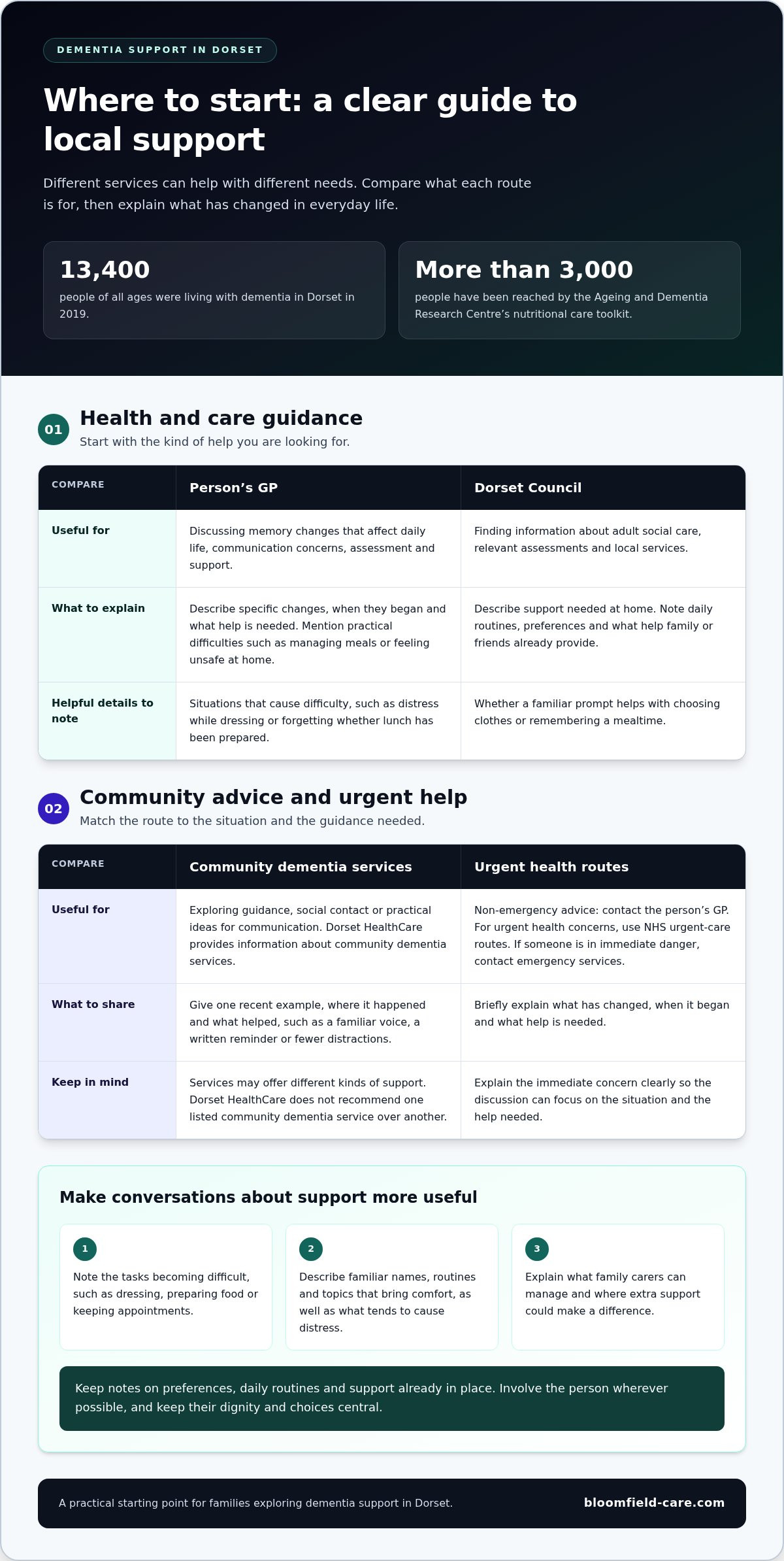
In Dorset, start with the person’s GP if memory changes affect daily life or communication. The GP can discuss concerns and guide the next steps towards assessment and support. Around 13,400 people of all ages were living with dementia in Dorset in 2019. For families seeking dementia communication in Dorset, describing specific changes can make the first conversation more useful.
For non-emergency advice, contact the person’s GP and ask about local dementia support. For urgent health concerns, use NHS urgent-care routes; if someone is in immediate danger, contact emergency services. When you call, briefly explain what has changed, when it began and what help is needed. For example, mention if the person is struggling to manage meals or feels unsafe at home.
Support needs can involve more than memory. A person may need help with personal care, meals, medication routines, companionship or familiar activities. Note the situations causing difficulty, such as becoming distressed while dressing or forgetting whether lunch has been prepared. These examples help families explain practical needs when discussing dementia communication in Dorset with health and social care professionals.
Dorset Council is a useful starting point for information about adult social care. Families can describe the support needed at home and ask about relevant assessments or local services. Keep notes on the person’s preferences, daily routine and the help already provided. For instance, record whether a familiar prompt helps them choose clothes or remember a mealtime.
Care can be arranged around specific daily tasks or provide more regular support at home, with trusted local providers like Bloomfield Care offering dedicated assistance. The right approach depends on the person’s abilities, preferences and safety, as well as the help available from family or friends. A short visit may support a planned task, while changing needs may call for a broader discussion about ongoing care. Involve the person wherever possible.
When comparing options in Dorset, focus on what each service can help with and how it fits the person’s routine. A simple list can make conversations clearer:
- Note the tasks that are becoming difficult, such as dressing, preparing food or keeping appointments.
- Describe communication preferences, including familiar names, routines and topics that bring comfort.
- Explain what family carers can manage and where extra support from Bloomfield Care would make a difference.
These details give professionals a clearer picture than a general request for help. They also help keep decisions focused on the person’s dignity, choices and familiar home life.
Nutrition can also be part of a discussion about everyday support, alongside meals and routines. The Ageing and Dementia Research Centre’s nutritional care toolkit for people with dementia has reached more than 3,000 people. Families can raise nutritional care when describing difficulties with meals and ask professionals whether the toolkit may be relevant to their conversation. Keeping notes about what makes meals manageable, and any support already in place, can help clarify the person’s needs while keeping their preferences central. This can sit alongside discussion of communication, personal care and safety, rather than replacing an individual assessment.
Dorset dementia communication support services and advice
For advice about communication in Dorset, start by describing what feels difficult. A family member might explain that conversations become confusing at mealtimes or that the person struggles to find familiar words. Share these examples with the person’s GP or a local support service. Specific situations help focus the discussion on practical guidance, not just general information about dementia.
Dorset HealthCare’s information about community dementia services can help families understand the local support landscape. Dorset HealthCare does not recommend one listed community dementia service over another. Use the details of each service to consider what kind of guidance it offers, such as information for carers, social contact or help understanding communication changes.
Before contacting a service, note the person’s preferred name, communication habits and what tends to help. For example, record whether they respond better to short explanations, familiar phrases or a quiet room. Include situations that cause distress, such as several people speaking at once. A concise record makes it easier to explain the need and discuss useful next steps.
Dorset Council is another point of contact for information about adult social care and local support. Explain how communication affects everyday tasks. For instance, the person may struggle to follow instructions while preparing a drink or find telephone conversations difficult. Ask what local advice or assessment may be relevant to these needs.
When comparing community options, look at the support each one describes rather than assuming every service does the same thing. Dorset HealthCare’s position is not to rank listed services. Instead, match the service information to the family’s priorities, such as understanding dementia, meeting other carers or finding practical ideas for conversations at home.
- Explain one recent communication difficulty, including where it happened and what was said.
- Describe what helped, such as a familiar voice, a written reminder or fewer distractions.
- Ask whether the service provides advice for relatives, the person with dementia, or both.
- Keep the contact details and agreed next steps together, so family members can follow up consistently.
When speaking with professionals over time, bring your notes and update them as needs change. If the person becomes upset during a particular task, describe the words, setting and response that came before it. This gives advisers a clearer starting point for suggesting communication approaches that respect the person’s preferences and dignity.
If communication difficulties are making daily life harder, explore personalised support at home as one possible part of the wider support plan.
When the person becomes upset during a particular task, record what happened and whether changing the setting or pace made the conversation easier. Share the pattern with a professional or support service, and agree on a simple approach relatives can use consistently. More than 80 people from Dorset’s voluntary and community sector attended the inaugural Stakeholder Conversation in Dorchester. Families can explain what communication support they are seeking and ask local services how to follow up if needs change.
Dementia communication techniques for carers and family members
Choose a quiet moment for an important conversation. Turn off the television, move closer and say the person’s name to get their attention. Face them at eye level and speak in a calm, familiar voice. If they seem tired or distracted, pause and try again later rather than competing with background noise.
Keep each sentence short and focused on one idea. Instead of saying, “Get ready, put your coat on and we’ll leave soon,” try, “Would you like your coat?” Then give them time to reply. A pause gives the person space to understand and respond, so avoid filling the silence or immediately repeating the question.
Offer simple choices when a decision is needed. “Would you like tea or water?” is easier to follow than “What would you like to drink?” If useful, show the options by holding up a cup of tea and a glass of water. Avoid testing memory with questions such as, “Do you remember what we did yesterday?”
If the person says something inaccurate, consider whether correcting them will help in the moment. Disagreeing about an old memory may cause distress without solving a practical problem. Respond to the feeling instead: “You’re looking for your mum. You miss her.” Then gently suggest a familiar activity, such as looking through a family album together.
Pay attention to expression and body language as well as words. The person may turn away, frown or become restless if a conversation feels confusing. Lower your voice, reduce distractions and give them space. If they smile or relax when you mention gardening, for example, use that familiar interest to reconnect and keep the exchange comfortable.
- Use the person’s preferred name and familiar words for everyday objects.
- Give one instruction at a time, such as “Please sit here,” before explaining the next step.
- Ask yes-or-no questions when open questions feel difficult to answer.
- Use gestures or point to an object, such as showing a cardigan when offering it.
For a task such as getting dressed, explain each step as you go and let the person do what they can. Hold up two familiar tops rather than choosing for them. If they become upset, stop, reassure them calmly and return to the task when they seem more settled. This keeps the exchange respectful and avoids making help feel like pressure.
Families can share useful phrases and approaches. Note what worked during a visit, such as offering a drink before discussing an appointment. Consistency between relatives can make everyday conversations clearer, while still allowing you to adapt when the person’s mood or needs change.
Dorset dementia communication training for carers and care staff
Useful dementia communication training turns broad advice into skills carers can practise during everyday support. In Dorset, families and care staff can use local dementia services as starting points for guidance. Dorset HealthCare provides information about community dementia services, while Dorset Council shares information about adult social care. Describe the training need clearly, such as supporting conversations during personal care.
Useful learning starts with understanding how communication needs can change. A carer might practise using plain words, sharing one idea at a time and waiting for the person’s response. Training can also explore how tone, facial expression and pace affect an interaction. A rushed instruction may feel confusing, for example, while a gentle explanation can make the next step clearer.
Practise with realistic situations. A family member could role-play offering a choice between two meals, then discuss which words were easiest to follow. Care staff could practise explaining a familiar task before starting, such as getting a coat ready for an outing. Role-play helps carers notice if they interrupt, ask several questions at once or speak from another room.
Training should also help carers respond when communication becomes difficult. If a person repeats a question, practise answering calmly rather than showing frustration. If they refuse help, consider whether the timing, surroundings or wording played a part. Staff can learn to pause, reduce distractions and try a simpler explanation later, while respecting the person’s preferences and choices.
- Practise gaining attention before speaking, using the person’s name and a clear, gentle tone.
- Replace multi-step instructions with one request, then allow time for a response.
- Notice signs of discomfort, including turning away or becoming tense, and adjust the approach.
- Share effective phrases with other carers so support feels familiar and consistent.
Families can build a simple learning routine at home. After a difficult conversation, note what happened, what the person seemed to understand and what helped them feel settled. Bring the example to a discussion with a dementia support service or care professional. A specific account, such as difficulty following a telephone call, gives the conversation a practical focus.
Care staff can use handovers to share communication preferences. Notes might say that the person responds well to a familiar greeting, needs extra time or prefers choices shown visually. Keep these observations respectful and focused on the individual. They should guide each interaction, not reduce the person to a list of difficulties.
For carers in Dorset, the aim is not to memorise fixed scripts, but to practise noticing, adapting and responding with respect. An approach that works at breakfast may need to change later. Reviewing real examples with family members and support services helps turn learning into thoughtful, person-centred care.
How to communicate with someone with advanced dementia
As dementia progresses, spoken words may become harder to understand or use. Connection can still come through a familiar voice, a gentle expression or a shared activity. Approach from the front, say the person’s name and give them time to notice you. For example, sit beside them before offering help with a cup of tea.
Use one short phrase at a time, then pause. During handwashing, you might say, “Let’s wash your hands,” while showing the towel. If the person doesn’t respond, wait and try a simple gesture rather than repeating several instructions. Keep your voice steady and avoid speaking as though they aren’t present.
Notice how the person responds, not just what they say. A relaxed face, reaching towards an object or turning away can offer clues about comfort or preference. If they pull back when you offer a jumper, stop and give them space. You could show another familiar item or try again later.
Familiar music, photographs and objects can help you connect when conversation feels difficult. A favourite song may invite a smile or gentle movement. A family photograph can prompt shared attention, even if the person doesn’t name anyone. Follow their response instead of testing their memory by asking who appears in the picture.
- Offer one clear choice, such as holding up a blue cardigan and a grey one.
- Use gestures alongside words, such as pointing to the chair before inviting them to sit.
- Reduce noise by turning off the television before speaking.
- Allow time for a response, and accept a gesture or expression as communication.
During personal care, explain what you’re about to do before touching the person. For example, say, “I’m going to help with your sleeve,” and pause. Keep them covered and comfortable, and watch for signs of distress. If they tense up or move away, stop, reassure them calmly and consider trying at a different time or in a different way.
When the person seems upset, respond to the feeling rather than correcting their words. If they say they need to go home while already at home, you might say, “You want somewhere familiar.” Then offer a comforting activity, such as sitting in their usual chair. A calm presence can be more helpful than a detailed explanation.
Share successful approaches with relatives and care staff. A note such as “show the cup before offering a drink” gives others a practical cue. Keep observing, as a phrase or activity that feels welcome one day may not suit the person another time. Respectful communication means adapting to their comfort and choices.
Bloomfield Care: Live-in care
Bloomfield Care can help families consider live-in care when dementia-related needs make regular support at home important. A carer provides a 24-hour presence and support for people with higher-dependency needs, helping maintain familiar routines and offering companionship in the person’s own home.
For someone who benefits from steady, familiar support, this approach can help keep communication centred on their preferences and daily habits. Bloomfield Care provides domiciliary care and dementia care, which can support different needs at home. Start by discussing the person’s routine, the help they need and what matters to them.
If you’re exploring care for a family member, contact Bloomfield Care to discuss support that may suit their needs.
Take the next step at your own pace
For families seeking dementia communication support in Dorset, choose one priority to discuss first. It might be making mornings calmer, supporting a family carer or helping a loved one feel more comfortable during daily routines. Starting with one concern can make the next decision clearer.
Bloomfield Care offers live-in care, domiciliary care and elderly care. Support can be shaped around the person’s needs, preferences and familiar routines. Share what matters to your family and discuss the support you’re considering.
You don’t need to have every detail decided before making contact. If you’d like to discuss your family’s needs, use Bloomfield Care’s contact form. One thoughtful step can help you move forward while keeping your loved one’s comfort and dignity in focus.