Consistent Live-in Dementia Care in Abingdon: Familiar Routines and Trust
A familiar routine and a consistent presence can help someone with dementia feel more at ease at home. Choosing a live-in dementia carer in Abingdon may suit someone who needs ongoing support while staying in familiar surroundings. Care should respect their preferences, dignity and independence.
It’s understandable to want reassurance about a carer’s experience and how they will support your relative. If you’re considering a permanent dementia carer in Abingdon, familiarity matters: a carer who learns your relative’s routines and communication style can make everyday support more personal.
This article explains how consistent routines and a supportive home environment can help someone with dementia in Abingdon. It also explores what ongoing care may involve and what to consider when choosing a permanent dementia carer in Abingdon.
Key Takeaways
- Notice which familiar routines bring comfort, and use them to shape a more reassuring day at home.
- Small changes to the home environment can make everyday activities feel easier and safer.
- Think through the support needed across the day, including personal care, companionship and help with daily routines.
- When considering ongoing care in Abingdon, identify the person’s preferences and needs before deciding what arrangement may suit them.
- Learn how live-in care and dementia care from Bloomfield Care may support someone who wants to remain at home.
Benefits of familiar surroundings and routines
In Abingdon, staying at home keeps familiar rooms, belongings and neighbourhood landmarks part of everyday life. Consistent routines can also help carers recognise what feels comfortable and notice what has changed.
Continuity in Familiar Settings
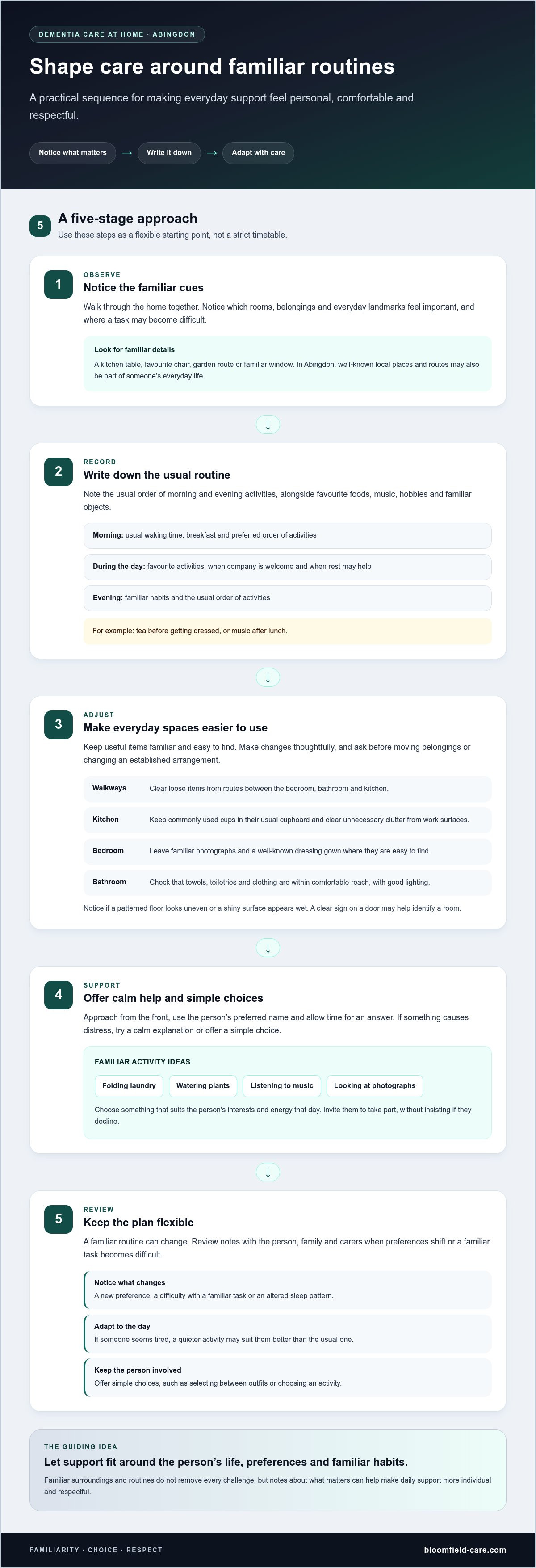
A familiar home offers everyday cues, such as the kitchen table, a favourite chair or the route to the garden. These surroundings can support independence with familiar tasks, like choosing a mug or finding a coat. Note which rooms and belongings matter most, then consider how care can fit around them without taking over.
Make a simple room-by-room note of useful landmarks and preferred belongings. In the kitchen, keep commonly used cups in their usual cupboard. In the bedroom, leave familiar photographs and a well-known dressing gown where they are easy to find. These details give carers practical ways to support daily activities while respecting the person’s habits.
Being at home also keeps everyday connections close. Someone may recognise a neighbour, enjoy looking through a familiar window or feel at ease in a well-known garden. In Abingdon, local places and familiar routes may be part of a person’s identity. A short walk on a known path may feel more reassuring than an unfamiliar outing, if walking is already part of their routine.
Consider what might change if the person moved to a care home. A new room, different sounds and faces, and unfamiliar daily patterns may take time to adjust to. That does not mean a care home is unsuitable; weigh the person’s preferences, support needs and response to change. Families can note which familiar objects might help make a new room feel more personal.
Maintaining Daily Routines
Routines give shape to ordinary days. Write down the person’s usual waking time, preferred breakfast, favourite activities and evening habits. They may, for example, like tea before getting dressed or enjoy music after lunch. Sharing these details helps carers provide support in a familiar order and avoid unnecessary changes to comfortable habits.
Keep the routine flexible rather than treating it as a strict timetable. If someone usually gardens after breakfast but seems tired, a quieter activity may suit them that day. A short written record can show which activities they welcome, when they prefer company and what signs suggest they need a rest. This gives family members and carers a practical starting point each day.
When considering dementia care, ask how support can follow personal routines and preferences. Carers trained in dementia support should listen to the person and family, rather than assume one schedule suits everyone. Share practical examples, such as how the person likes help with dressing or which familiar meal they enjoy. These details help make care individual and respectful.
Try these steps when recording a routine:
- Note the usual order of morning and evening activities.
- Record favourite foods, music, hobbies and familiar objects.
- Describe what helps if a task becomes confusing or frustrating.
Review the notes when routines change. A new preference, difficulty with a familiar task or altered sleep pattern can be useful for the family and carers to discuss. Keep the person involved by offering simple choices, such as selecting between outfits or choosing an activity. Familiar surroundings and routines do not remove every challenge, but they can help daily support reflect the person’s life, not just their care needs.
Safe and nurturing environment
A supportive home combines practical safety with comfort and choice. In Abingdon, families can also explore welcoming community activities where people with dementia and their carers can spend time together.
Make everyday spaces easier to use
Walk through the home with the person and notice where everyday tasks become difficult. A clear route between the bedroom, bathroom and kitchen can make moving around simpler. Move loose items that obstruct walkways, and keep commonly used objects easy to see. Ask before changing familiar arrangements, as a well-meant tidy-up can make belongings harder to find.
In the bathroom, check whether towels, toiletries and clothing are within comfortable reach. Good lighting can make the room easier to use, especially during evening routines. In the kitchen, keep frequently used items in familiar places and clear unnecessary clutter from work surfaces. These practical adjustments should not take away the person’s independence or control.
Look at the home from the person’s point of view. Could a patterned floor look uneven, or a shiny surface appear wet? Would a clear sign on the bathroom door make it easier to identify? Small, visible cues can support orientation. A family member can observe which places cause hesitation, then discuss one change at a time.
Offer calm, respectful support
A supportive environment also depends on how people speak and respond. Approach from the front, use the person’s preferred name and allow time for an answer. If a question causes distress, try a calm explanation or offer a simple choice, such as sitting in the lounge or garden. This respects the person rather than rushing them through a task.
Activities can provide structure and a sense of participation. Offer familiar options, such as folding laundry, watering plants, listening to music or looking through photographs. Choose an activity that suits the person’s interests and energy that day. Invite them to join, but don’t treat participation as a test or insist if they decline.
Families in Abingdon can also consider welcoming community sessions. Dementia Friendly Abingdon’s Coffee Group is for people living with dementia or mild cognitive impairment and their carers. It meets on Thursday mornings from 10:30 to 11:30 at St Ethelwold’s House in Abingdon. A familiar community setting may offer a chance to meet others without making every social activity feel formal.
Bridge House hosts a Community Butterflies Café each month. Families can consider whether a group setting feels comfortable and plan practical details such as transport, the best time of day and what helps the person feel at ease. A short visit may be a gentler introduction than a long session. Let the person’s preferences guide whether they attend.
Dementia Friendly Abingdon aims to make the town more supportive of people affected by dementia or mild cognitive impairment, and their carers. Its awareness sessions are delivered by volunteers trained by the Alzheimer’s Society. The sessions help community groups, businesses, public services and young people learn to respond more considerately.
For a practical home review, note one concern in each main room, then agree which change to try first. Include the person wherever possible. Families can also talk through support for a safer home as they consider next steps. A dedicated, patient approach can help the home remain both welcoming and centred on the person’s choices.
What is the process for arranging a permanent dementia care placement in Abingdon?
Start by defining what “permanent placement” means for your family: moving into a care home, or arranging ongoing support at home. The right next steps depend on the person’s wishes, daily support needs, health and finances.
Describe the support needed
Write down the tasks that have become difficult, such as preparing meals, washing, dressing or managing safely at home. Include what happens during the day and night, along with any changes that concern the family. For example, note whether the person can prepare a familiar lunch independently or needs someone nearby to help with each step.
Record the person’s preferences alongside practical details. They may want to stay near familiar friends in Abingdon, keep a pet or continue a weekly activity. Ask what matters most to them and include their answers in care discussions. A clear picture of needs and preferences helps families compare a care home move with ongoing support in familiar surroundings.
Explore suitable care arrangements
Make a short list of the arrangements you want to consider. A care home provides a residential setting, while support at home lets the person remain in familiar surroundings. Think through how each option would work on an ordinary day: who would help with meals, personal care, companionship and activities?
For a care home, consider the setting, daily routine, personal space and how carers would learn the person’s preferences. For support at home, map out when help is needed and which household routines should remain unchanged. If family members currently provide support, note what they can comfortably continue and where additional help would make a practical difference.
Plan the move and handover
If the family chooses a care home, prepare a written handover before moving day. Include the person’s preferred name, communication style, food likes and dislikes, familiar activities, and what usually helps when they feel unsettled. Pack recognisable belongings, such as family photographs or a favourite blanket, and label them clearly. These steps help carers understand the person as an individual, not just a list of tasks.
For a move from hospital, gather the discharge information and list the support needed after returning home or entering residential care. If the person is moving from home, plan how prescriptions, clothing, mobility aids and familiar objects will travel with them. Give the person time to understand each step, using simple explanations and calm conversations rather than presenting every decision at once.
Understand funding and financial considerations
Ask the local authority about a financial assessment and what information the family should prepare. In the UK, the 12-Week Property Disregard may temporarily exclude a person’s home from financial assessments if they have been in hospital or are receiving permanent care. This can be relevant when a person enters permanent residential care, so families should include the home and other finances in the discussion.
The NHS provides a weekly payment called NHS Funded Nursing Care to contribute towards nursing care when it is required. It does not cover all care home fees. Keep these points distinct when planning: contributions towards nursing care and the wider costs of a care home are not the same. Write down questions about accommodation, personal care and nursing needs before discussing the overall arrangement.
Before confirming a permanent move, review the plan with the person and family. Check that the chosen arrangement addresses the daily support needs you recorded, and that belongings and routines have been considered. If you’re weighing up the next steps, talk through your family’s care needs and the support that may suit home life in Abingdon.
Before confirming an arrangement, compare the practical support plan with the costs and make sure the family understands what each option covers. Consider how often help is needed, whether support is required overnight and who will coordinate changes as needs develop.
Discuss the figures with the person and anyone involved in funding decisions, and make sure the chosen plan can be sustained. Keep notes of questions and agreed actions, then revisit the arrangement if the person’s circumstances or preferences change, so support continues to reflect their needs.
Bloomfield Care: Live-in care
Bloomfield Care can help families in Abingdon considering a permanent dementia carer at home. Live-in care provides a 24-hour presence and support for people with higher-dependency needs, while allowing them to remain in familiar surroundings.
If you’re considering a permanent dementia carer in Abingdon, talk with Bloomfield Care about your relative’s daily needs, routines and preferences. This can help you consider whether live-in care or home care visits may better suit your family’s circumstances.
To discuss a permanent dementia carer in Abingdon, contact Bloomfield Care by phone or through the contact form.
Choose a next step that feels right for your family
Deciding whether live-in care for dementia in Abingdon is the right choice starts with a conversation about the person, not just the tasks they need help with. Consider what they value at home, where support is most needed and how much involvement family members can comfortably provide. Take time to discuss these points together and make a plan that respects the person’s wishes.
Bloomfield Care offers live-in care, domiciliary care and elderly care. Families can get in touch to talk about the support that may fit their circumstances and their relative’s day-to-day needs. A first conversation can help you explain what matters most and explore a suitable way forward, without needing to have every decision settled beforehand.
Contact Bloomfield Care to discuss support. With a thoughtful plan and the right support, your family can take the next step with greater confidence.
Frequently Asked Questions
Are your carers trained in dementia care?
Yes. Bloomfield Care’s carers are trained to support people living with dementia. They can adapt their communication and provide practical help with everyday activities. Share details such as whether your relative responds best to one instruction at a time or prefers extra time to answer. These insights help carers provide respectful, considerate support.
Can you support more advanced dementia?
Yes, Bloomfield Care provides dementia care for people with different support needs. Families can describe the help their relative needs, such as assistance with dressing, meals or communicating choices. Explain what a typical day looks like and where difficulties arise. This gives the care discussion a clear starting point and helps identify support that may suit the person.
How much does dementia care cost in Abingdon?
The cost depends on the care needed, including the type and amount of support required. For example, a family may need help with selected daily tasks, while another person may require more ongoing assistance. Bloomfield Care can discuss your relative’s circumstances and the support you’re considering. Contact the team for a free assessment and to talk through the care needed.
Why is staying at home good for someone with dementia?
Remaining at home can let someone keep familiar roles and make everyday choices in their own space. They might enjoy setting the table, choosing what to wear or deciding where to sit. These opportunities can help preserve a sense of control and personal identity. To discuss support for your family member, call your local office or use the contact form.