Alzheimer's Home Care in Oxfordshire for Independent Living
Alzheimer’s home care in Oxfordshire can help someone remain in familiar surroundings, with support shaped around their needs and daily routines. Support may take the form of home care visits or live-in care, with family involved in decisions wherever the person wishes. If memory changes or everyday tasks are becoming difficult, speak to a GP about the next steps.
It’s understandable to want to know who will come into your relative’s home and whether care can adapt as their needs change. Personal care should respect the person’s choices, dignity and independence, while giving family carers room to rest and plan ahead. This guide explains how personalised support, respite and live-in care can fit into a plan, and what to consider for the future. It will help you explore options for supporting someone with Alzheimer’s at home in Oxfordshire and identify practical next steps for your family.
Key Takeaways
- If memory changes or everyday tasks become harder, speaking with a GP can be a helpful first step towards assessment and support.
- Personalised care can be shaped around familiar routines, preferences and the help needed to maintain independence at home.
- Respite support can give family carers time to rest while their relative continues to receive care.
- Planning ahead can help families discuss future preferences and prepare for changing care needs.
- Home care visits and live-in care offer different ways to support someone at home; the right arrangement depends on their needs and circumstances.
Looking for dementia home care?
In Oxfordshire, support can begin before a dementia diagnosis and change as needs develop, including planning for end-of-life care or a move to a care home. Oxfordshire County Council is the route for asking about an adult social care assessment and possible council-arranged support; decisions depend on assessed needs and financial circumstances.
Support Across the Dementia Journey
A diagnosis is one point in a longer journey, not a complete plan for daily life. Talk with the person, their family and relevant professionals about current support needs, such as meals, personal care, medication routines or companionship. Keep a written record of changing needs and preferences so the plan can be reviewed as circumstances change.
Over time, families may need to discuss more intensive care, end-of-life wishes or whether a care home would better meet the person’s needs. These conversations can cover what matters to the person, the support available at home and the practical needs of family carers. Raising preferences early gives everyone time to understand the options and plan together.
Local Advice and Referral Routes
You do not need a dementia diagnosis to seek advice about memory concerns. In Oxfordshire, people with memory concerns, Mild Cognitive Impairment or a wait for a Memory Clinic appointment can access the Memory support service after referral by a GP or another medical professional. Advisers arrange a phone appointment to provide information and support, and may refer people to other organisations.
After a dementia diagnosis, people living at home are matched with a local Dementia Adviser who supports them and their family. Dementia Oxfordshire’s support line, 01865 410 210, offers advice about local services. People can also find memory cafés, clubs, singing groups, carer training and social opportunities by searching “dementia” on Live Well Oxfordshire. Professionals, including doctors and district nurses, can refer people to dementia advisers.
Home Care Options and Council Funding
Home support can fit around the person’s daily routine and the tasks they find difficult. For example, a family might arrange help with washing and dressing while the person continues choosing meals, activities and how to spend the day. Alzheimer’s care at home can adapt as needs change. Review which tasks need support and when.
To ask about council support, contact Oxfordshire County Council about an adult social care assessment. The assessment and financial circumstances help determine whether the council can arrange or contribute towards care. Oxfordshire also has seven community centres supporting adults living with dementia. Families can consider these alongside help at home when planning suitable support and meaningful activities.
Personalised care and remaining independent at home
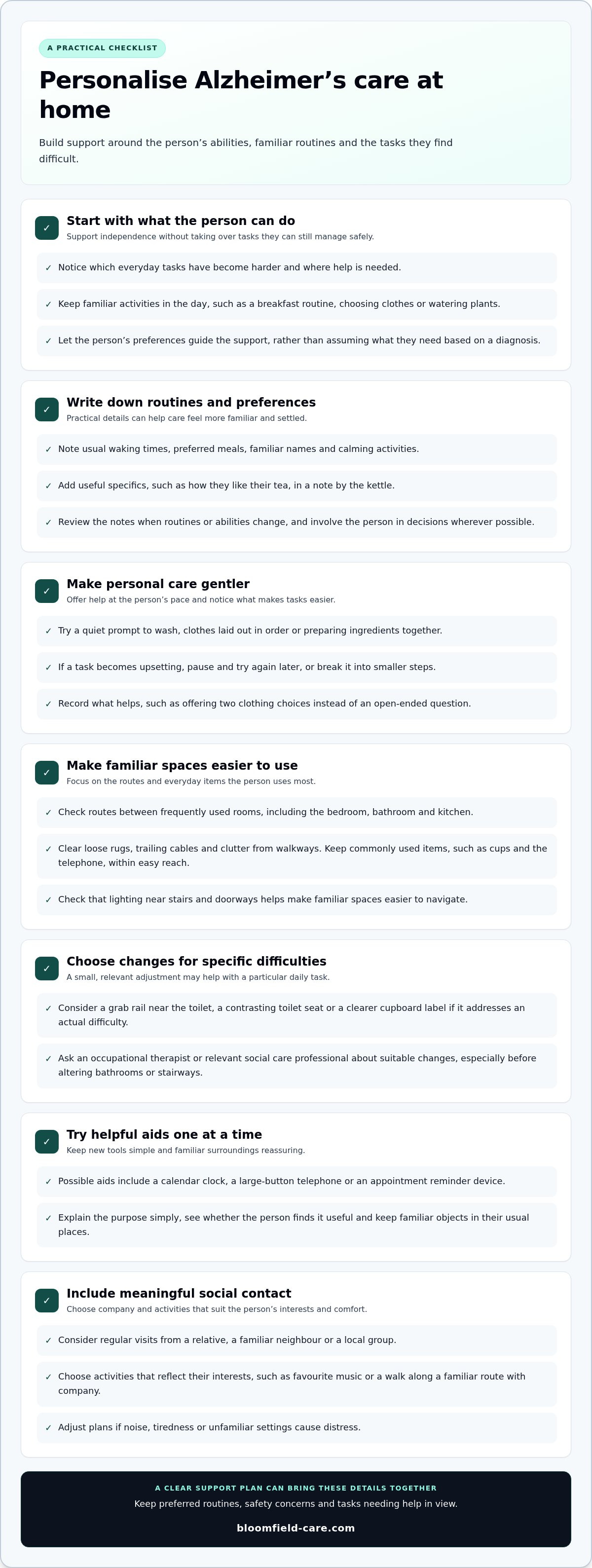
Start by identifying what the person can still manage and where Alzheimer’s makes tasks harder. A familiar breakfast routine, choosing clothes or watering plants may remain part of their day. Support is most helpful when it follows their preferences rather than taking over tasks they can still do safely.
Write down practical details that help the person feel settled: their usual waking time, preferred meals, familiar names and calming activities. For example, a note by the kettle can remind a carer how they like their tea. Review the notes when routines or abilities change, and involve the person in decisions wherever possible.
Offer personal care at the person’s pace. A quiet prompt to wash, clothes laid out in order or preparing ingredients together may help them participate. If a task becomes upsetting, pause and try again later, or break it into smaller steps. Record what helps, such as offering two clothing choices rather than asking an open-ended question.
Check the routes between frequently used rooms, including the bedroom, bathroom and kitchen. Remove loose rugs, trailing cables and clutter from walkways. Keep commonly used items, such as cups and the telephone, within easy reach. Good lighting near stairs and doorways can make familiar spaces easier to navigate.
Adapt the home to the person’s actual difficulties, not assumptions about their diagnosis. A grab rail near the toilet, a contrasting toilet seat or a clearer cupboard label may help with a specific daily task. Ask an occupational therapist or relevant social care professional about suitable changes, especially before altering bathrooms or stairways.
Assistive technology may provide practical reminders or make it easier to call for help. Options include a calendar clock, a large-button telephone or an appointment reminder device. Introduce one change at a time, explain its purpose simply and see whether the person finds it useful. Keep familiar objects in their usual places while trying new aids.
Include social contact in plans for independence. Regular visits from a relative, a familiar neighbour or a local group can add structure to the week. Choose activities that reflect the person’s interests, such as favourite music or a walk along a familiar route with company. Adjust plans if noise, fatigue or unfamiliar settings cause distress.
Families can turn these observations into a clear support plan, with preferred routines, safety concerns and tasks needing help. If practical support at home would help put that plan into action, explore personalised home support options.
Benefits and respite breaks for carers
Supporting someone with dementia can involve familiar routines, personal care and repeated reminders. Respite gives family carers time away while another person helps maintain the agreed routine. Planning a break around a specific need, such as an appointment, rest or a social activity, can make support easier to arrange.
To compare CQC-rated dementia home care providers in Oxfordshire, use the Care Quality Commission’s published provider profiles to review registration and ratings. Then compare the support offered, including dementia experience, care planning and how the provider will respect the person’s preferences.
Make respite practical by listing the tasks that need covering, such as preparing lunch, giving a routine reminder or providing companionship. Share useful details with the carer, including preferred foods, ways to communicate and what helps if the person feels unsettled. A clear handover keeps the break familiar for the person receiving care and more manageable for family carers.
Before arranging live-in support, agree the role and boundaries with the provider. Write down daily tasks, routines, break arrangements and who to contact about changes. A live-in carer supports agreed care needs, but is not a substitute for every professional or household service. Clarify who manages clinical decisions and which household tasks are outside the care plan.
Choosing a carer also means considering how the person feels with them. Include the person in introductions where possible, and explain their communication style, interests and routines. For example, gentle prompts may work better than correcting a repeated question. Once support begins, note what feels comfortable and discuss any adjustments to the plan with the provider.
Ask about dementia training for family carers as well as paid carers. Training can help relatives practise clearer communication, respond to distress and support daily routines. Oxfordshire’s local support directories can help families find training opportunities. Before choosing a course, consider whether it covers situations your family faces, such as supporting someone at meals or helping them prepare for an outing.
Plan respite as part of ongoing care, rather than waiting until a family carer feels exhausted. Keep a simple record of what worked, what the person enjoyed and what to change next time. These details can guide future breaks and help the family explain the person’s needs consistently to anyone providing support.
Future planning and legal issues
Planning early can help someone living with dementia express what matters while they can take part in decisions. Choose a calm time to discuss practical topics, such as preferred daily activities, who should be involved in care conversations and what makes home feel familiar. Record the person’s own words and revisit the notes as their wishes or circumstances change.
Give legal and financial matters separate attention. List questions about managing bills, making decisions and recording future care preferences. For example, ask a solicitor which formal arrangements may suit the person’s circumstances and how to put them in place. Do not assume a relative can make decisions simply because they provide day-to-day support.
A planning file can bring key information together in one place. Include contact details for the GP, family members involved in support and relevant professionals. Add a medication list, the person’s communication preferences, important routines and activities they enjoy. Keep the file somewhere agreed with the person, and tell trusted family members where to find it.
Discuss future care choices before a crisis makes conversation harder. The person may wish to remain at home for as long as suitable, or may want family to consider other settings if support needs change. Record what they value, such as familiar surroundings, privacy, visits from particular people or access to a garden. These details can guide later conversations with family and care professionals.
Review plans after a diagnosis, a change in health or a significant change at home. A fall, difficulty preparing meals or growing confusion about daily routines may prompt a family discussion. Keep the focus on the person’s wishes and the support they need, rather than making decisions based on one difficult day.
Prepare for appointments by writing down questions in advance. Ask the GP or relevant professional to clarify care needs, available support and who should be involved in planning. If family members disagree, return to the person’s recorded preferences and identify the specific issue to resolve. Recording decisions and follow-up actions can help everyone stay informed.
Planning should also account for family carers’ needs. Agree who can help with calls, paperwork and routine tasks, and note any commitments that may affect care. A shared calendar can show appointments, preferred activities and responsibilities. Review it together when circumstances change, so the plan remains practical and centred on the person.
What home care services for people with Alzheimer's are available in Oxfordshire?
Home support can range from planned visits to help throughout the day. The right arrangement depends on what the person wants help with, their usual routine and the support family can provide. Start by listing difficult tasks, such as washing, dressing, preparing meals or having company, then match support to those needs.
Scheduled home visits can support specific parts of a daily routine. A carer might help someone get ready in the morning, prepare lunch or follow a familiar evening routine. Discuss visit times and tasks, then review the plan if the person’s needs or preferences change.
Companionship and practical support can include conversation, familiar activities and help with everyday tasks. A walk along a well-known route, listening to favourite music or sharing a meal can make a visit feel personal. Tell the carer what the person enjoys, how they prefer to communicate and which routines help them feel at ease.
More continuous support may suit someone who needs help at different times throughout the day. Live-in care is an option for families seeking support in the person’s home, rather than a series of separate visits. Include the person’s daily needs, privacy, household routines and the family’s role in the planning.
A care plan can include personal care, meals, medication support and companionship, shaped around the person’s needs. Be specific about each task. For example, explain whether someone needs a gentle prompt to wash, help preparing food or company during an activity. Clear details make it easier to tailor support to their abilities and preferences.
Ask how the plan will reflect familiar routines and changing needs. Discuss the person’s preferred name, foods they avoid, what helps if they become distressed and how they like choices to be offered. A simple written record can help family members and carers follow a consistent approach and note changes for the next review.
In Oxfordshire, families can explore local community options alongside support at home. Live Well Oxfordshire lists dementia-related memory cafés, clubs, singing groups, carer training and social opportunities. These activities may complement a care plan by helping someone enjoy familiar interests and spend time with others.
If Alzheimer’s support at home is the next step for your family, contact us to discuss care options and arrange a free assessment. The assessment helps shape support around the person’s needs and routines.
Bloomfield Care: Live-in care
Bloomfield Care provides live-in care for families considering ongoing support at home. A carer offers a consistent presence and support for higher-dependency needs, with care shaped around the person’s routines, preferences and dementia-related needs.
For people who need help at selected times, domiciliary care visits may be a better fit. Bloomfield Care provides these visits from local offices including Wallingford and Henley. Its live-in care is available across the south of England. Bloomfield Care Ltd is registered with the CQC and rated “Good” overall.
Discuss the person’s daily needs, the support family members provide and the routines that matter most. This can help you decide whether live-in care or home care visits better suit their circumstances. To talk through care options, contact Bloomfield Care or visit bloomfield-care.com.
Take the next step at your own pace
Deciding what support feels right can start with a conversation about the person’s priorities and the help your family needs. Choosing Alzheimer’s home care in Oxfordshire is about more than arranging practical assistance. It also means protecting familiar routines, respecting personal choices and making room for family relationships.
Bloomfield Care provides live-in care, domiciliary care and elderly care. A conversation can help you explain what daily life looks like and what support you are considering. Raise questions about the person’s routines, preferences and changing needs, then explore a suitable way forward together.
Contact Bloomfield Care to discuss care and take a considered first step towards support that respects the person and their home.
Frequently Asked Questions
How can I get support?
Start by contacting the person’s GP about memory changes, daily difficulties or a possible dementia diagnosis. In Oxfordshire, a GP or another medical professional can refer someone to the Memory support service. After referral, an adviser arranges a phone appointment to discuss information and support. For local advice, families can also call Dementia Oxfordshire’s support line on 01865 410 210.
How do I get a needs assessment and financial assessment for dementia care in Oxfordshire?
Contact Oxfordshire County Council to ask about an adult social care assessment and a financial assessment. Before speaking with the council, note tasks the person finds difficult, such as washing, dressing, preparing meals or managing daily routines. Include the help relatives already provide and what has recently become harder. This record can help explain support needs and inform discussions about care funding.
What NHS support is available for people with Alzheimer's living at home in Oxfordshire?
A GP can discuss memory concerns and the next steps towards a Memory Clinic appointment. Oxford Health memory clinic teams may include consultant psychiatrists, specialist dementia nurses, occupational therapists, psychologists and dementia advisers. Appointments may cover memory, daily activities, driving and family life, with tests forming part of the assessment. The aim is a treatment plan shaped around medical, social and care needs.
What adaptations and assistive technology help someone with Alzheimer's stay safe at home?
Useful changes depend on the person’s needs and the layout of their home. Options include removing loose rugs, improving lighting on familiar routes, adding clear cupboard labels or using a calendar clock for reminders. Introduce one change at a time and see whether it helps. Before changing bathrooms or stairs, ask an occupational therapist to consider the person’s mobility and home environment.
What are the risks and safety steps for caring for someone with Alzheimer's at home?
Common concerns include trips, confusion during familiar tasks and difficulty finding everyday items. Keep walkways clear, store frequently used belongings consistently and ensure essentials such as a telephone are within reach. Record situations that cause distress or difficulty, then discuss practical changes with family and relevant professionals. A simple, consistent routine can make everyday activities easier to follow.
What respite care and emergency support are available for dementia carers in Oxfordshire?
Respite care can provide temporary support while a family carer rests, attends an appointment or manages another commitment. Explain the person’s routine and support needs before the break, including what helps if they feel unsettled. For local advice about services, call Dementia Oxfordshire on 01865 410 210. Oxford and Buckinghamshire residents can reach the NHS Mental Health Helpline through NHS 111.
To discuss care for your family, call your local Bloomfield Care office or use the contact form.